


Some error occured while loading the Quick View. Please close the Quick View and try reloading the page.
A timely examination of African politics during the formative years of Zimbabwean nationalism.
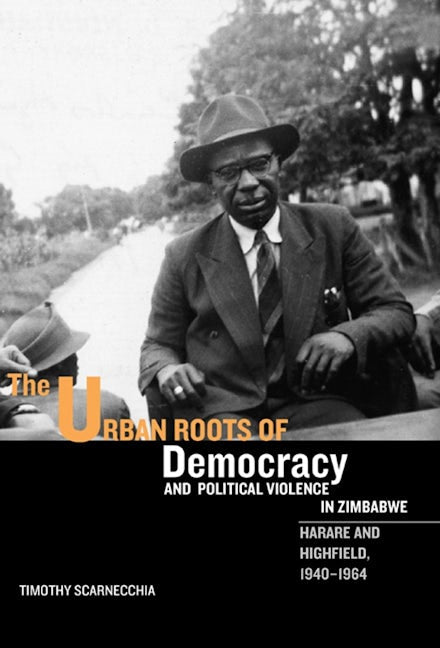
The Urban Roots of Democracy and Political Violence in Zimbabwe details a democratic tradition developed in the 1940s and 1950s, and a movement that would fall victim to an increasingly elitist and divisive political culture by the 1960s. Providing biographical sketches of key personalities within the genealogy of nationalist politics, Timothy Scarnecchia weaves an intricate narrative that traces the trajectories of earlier democratic traditions inZimbabwe, including women's political movements, township organizations, and trade unions. This work suggests that intense rivalries for control of the nationalist leadership after 1960, the "sell-out" politics of that period, andCold War funding for rival groups contributed to a unique political impasse, ultimately resulting in the largely autocratic and violent political state today. The author further proposes that this recourse to political violence,"top-down" nationalism, and the abandonment of urban democratic traditions are all hallmarks of a particular type of nationalism equally unsustainable in Zimbabwe then as it is now.
Timothy Scarnecchia is assistant professor of African history at Kent State University in Kent, Ohio.
The Urban Roots of Democracy and Political Violence in Zimbabwe details a democratic tradition developed in the 1940s and 1950s, and a movement that would fall victim to an increasingly elitist and divisive political culture by the 1960s. Providing biographical sketches of key personalities within the genealogy of nationalist politics, Timothy Scarnecchia weaves an intricate narrative that traces the trajectories of earlier democratic traditions inZimbabwe, including women's political movements, township organizations, and trade unions. This work suggests that intense rivalries for control of the nationalist leadership after 1960, the "sell-out" politics of that period, andCold War funding for rival groups contributed to a unique political impasse, ultimately resulting in the largely autocratic and violent political state today. The author further proposes that this recourse to political violence,"top-down" nationalism, and the abandonment of urban democratic traditions are all hallmarks of a particular type of nationalism equally unsustainable in Zimbabwe then as it is now.
Timothy Scarnecchia is assistant professor of African history at Kent State University in Kent, Ohio.

Price: $29.99
Pages: 240
Publisher: Boydell & Brewer Inc.
Imprint: University of Rochester Press
Publication Date:
01 August 2013
Trim Size: 9.00 X 6.00 in
ISBN: 9781580463638
Format: Paperback
BISACs:
LITERARY COLLECTIONS / African, Anthologies: general

[An] original and intriguing book. [.] Scarnecchia skilfully moves his analysis between the local, national and international dimensions of the nationalist struggle in order to show how the deepening fault lines of class, gender and nation undermined the coherence of the nationalist movement and fuelled a politics of intimidation. In doing so he effectively undermines Zimbabwe's nationalist historiography of anticolonial triumph, and adds a valuable contribution to a growing revisionist historiography of African nationalism that seeks new explanations for the pernicious tendencies of African regimes.
Charles Mzingeli's Leadership and Imperial Working-Class Citizenship
Township Protest Politics
Resistance to the Urban Areas Act and Women's Political Influence
Changing Tactics: Youth League Politics and the End of Accommodation
The Early Sixties: Violent Protest and "Sellout" Politics
The "Imperialist Stooge" and New Levels of "Sellout" Political Violence
Township Protest Politics
Resistance to the Urban Areas Act and Women's Political Influence
Changing Tactics: Youth League Politics and the End of Accommodation
The Early Sixties: Violent Protest and "Sellout" Politics
The "Imperialist Stooge" and New Levels of "Sellout" Political Violence