


Some error occured while loading the Quick View. Please close the Quick View and try reloading the page.
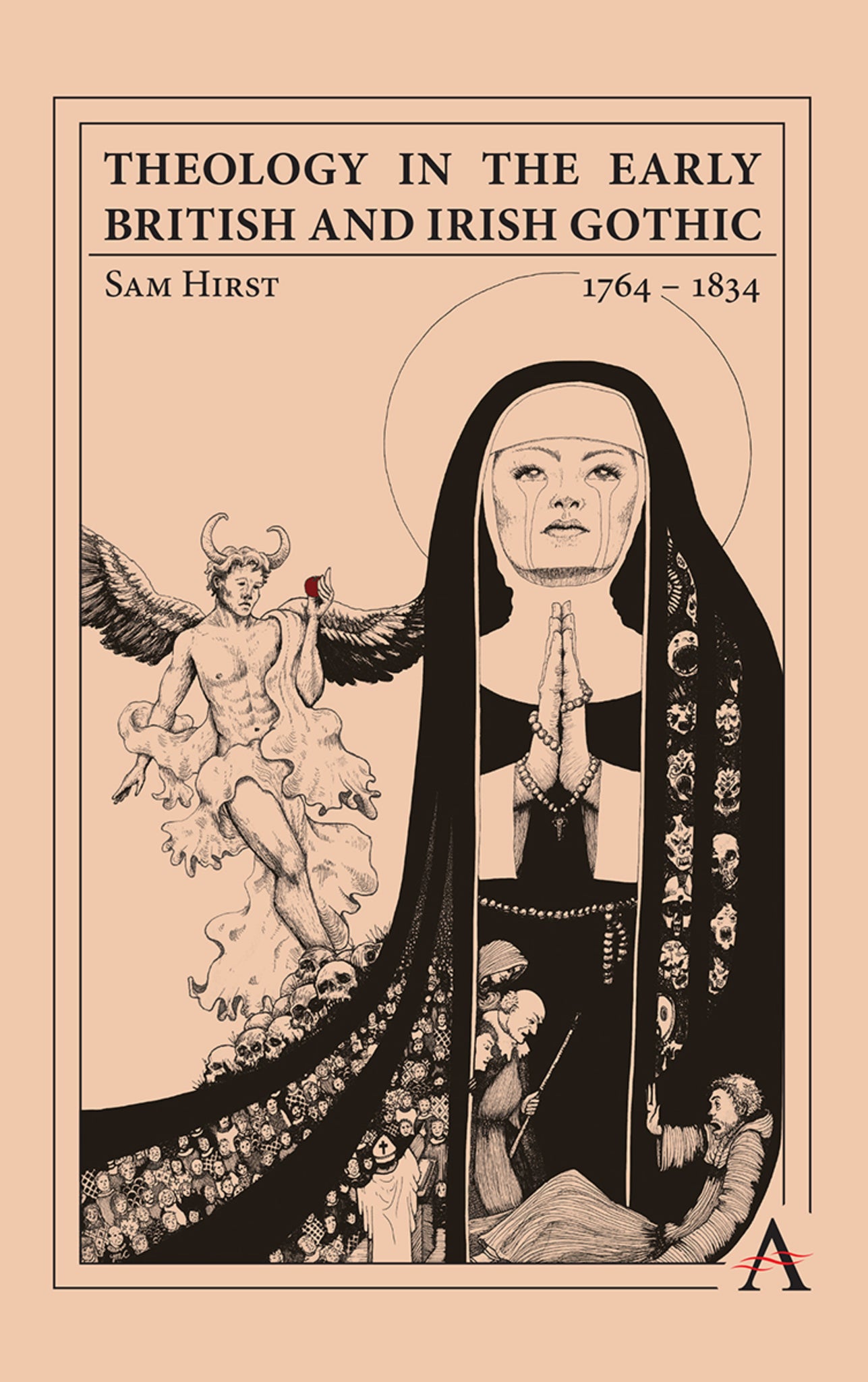
Theology in the Early British and Irish Gothic, 1764–1834 reassesses the relationship between contemporary theology and the Gothic. Investigating Gothic aesthetics, depictions of the supernatural and portrayals of religious organisations, it explores how the Gothic engages with contemporary theologies, both Dissenting and Anglican. Moving away from the emphasis on either a monolithic Protestantism or on the Gothic as a secular mode, it shows the ways in which the Gothic exploration of the transcendent and the obscure cannot be separated from the diverse theologies of its day. The project maps how the Gothic not only reflects but actively engages in the theological debates and controversies contemporary to its efflorescence.


‘In this excellent study, Sam Hirst meticulously explores the theological underpinnings of a broad range of early British and Irish Gothic fictions. As rigorously researched as it is elegantly written, the volume convincingly shows, in the end, how we ignore the Gothic’s abiding theological contexts and concerns to our peril.’ —Dale Townshend, Professor of Gothic Literature, Manchester Centre for Gothic Studies, Manchester Metropolitan University, UK.
Sam Hirst completed a PhD in the theology of the Early British Gothic at Manchester Metropolitan University. Sam Hirst is an honorary research fellow at the University of Liverpool, a research fellow at the University of Nottingham and a lecturer in the nineteenth century at Oxford Brookes University. Sam Hirst runs the online education project ‘Romancing the Gothic,’ which provides access to live and recorded talks on subjects related to Gothic and horror from experts around the world and facilitates an annual conference.
Introduction; Chapter 1: “Christ is not Divided”: Theologies of Toleration and the Depiction of the Catholic; Chapter 2: “Serve the Lord with Fear and Rejoicing”: Gothic Theologies of the Sublime; Chapter 3: “For Satan Himself is Transformed into an Angel of Light”: The Theo-Aesthetics of Demonic Depiction; Chapter 4: “Your Sons and Daughters will Prophesie”: Gothic Dreams; Chapter 5: “Test the Spirits”: Ghosts and Apparitions of the Gothic; Chapter 6: “If Ye Live After the Flesh, Ye Shall Die”: Embodied Immortality and Damnation; Conclusion.