


Some error occured while loading the Quick View. Please close the Quick View and try reloading the page.
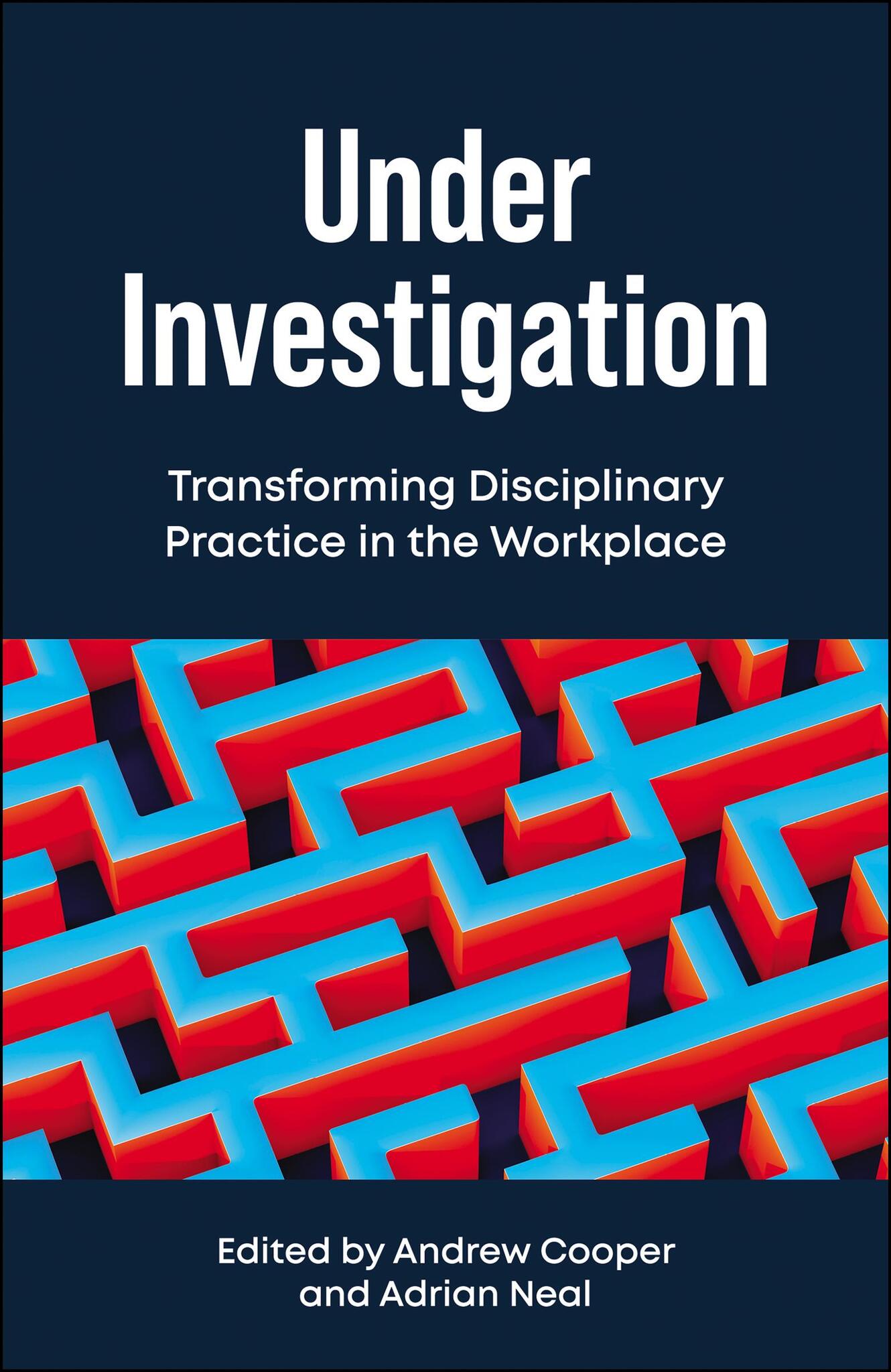
While employee relations investigations are an important part of organisational practice for managing workplace issues, there is growing evidence of the significant harm they can cause to individuals being taken through them. This harm can also spread further to those involved in their delivery, as well as impacting organisational culture and reputation, leading to financial and economic harm.
Under Investigation proposes a shift in mindset that prioritises employee wellbeing alongside the application of the process, reducing potential harm and creating healthier work environments. Based on a programme of work and research within NHS Wales, it explores the wider impact of employee investigations, considers new approaches to applying disciplinary policy and includes a call to the human resources profession for change.


"Much of what is in the book is aligned to what I’ve been saying for years, but there’s been nothing available to back it up. An important addition to academic and HR literature on this subject." Karen Wise, Director of Senatus Consulting
“A must-read for HR professionals, managers and leaders at every level. With clarity and authority, it offers a compelling vision for rethinking and transforming how we manage disputes, especially the often-damaging way we approach disciplinary investigations..” Kate Nowicki, former Director of Dispute Resolution, Acas
“This book quickly becomes one that you can’t put down. It draws you into the stories of individuals who have been negatively affected by HR processes and makes you question your own practice. It is a call to anyone involved in disciplinary investigations to ensure that respect and dignity are at the heart of them.” James Devine, Korn Ferry Consulting and HR Most Influential Practitioner 2024
“An important read. It’s a subject that deserves proper forensic scrutiny.” Nick Wallis, author of The Great Post Office Scandal
“I read this book during a long train journey and was completely absorbed. It sets out a key role for public health advocacy: to influence those responsible for setting disciplinary policy and process because of the impact they can have on the working population.” Tracy Daszkiewicz, Vice-President, Faculty of Public Health
“This is a fascinating read for anyone who wants to think seriously about disciplinary processes and changing the organisational culture in which they are applied. It is both clear and thoughtful on the fundamental challenges for individuals and organisations and provides engaging case studies to bring the theory to life.” Sarah Fraser Butlin, King’s Counsel, Selwyn College, Cambridge
“I welcome this book for the way in which it brings together colleagues from HR and psychology to reflect on, and consider new approaches to the application of disciplinary policy and processes to support employee wellbeing.” Dr Roman Raczka, President, British Psychological Society
“A neglected topic brought to life with evidence and stories across disciplines and sectors. The questions asked provide food for thought for anyone working or studying in this area. For HR practitioners and for line managers, this book is a must.” Sarah Gilmore, Head of Management, Employment and Organization Section, Cardiff University
“New legislation in Australia is leading international debate on the duty that employers have to prevent the harm that trauma exposure at work can cause. This book strengthens the case further to build safer workplaces through the application of risk management thinking to HR policies and processes.” Jason van Schie, Founder and CEO, FlourishDx
“An important contribution to an under-assessed field. A workplace culture of reaching for disciplinary measures rather than dialogue, training and reconciliation will inevitably lead to poor outcomes for the employee and the organization.” Alex Aiken, former Head of Profession, UK Government Communication Service
“The authors' call to make processes more humane, thoughtful and productive is an important one. These practices can play a key part in creating healthier workforces and more effective service delivery. I think the book can generate helpful reflection for you and advance learning and improvement in your organization. I certainly recommend it.” Joe McCannon, former Vice President, Institute for Healthcare Improvement, US
Andrew Cooper is the Head of Programmes for Employee Wellbeing in Aneurin Bevan University Health Board in NHS Wales. He holds an honorary research role with the University of Plymouth and is leading a programme of research exploring the impact of the disciplinary process on individuals and organisations.
With a background in healthcare improvement and innovation, he has held senior communications roles across the private, public and voluntary sectors and is a Fellow of the Chartered Institute for Public Relations for his contribution to healthcare communications.
Adrian Neal is the Head of Employee Wellbeing in Aneurin Bevan University Health Board in NHS Wales and a Consultant Psychologist. Qualified in both clinical and business psychology, he leads a service providing psychological therapy for employees, consultation and support for teams and external organisations.
He has worked across the public sector, including health, education, policing and government on employee experience and wellbeing initiatives. He has published widely and holds honorary roles with Cardiff and Plymouth universities and is a long-term member of the British Psychological Society’s Leadership and Management Faculty.
Foreword – Peter Cheese
Introduction – Andrew Cooper, Adrian Neal
Part I: Counting the Cost
1. The Impact on the Investigated: The Potential for Harm to Employees Who Are Subject to Disciplinary Investigations – Benna Waites, Khadija Rouf
2. The Impact on Investigators: Understanding the Harm That Managers and Others Involved in Disciplinary Investigations Can Experience – Richard Saundry, Andrew Cooper
3. The Impact on Culture: The Potential for Harm to Organizational Culture Through Poorly Managed or Avoidable Disciplinary Investigations – Adrian Neal, Andrew Cooper
4. The Impact on the Bottom Line: The Economic and Financial Harm Caused by Avoidable or Poorly Managed Disciplinary Investigations – Roger Kline, Ceri J. Phillips
Part II: Making the Change
5. A Last Resort: How Pursuing Informal Resolution Can Lead to a Reduction in Employee Investigations, Fewer Sick Days and Costs – Doris A. Behrens, Sarah Simmonds
6. Creating Compassionate Cultures: How a Compassionate Culture Leads to the Reduction and Better Management of Employee Investigations – Michael West, Rhiannon Windsor
7. First Principles: How Fair, Comprehensive, Clear and Compassionate Disciplinary Policy and Processes Minimize the Harm and Costs of Employee Investigations – Jo Yarker, Adam Morgan
8. Alongside the Lawyer: How Understanding the Lawyer’s Perspective Supports the Better Management of Employee Investigations – Tracey Rosell, Sammie Morris
Part III: Charting the Future
9. Working in the Grey: How HR Can Mitigate Organizational Risk and Promote Employee Wellbeing in the Management of Employee Investigations – Aoife M. McDermott, Liz Rogers
10. Avoidable Employee Harm: How the Concept of Avoidable Employee Harm Can Be Used To Improve the Management of Employee Investigations – Jonny Gifford, Andrew Cooper, Aled Jones
11. A Systematic Approach: How an Effective Occupational Health and Wellbeing Approach Can Improve the Management of Employee Investigations – Kevin Teoh, Nick Pahl
12. The Disciplinary Policy and Beyond: Steps To Improve the Management of Employee Investigations – Andrew Cooper, Rhiannon Windsor, Adrian Neal
13. A Call to Action: The Disciplinary Process Through the Lens of the CIPD Profession Map: Principles-Led, Evidence-Based, Outcomes-Driven – David D’Souza, Julie Rogers