


Some error occured while loading the Quick View. Please close the Quick View and try reloading the page.
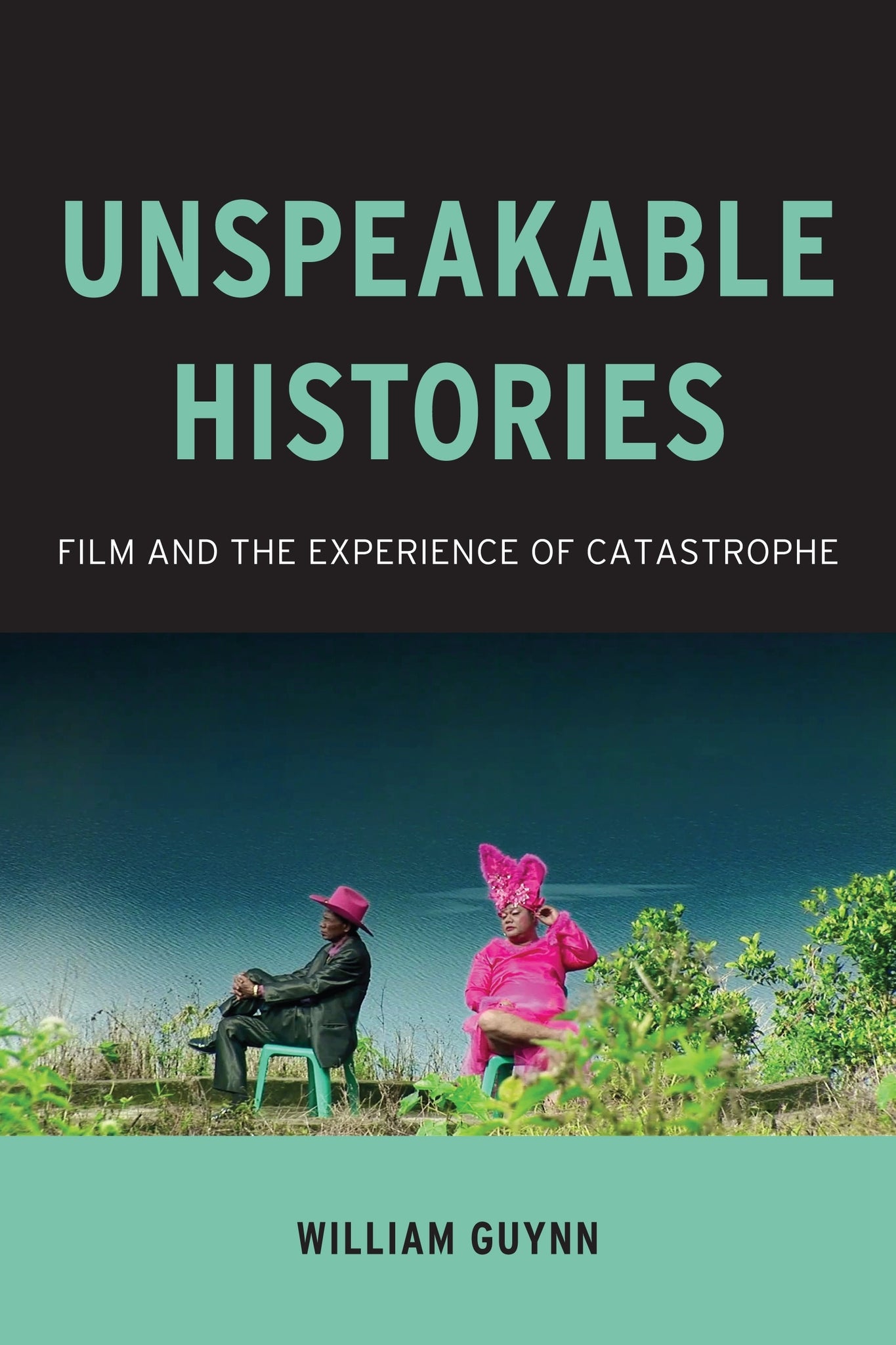
In Unspeakable Histories, William Guynn focuses on the sensation of encountering past events through film. Film is capable, he argues, of triggering moments of heightened awareness in which the barrier between the past and the present can fall and the reality of the past we thought lost can be momentarily rediscovered in its material being. In his readings of seven exceptional works depicting twentieth century atrocities, Guynn explores the emotional resonance that still adheres to traumatic historical events.
Guynn considers dimensions of experience that historiography leaves untouched. Yaël Hersonski's A Film Unfinished (2010) deconstructs scenes from the Nazi propaganda film Das Ghetto through the testimony of ghetto survivors. Andrzej Wajda's Katyn (2007) revivifies the murder of the Polish officer corps (in which Wajda's father perished) by Stalin's security forces during the Second World War. Andrei Konchalovsky's Siberiade (1979) reimagines the turbulent history of the Soviet Union from the perspective of an isolated Siberian village. Larissa Shepitko's The Ascent (1977) evokes the existential drama Soviet partisans faced during the Nazi occupation. Patricio Guzmán's Nostalgia for the Light (2011) examines the vestiges of human experience, including the scattered remains of Pinochet's victims, alive in the aridity of the Atacama Desert. Rithy Panh's S-21 (2003) reawakens events of the Cambodian genocide through dramatic confrontation with some of its executioners, and Joshua Oppenheimer's The Act of Killing (2012) films the perpetrators of the Indonesian genocide as they restage scenes of killings and torture. Inspired by the work of Walter Benjamin, Frank Ankersmit, Joseph Mali, and Simon Schama, Guynn argues that the film medium, more immediate than language, is capable of restoring the affective dimension of historical experience, rooted in the deepest reaches of our minds.


— Robert A. Rosenstone, author of History on Film/Film on History
Unspeakable Histories decisively advances the state of the discipline in historical film studies. Film is shown to be a particularly subtle and challenging medium for articulating the historical traumas of the twentieth century. The writing is nuanced, vivid, and at times, passionate.
— Robert Burgoyne, author of The Hollywood Historical Film
Through a close analysis of movies dealing with catastrophes, this book proposes a new theoretical approach: to study how film, under certain conditions at some moments (through intense flashes), can lead us to experience the past as a direct phenomenological perception and how it can change our understanding of history. Provocative, but also clear and didactical. A significant contribution to the relations between film and history.
— Roger Odin, Professor of Sciences of Information and Communication, University of Paris III Sorbonne Nouvelle.
An eloquent meditation on cinema's capacity to put us in touch, in every sense of the word, with the presence of the past. Guynn's study makes a sustained argument for the place of affect, sensation, experience, and myth in our historical imagination.
— Debarati Sanyal, author of Memory and Complicity: Migrations of Holocaust Remembrance
In this thought-provoking book, Guynn argues for the power of historical films about catastrophic events of the twentieth century to suspend, albeit fleetingly, the distance between present and past, enabling viewers to grasp a fragment of that past. At once attuned to the affective dimension of spectatorship and the medium's power to reanimate traces of the historical past, this book argues for the crucial role of film in understanding historical disasters.
— Alison Landsberg, author of Prosthetic Memory: The Transformation of American Remembrance in the Age of Mass Culture
Guynn does a superb job of examining these often-harrowing works.
Introduction: Making Experience Speak
1. Yaël Hersonski's A Film Unfinished
2. Andrzej Wajda's Katyn
3. Andrei Konchalovsky's Siberiade
4. Larisa Shepitko's The Ascent
5. Patricio Guzmán's Nostalgia for the Light
6. Rithy Panh's S21: The Khmer Rouge Killing Machine
7. Joshua Oppenheimer's The Act of Killing
Epilogue
Notes
Bibliography
Index