


Some error occured while loading the Quick View. Please close the Quick View and try reloading the page.
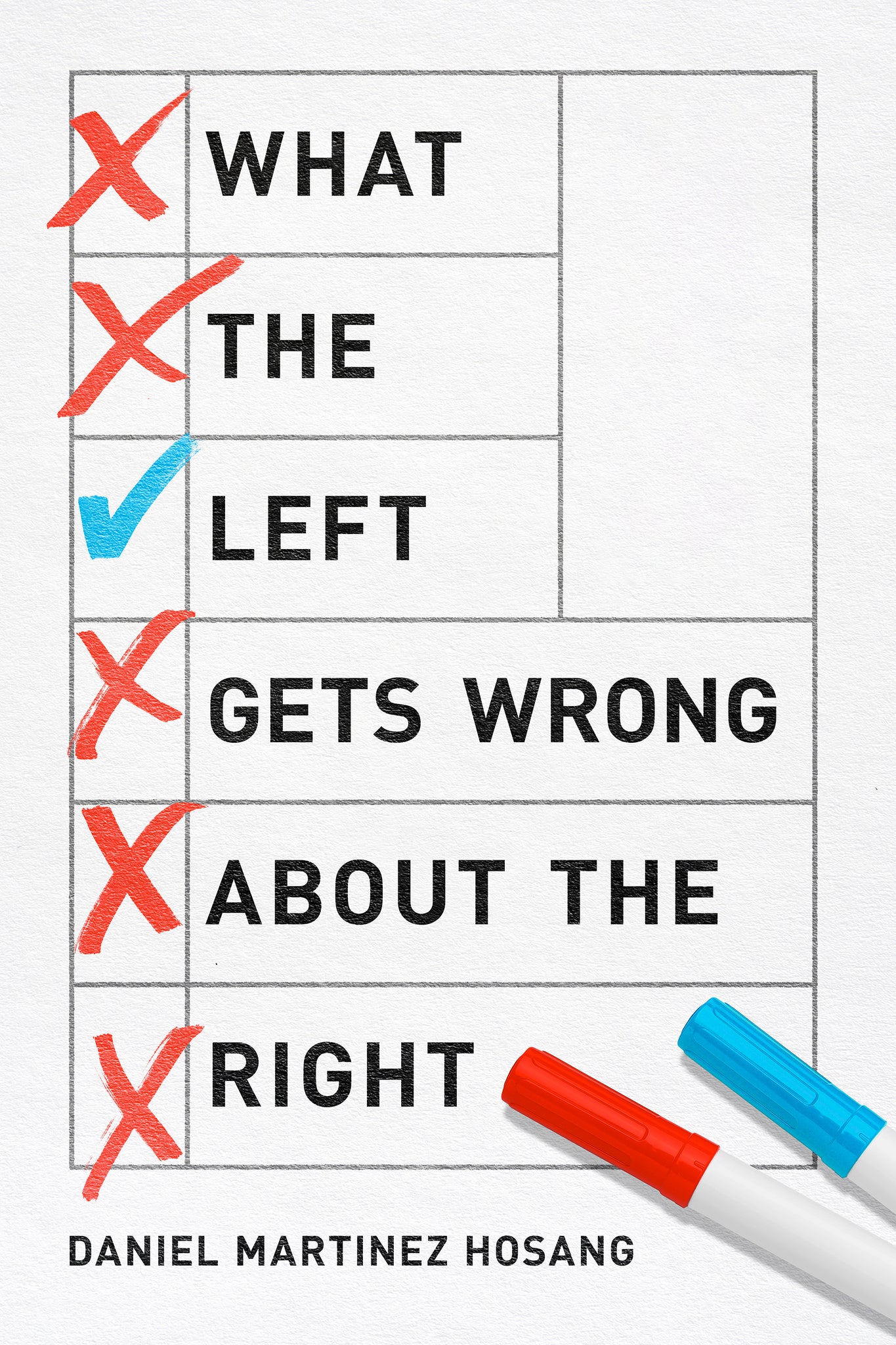
The story the left tells itself about the right’s success is wrong—and limits our ability to connect with people who can be won to liberatory politics
In this timely and incisive book, Daniel Martínez HoSang challenges many of the dominant frameworks through which progressives have interpreted right-wing movements. Drawing on more than a decade of original research and on-the-ground reporting at conferences held by Turning Point USA and other conservative groups, HoSang shows how prevailing assumptions on the left often overlook the conditions that are reshaping political life. Across the United States, experiences of institutional failure, dislocation, and isolation are leading many people to withdraw from collective projects and disengage from public life, creating new openings for right-wing appeal.
Rather than relying on older models of conservative mobilization, the contemporary right has learned to navigate this terrain in distinct ways. It builds forms of belonging and political identity that resonate with those who feel unmoored, cultivating multiracial and socially diverse coalitions that often present themselves as welcoming and inclusive. This ecosystem extends far beyond Trump and MAGA, drawing in people who were once disengaged or even aligned with progressive causes.
Moving beyond familiar diagnoses, HoSang argues that only by understanding the emotional and structural forces driving the right’s appeal can we begin to imagine an effective response. The book ultimately asks what it would take to rebuild and reimagine collective democratic projects today, offering a framework for renewing public life and forging new pathways for shared purpose, participation, and liberation.


“Daniel Martinez HoSang has long distinguished himself as an astute, impassioned, and strategically brilliant champion of the people’s right to run their own lives. In What the Left Gets Wrong About the Right he shows that the rise of right-wing politics emerges in part from the lack of connection, participation, and democratic action in society.” —George Lipsitz
Praise for A Wider Type of Freedom
"Vividly distills the long struggle to abolish racial subordination through stories of organizers, artists, and writers who carried wide-ranging visions of freedom and liberation. A timely book for those yearning to think beyond our current crises."
–Kimberlé Williams Crenshaw, Cofounder and Director of the African American Policy Forum
"A must read for all of us determined to make collective liberation real."
–Rinku Sen, author of Stir It Up: Lessons in Community Organizing and Advocacy
"This is the only book that brings together myriad movements that emerged in different time periods, geographic regions, and within different communities. There is something for every reader here."
–Claire Jean Kim, author of Dangerous Crossings: Race, Species, and Nature in a Multicultural Age
"This thoughtful, accessible analysis of pressing issues speaks directly to COVID and the recent past, but it will be read with great profit decades from now. It compactly tells the stirring stories of a variety of social movements that are often intensely local and sometimes fully transnational but point to something bigger, no matter the scale."
–David Roediger, author of How Race Survived U.S. History: From Settlement and Slavery to the Eclipse of Post-racialism
The Introduction: “What We Miss When We Laugh at MAGA” opens the book by focusing on progressives and their interpretations of right-wing politics that have prevailed since Trump's ascension into national politics a decade ago. These frameworks cannot explain the success of the Right today.
Chapter 1: “Onramps” describes the diverse ways that right-wing groups create points of entry for new constituents, often by laying claim to issues that have historically been the domain of the Left. This chapter explores the ways that organized groups on the right have sought to fashion such inroads, and why growing numbers of Americans have responded.
Chapter 2: “Affect” explores the ways that feeling, emotion, and desire operate on the contemporary Right. This chapter explores the affective appeals of the far right including political rallies and gatherings and media spaces, including many people that don’t necessarily identify as conservative.
Chapter 3: “Inclusive Nationalism” takes up a central paradox on the Right. How has the conservative movement grown increasingly multiracial and diverse even as they moved sharply to the right on a wide range of racialized policy issues, including affirmative action, voter rights, immigration, public safety, housing, and reproductive justice?
Chapter 4: “The Globalization of Anti-Globalism” explores the increasingly fertile exchanges between right-wing formations outside the United States and the MAGA right today.
Conclusion: “New Political Homes” considers how the Left and progressive organizations can and must fashion spaces and movements for the large sectors of populace who face growing experiences of material precarity and cynicism about the future and have turned away from the incrementalistic and technocratic vision of the Democratic Party and mainstream liberalism.