


Some error occured while loading the Quick View. Please close the Quick View and try reloading the page.
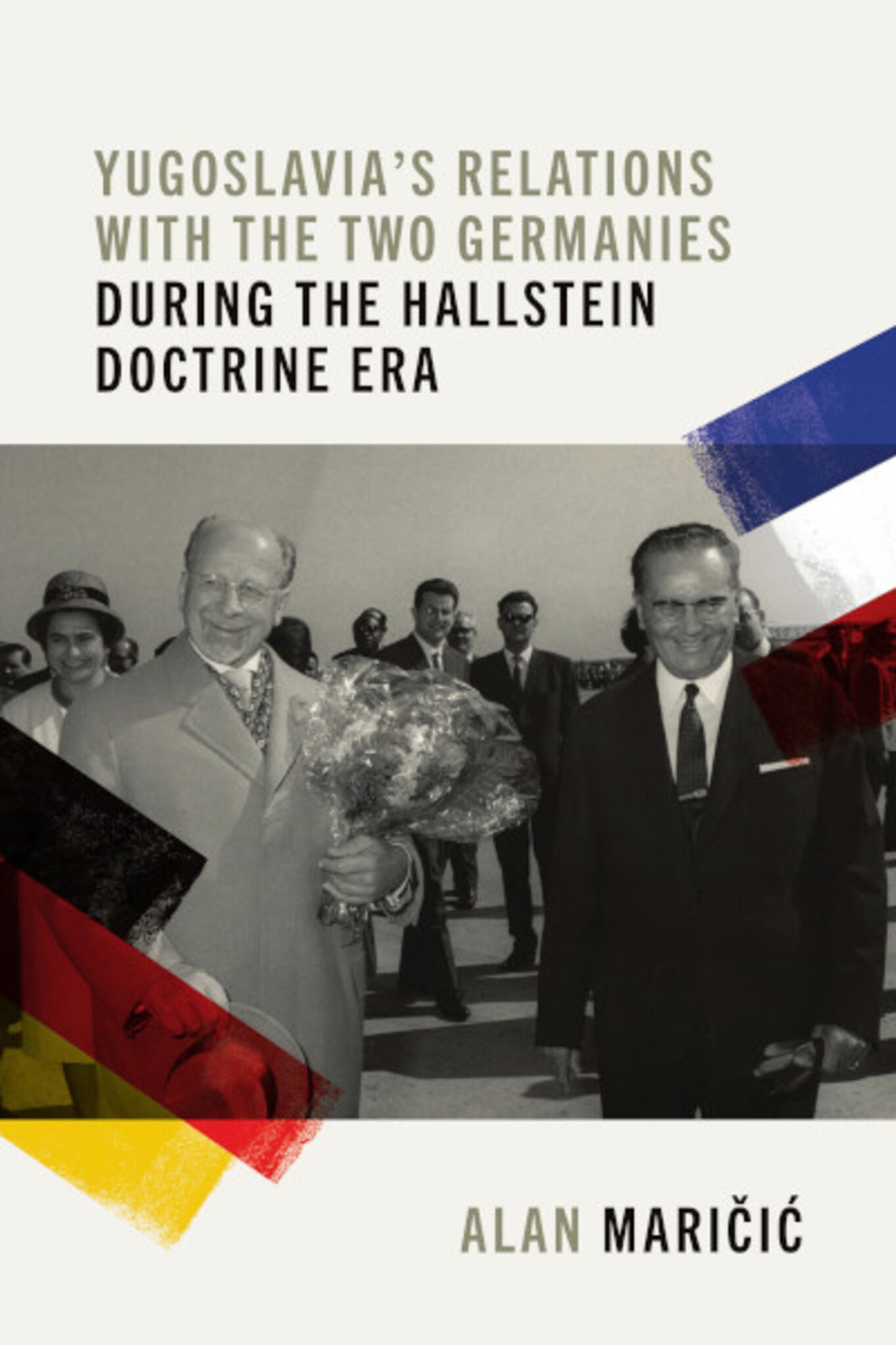
Alan Maričić examines Yugoslavia’s relations with the Federal Republic of Germany (FRG) and the German Democratic Republic (GDR) between 1955 and 1968. This period was marked by the FRG’s Hallstein Doctrine, a set of measures placed to prevent international recognition of the GDR. One such measure, which stipulated that the FRG would break off diplomatic relations with any country which recognized the GDR, was enforced in 1957 with Yugoslavia. Maričić argues that Yugoslavia’s decision, driven by its desire for rapprochement with the Eastern Bloc, was a miscalculation, making its already uneasy position in a divided Europe even more precarious.


Alan Maričić is a Cold War historian focused on Yugoslavia's foreign policy and cultural relations with the Global South. He received his PhD from the University of Waterloo, where he is also a sessional instructor.
List of Abbreviations
Introduction
Chapter 1. The Yugoslav-Soviet Thaw and the German Question
Chapter 2. Yugoslavia Recognizes the GDR
Chapter 3. Yugoslavia and the German Question in the Shadow of the Berlin Crisis (1957-1960)
Chapter 4. The Belgrade Non-Aligned Conference and the German Question
Chapter 5. Time of Transition (1961-1964)
Chapter 6. From Cairo to Kiesinger
Chapter 7. West Germany’s New Ostpolitik and Yugoslavia (1966-1968)
Conclusion
Bibliography
Index