You may also like
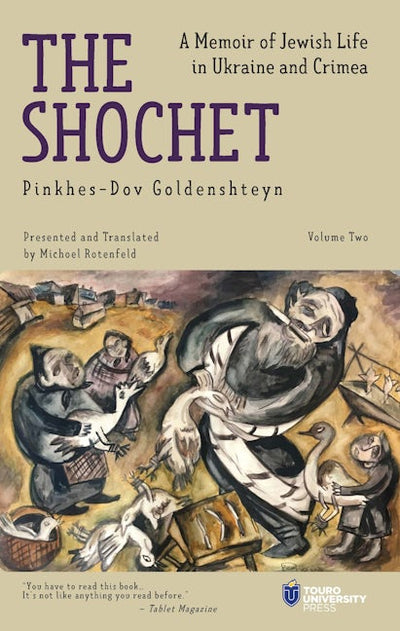
The Shochet (Vol. 2)
Regular price $44.95 Save $-44.95“A fitting conclusion to a well-researched and meticulously edited memoir translation.” — Kirkus Reviews
“You have to read this book… It’s not like anything you read before.” — Tablet Magazine
Set in Ukraine, Crimea, and Israel, this unique two-volume autobiography offers a fascinating, detailed picture of life in Tsarist Russia and Israel during the late 19th and early 20th centuries. Goldenshteyn (1848-1930), a traditional Jew who was orphaned as a young boy and became a shochet (kosher slaughterer) as a young man, is a master storyteller. Folksy, funny, streetwise, and self-confident, he is a keen observer of his surroundings. His accounts are vivid and readable, sometimes stunning in their intensity.
The memoir is brimming with information. Goldenshteyn’s adventures shed light on communal life, persecution, family relationships, religious practices and beliefs, social classes, local politics, interactions between Jews and other religious communities, epidemics, poverty, competition for resources, migration, war, technology, modernity and secularization. In chronicling his own life, Goldenshteyn inadvertently tells a bigger story—the story of how a small, oppressed people, among other minority groups, struggled for survival in the massive Russian Empire and in the Land of Israel.
Volume two begins in 1873, when Goldenshteyn obtains his first position as a shochet in Slobodze, and it follows him to the Crimea, where he endures 34 years of vicissitudes. In 1913, he fulfills a dream of immigrating to the Land of Israel, hoping to find tranquility in his old age. Instead, he is met with the turbulence of the First World War, as battles rage between the retreating Ottoman Turks and the advancing British forces.
Informed by research in Ukrainian, Israeli and American archives and personal interviews with the few surviving individuals who knew Goldenshteyn personally, The Shochet is a magnificent new contribution to Jewish and Eastern European history.

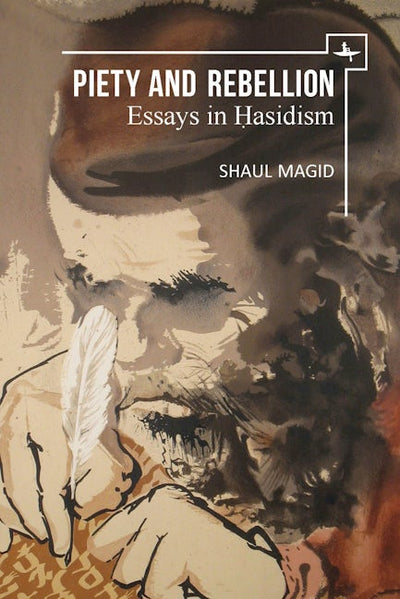
Piety and Rebellion
Regular price $34.00 Save $-34.00
Awakening to Radical Islamist Evil
Regular price $39.95 Save $-39.95This volume, like its predecessor of the same title, offers the first daily account of the war forced upon the State of Israel by Hamas’s brutal attack on its southern communities near the Gaza Strip on October 7, 2023. Focusing on the second six months of that war, Professor Monty Penkower examines in detail its local, regional, and international significance. Joining extensive research and a limpid prose, as in his many other books on modern Jewish history, this prize-winning historian again displays a definitive mastery of his craft.
Awakening to Radical Islamist Evil
Regular price $89.95 Save $-89.95This volume, like its predecessor of the same title, offers the first daily account of the war forced upon the State of Israel by Hamas’s brutal attack on its southern communities near the Gaza Strip on October 7, 2023. Focusing on the second six months of that war, Professor Monty Penkower examines in detail its local, regional, and international significance. Joining extensive research and a limpid prose, as in his many other books on modern Jewish history, this prize-winning historian again displays a definitive mastery of his craft.
The Haunted Present
Regular price $99.00 Save $-99.00Emerging from the shadows of empire and memory, this groundbreaking study reveals how contemporary Eastern European film and television use neo-noir to confront unresolved trauma, power, and injustice in the post-Soviet world.
This collection explores for the first time the pervasive presence of neo-noir film and TV series (including releases on widely popular streaming channels) in recent Balkan, Czech, Polish, Russian, and Ukrainian cinema and television. Classic western noir’s structural pessimism was driven by a utopian desire for a just society, a quality which made it attractive to all eastern European countries. The films and series in the collection present modern iterations of a still-relevant colonial past, such as the repression of dissent and of sexual minorities, culpability in World War II, and the activities of the security services. Contemporary narratives reveal the effects of the violence released after the collapse of the Soviet Union—the continuing trauma and scars of an unprocessed past, social dysfunction, organized crime, ecological degradation, exploitation of indigenous populations, and restorative nostalgia for previous systems of governance.