


Some error occured while loading the Quick View. Please close the Quick View and try reloading the page.
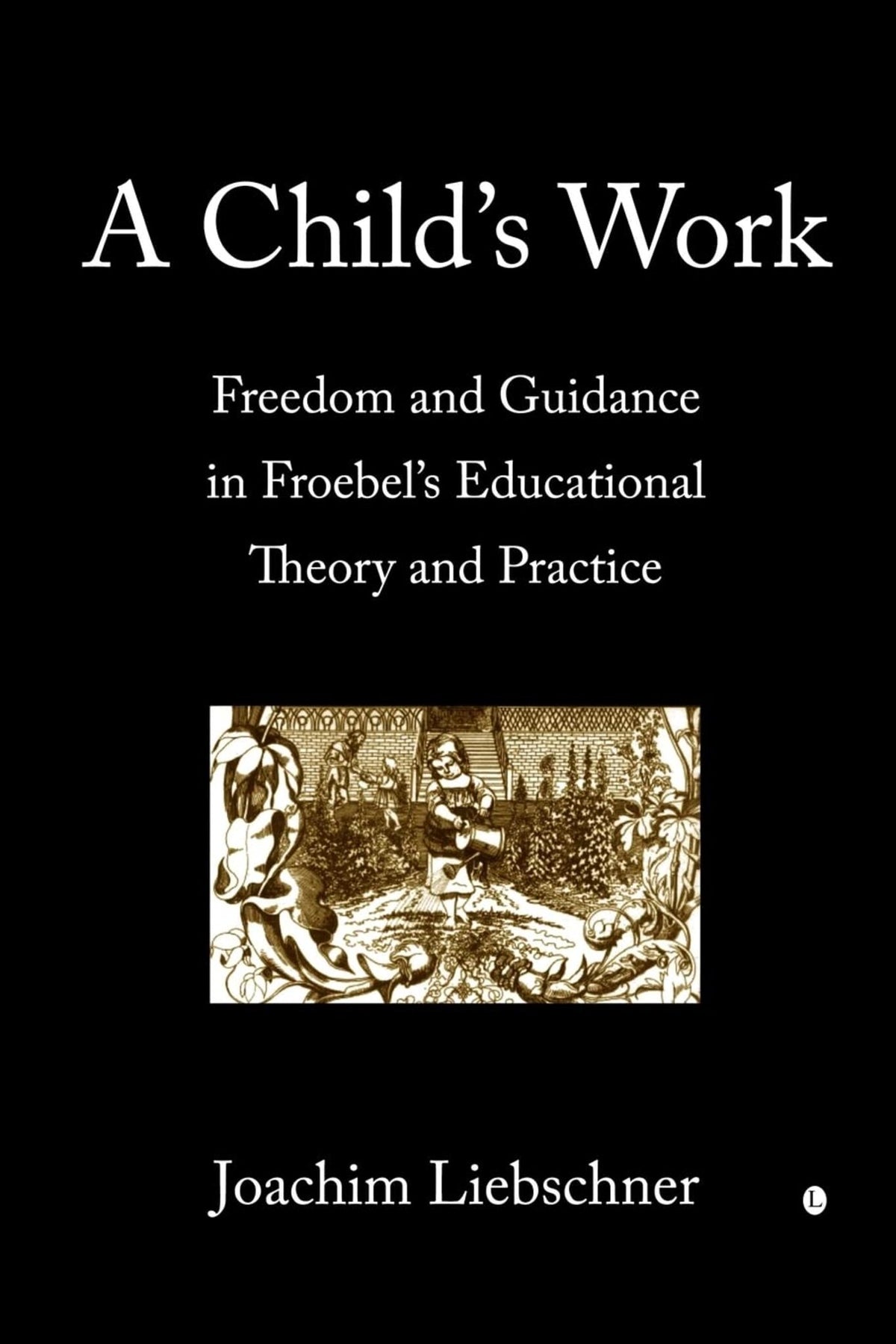
An illuminating study of the great German educationalist's philosophy that guided play is the most important learning tool for young children.
This book considers Friedrich Froebel's work and ideas in the light of the continuing debate over methods of primary education, raising the old conflict between child-centred and traditional education; concern about the role of teacher in the classroom; and the renewed challenge of 'play' as a tool of education. To Froebel, play provided the means for a child's intellectual, social, emotional and physical development. Froebel believed that the education of a child began at birth, and that parents and teachers played a crucial role in helping children in this activity. 'Play is a mirror of life' - he wrote, leading to self discipline and respect for law and order. The events of Froebel's life are carefully documented in A Child's Work, together with their influence on his ideas and their spread. The author shows how the early death of Froebel's mother and a home lacking in love were to provide the impetus behind one of Froebel's overriding aims: the fostering of family life. The shaping of his educational thought and philosophy through contact with the ideas of other educators, especially his 'spiritual father' Pestalozzi, and philosophers such as Kant, Hegel and Krause, is examined. Froebel's continuous reassessment of the function of play in a child's life came to fruition in the concept of the Kindergarten and the creations with which he peopled it. Illustrations from original sources complement the thorough explanations of these educational innovations in the book. From the soft ball on a spring, the simplest of the Gifts, to the unravelling of more complex ideas in the Mother Songs, Froebel incorporated the various facets that he saw as important in play: the notion of the symbolic and the surmise, the tension between the known and the unknown, the development of physical dexterity and care for the environment. As we continue to shift towards an emphasis on a more formal, more restrictive and less creative mode of education, it is an appropriate time to re-examine Froebel's contribution to educational thinking, which was revolutionised by his ideas. His respect for a child as an independent, searching and creative person learning through his own actions, and for the teacher as facilitator and guide, led to monumental changes. Froebelís legacy challenges us to examine the assumptions underlying current trends in education, and our attitude towards educating young children.
This book considers Friedrich Froebel's work and ideas in the light of the continuing debate over methods of primary education, raising the old conflict between child-centred and traditional education; concern about the role of teacher in the classroom; and the renewed challenge of 'play' as a tool of education. To Froebel, play provided the means for a child's intellectual, social, emotional and physical development. Froebel believed that the education of a child began at birth, and that parents and teachers played a crucial role in helping children in this activity. 'Play is a mirror of life' - he wrote, leading to self discipline and respect for law and order. The events of Froebel's life are carefully documented in A Child's Work, together with their influence on his ideas and their spread. The author shows how the early death of Froebel's mother and a home lacking in love were to provide the impetus behind one of Froebel's overriding aims: the fostering of family life. The shaping of his educational thought and philosophy through contact with the ideas of other educators, especially his 'spiritual father' Pestalozzi, and philosophers such as Kant, Hegel and Krause, is examined. Froebel's continuous reassessment of the function of play in a child's life came to fruition in the concept of the Kindergarten and the creations with which he peopled it. Illustrations from original sources complement the thorough explanations of these educational innovations in the book. From the soft ball on a spring, the simplest of the Gifts, to the unravelling of more complex ideas in the Mother Songs, Froebel incorporated the various facets that he saw as important in play: the notion of the symbolic and the surmise, the tension between the known and the unknown, the development of physical dexterity and care for the environment. As we continue to shift towards an emphasis on a more formal, more restrictive and less creative mode of education, it is an appropriate time to re-examine Froebel's contribution to educational thinking, which was revolutionised by his ideas. His respect for a child as an independent, searching and creative person learning through his own actions, and for the teacher as facilitator and guide, led to monumental changes. Froebelís legacy challenges us to examine the assumptions underlying current trends in education, and our attitude towards educating young children.

Price: $29.99
Pages: 168
Publisher: Boydell & Brewer Inc.
Imprint: Lutterworth Press
Publication Date:
26 October 2006
Trim Size: 9.17 X 6.10 in
ISBN: 9780718830687
Format: Paperback
BISACs:
EDUCATION / History

Acknowledgements
Introduction
Froebel's Life
The Origins of Frobel's Philosophical and Educational Ideas
How Froebel's Ideas of Play Changed in his Life-time and How they compare with those of Other Educators and Philosophers
Freedom and Sensitivity in Education
The Gifts
The Movement Games and Occupations
The Mother Songs
Criticism of Froebel's Work, Then and Now
Froebel's Greatest Contribution to Educational Thinking
Bibliography
Index
Introduction
Froebel's Life
The Origins of Frobel's Philosophical and Educational Ideas
How Froebel's Ideas of Play Changed in his Life-time and How they compare with those of Other Educators and Philosophers
Freedom and Sensitivity in Education
The Gifts
The Movement Games and Occupations
The Mother Songs
Criticism of Froebel's Work, Then and Now
Froebel's Greatest Contribution to Educational Thinking
Bibliography
Index