


Some error occured while loading the Quick View. Please close the Quick View and try reloading the page.
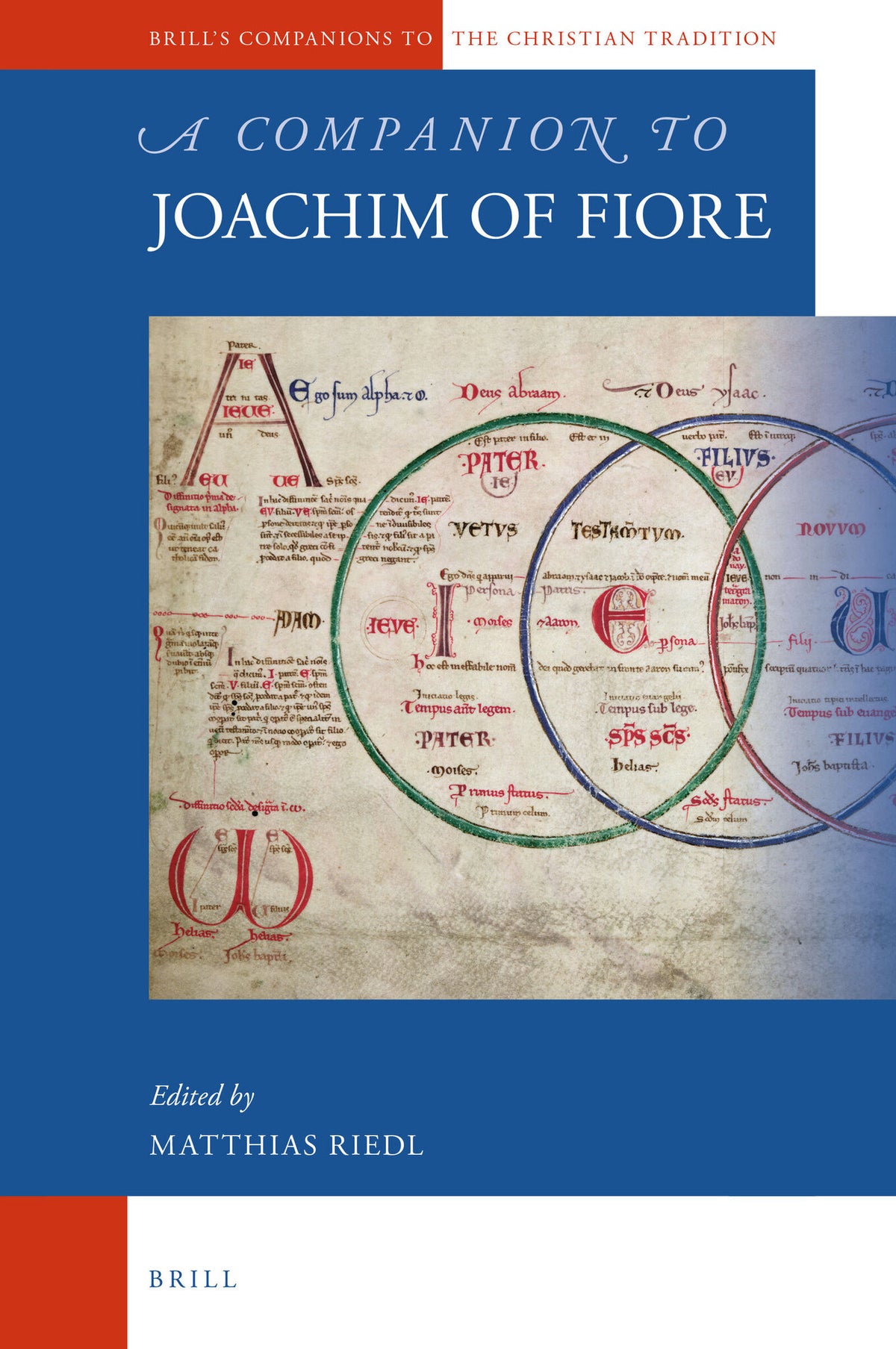
Joachim of Fiore (c.1135-1202) remains one of the most fascinating and enigmatic figures of medieval Christianity. In his own time, he was an influential advisor to the mighty and powerful, widely respected for his prophetic exegesis and decoding of the apocalypse. In modern times, many thinkers, from Thomas Müntzer to Friedrich Engels, have hailed him as a prophet of progress and revolution. Even present-day theologians, philosophers and novelists were inspired by Joachim’s vision of a Third Age of the Holy Spirit.
However, at no time was Joachim an uncontroversial figure. Soon after his death, the church authorities became suspicious about the explosive potential of his theology, while more recently historians held him accountable for the fateful progressivism of Western Civilization.
Contributors are: Frances Andrews, Valeria De Fraja, Alfredo Gatto, Peter Gemeinhardt, Sven Grosse, Massimo Iiritano, Bernard McGinn, Matthias Riedl, and Brett Edward Whalen.
However, at no time was Joachim an uncontroversial figure. Soon after his death, the church authorities became suspicious about the explosive potential of his theology, while more recently historians held him accountable for the fateful progressivism of Western Civilization.
Contributors are: Frances Andrews, Valeria De Fraja, Alfredo Gatto, Peter Gemeinhardt, Sven Grosse, Massimo Iiritano, Bernard McGinn, Matthias Riedl, and Brett Edward Whalen.

Price: $277.00
Pages: 360
Publisher: Brill
Imprint: Brill
Publication Date:
09 November 2017
ISBN: 9789004201637
Format: Hardcover

“A Companion to Joachim of Fiore is a worthy addition to Brill’s [Companion] series and will serve its readers well for some time to come.”
Luke Penkett, The Julian Centre, Norwich. In: Journal of Religious History, Literature and Culture, Vol. 5, No. 1, pp. 158-160.
Luke Penkett, The Julian Centre, Norwich. In: Journal of Religious History, Literature and Culture, Vol. 5, No. 1, pp. 158-160.
Matthias Riedl, Dr. phil. (2003), University Erlangen-Nuremberg, is an associate professor at the Department of History at Central European University, Budapest. He published the monograph Joachim von Fiore: Denker der vollendeten Menschheit (2004) and numerous articles on the history of religious and political thought.