


Some error occured while loading the Quick View. Please close the Quick View and try reloading the page.
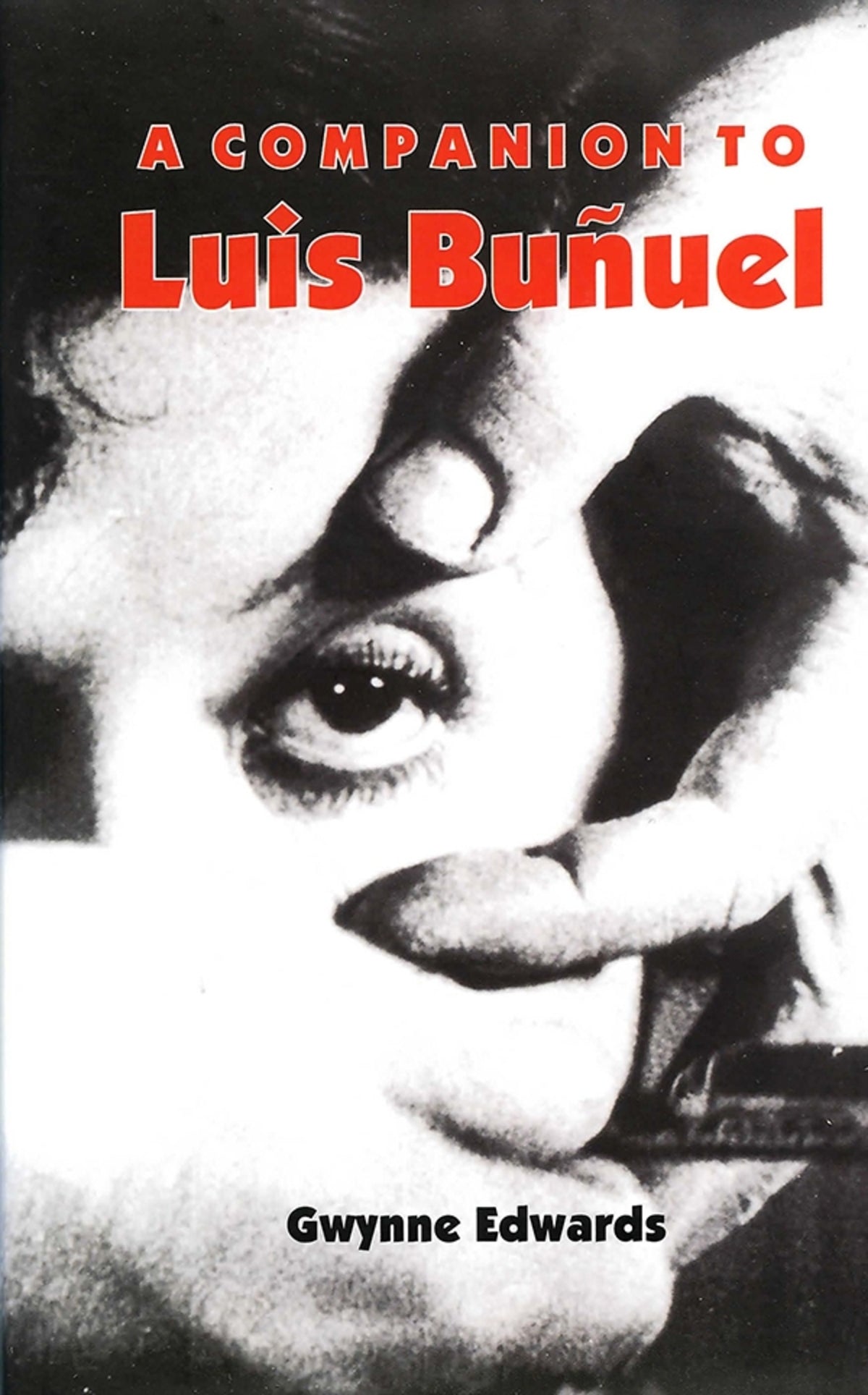
Luis Buñuel was one of the great film-makers of the twentieth century. Gwynne Edwards analyses his work in the context of Buñuel's personal obsessions - sex, bourgeois values and religion.
Luis Buñuel (1900-1983) was one of the truly great film-makers of the twentieth century. Shaped by a repressive Jesuit education and a bourgeois family background, he reacted against both, escaped to Paris, and was soon embraced by André Breton's official surrealist group. His early films are his most aggressive and shocking, the slicing of the eyeball in Un Chien andalou (1929) one of the most memorable episodes in the history of cinema.
The Forgotten Ones (1950) and He (1952), made in Mexico, were followed, from 1960, in Spain and France, by the films for which he is best known: Viridiana (1961), Belle de jour (1966), Tristana (1970), The Discreet Charm of the Bourgeoisie (1972), and That Obscure Object of Desire (1977).
Gwynne Edwards analyses the films in the context of Buñuel's personal obsessions - sex, bourgeois values, and religion - suggesting that the film-maker experienced a degree of sexual inhibition surprising in a surrealist.
GWYNNE EDWARDS is Professor of Spanish at the University of Wales, Aberystwyth.
Luis Buñuel (1900-1983) was one of the truly great film-makers of the twentieth century. Shaped by a repressive Jesuit education and a bourgeois family background, he reacted against both, escaped to Paris, and was soon embraced by André Breton's official surrealist group. His early films are his most aggressive and shocking, the slicing of the eyeball in Un Chien andalou (1929) one of the most memorable episodes in the history of cinema.
The Forgotten Ones (1950) and He (1952), made in Mexico, were followed, from 1960, in Spain and France, by the films for which he is best known: Viridiana (1961), Belle de jour (1966), Tristana (1970), The Discreet Charm of the Bourgeoisie (1972), and That Obscure Object of Desire (1977).
Gwynne Edwards analyses the films in the context of Buñuel's personal obsessions - sex, bourgeois values, and religion - suggesting that the film-maker experienced a degree of sexual inhibition surprising in a surrealist.
GWYNNE EDWARDS is Professor of Spanish at the University of Wales, Aberystwyth.

Price: $29.99
Pages: 186
Publisher: Boydell & Brewer Inc.
Imprint: Tamesis Books
Publication Date:
18 March 2010
Trim Size: 9.29 X 6.14 in
ISBN: 9781855662056
Format: Paperback
BISACs:
PERFORMING ARTS / Film / History & Criticism, Film history, theory or criticism

Buñuel and the Surrealists
A Surrealist in Chains
Buñuel and the Bourgeoisie
'Thank God I'm Still an Atheist'
A Surrealist in Chains
Buñuel and the Bourgeoisie
'Thank God I'm Still an Atheist'