


Some error occured while loading the Quick View. Please close the Quick View and try reloading the page.
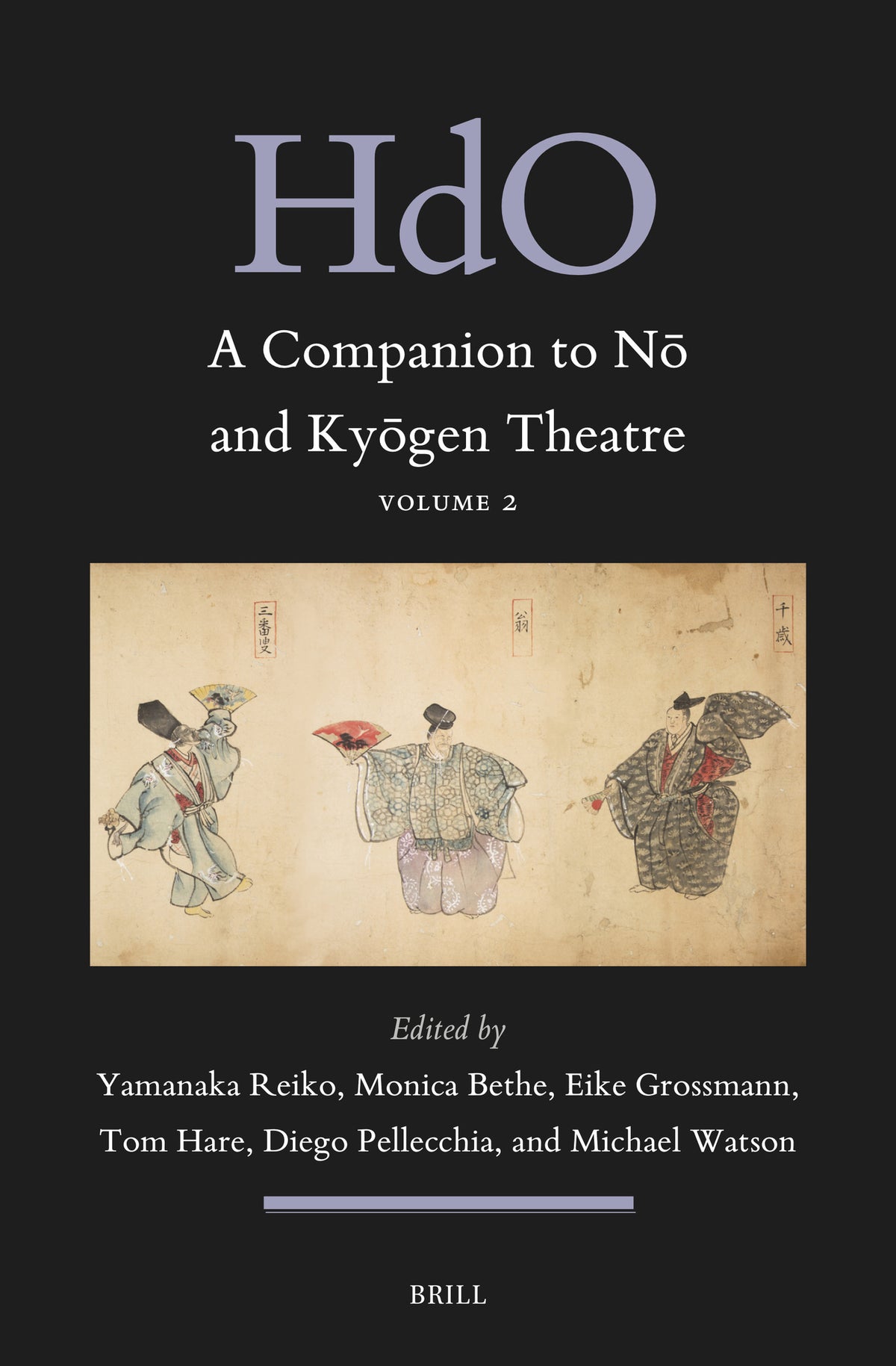
Nō and kyōgen theatre are among the longest continuously staged dramatic forms in the world and are deeply connected to Japanese arts, culture, society, and history. This richly illustrated two-volume set brings together the important elements of these traditions to offer new insights, with contributions by Japanese and non-Japanese experts from a broad range of disciplines. It represents the most ambitious and exhaustive exploration of nō and kyōgen to date, and is an invaluable resource for both scholars and enthusiasts. (This is volume 2 out of 2). For Volume 1 see: brill.com/edcollbook/title/62128.

Price: $200.00
Pages: 556
Publisher: Brill
Imprint: Brill
Publication Date:
19 December 2024
ISBN: 9789004722736
Format: Hardcover

Yamanaka Reiko, is professor at Hōsei University, Tokyo. She has published extensively on Zeami and on the history of the stage directions regarding individual nō plays.
Monica Bethe, is director of the Medieval Japanese Studies Institute, Kyoto. Her research interprets nō as an interactive whole including the impact of masks and costumes.
Eike Grossmann, is professor at the University of Hamburg. Her research areas include traditional theatre and folk performing arts, as well as the history of childhood and material culture.
Tom Hare is professor at Princeton University. He has translated Zeami’s writings on training and performance, and publishes on medieval portrait inscriptions.
Diego Pellecchia is associate professor at Kyoto Sangyō University. His research interests include nō training, performance, interactions between professionals and amateurs, and the reception of nō outside Japan.
Michael Watson, is professor emeritus at Meiji Gakuin University, Tokyo. His research has centred on the Heike monogatari, nō drama, narratology, translation, and reception history.
Monica Bethe, is director of the Medieval Japanese Studies Institute, Kyoto. Her research interprets nō as an interactive whole including the impact of masks and costumes.
Eike Grossmann, is professor at the University of Hamburg. Her research areas include traditional theatre and folk performing arts, as well as the history of childhood and material culture.
Tom Hare is professor at Princeton University. He has translated Zeami’s writings on training and performance, and publishes on medieval portrait inscriptions.
Diego Pellecchia is associate professor at Kyoto Sangyō University. His research interests include nō training, performance, interactions between professionals and amateurs, and the reception of nō outside Japan.
Michael Watson, is professor emeritus at Meiji Gakuin University, Tokyo. His research has centred on the Heike monogatari, nō drama, narratology, translation, and reception history.