


Some error occured while loading the Quick View. Please close the Quick View and try reloading the page.
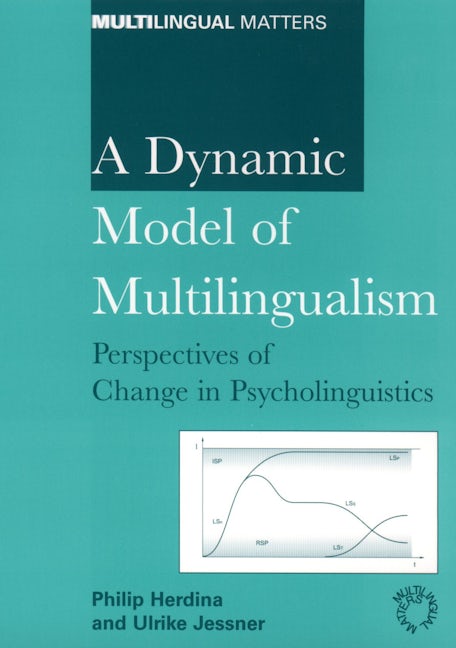
The model presented in this volume draws together various strands of research – second language acquisition theory, bilingualism research, dynamic systems theory – to develop a novel approach to this challenging subject. Its main focus lies on the psycholinguistic dynamics of multilingualism, the processes of change in time affecting two or more language systems.


This book sets out with the highly ambitious aim of combining two fields of investigation which are not self-evidently relatable - namely, on the one hand, research into dynamic systems and, on the other, research into multilingualism. It seeks to use notions of dynamic systems as they have been applied in such areas as physics and meteorology as the basis for the development of a dynamic model of multilingualism. The writing is clear and the argumentation cogent throughout, and although the text is certainly not an easy read, its insightfulness fully repays the close attention it demands. There is absolutely no doubt that this volume will quickly become - and will deserve to become - an indispensable reference-point in any discussion of multilingualism.
Philip Herdina has published on the methodology of linguistics and literature, theory of grammar and multilingualism. He is also the co-author of a bilingual philosophical dictionary.
Ulrike Jessner has published on psycholinguistic issues in the fields of second language acquisition, multilingualism and gender issues. Recently she has co-edited the book English in Europe (Multilingual Matters, 2000).
Both authors are Associate Professors of English Linguistics at the University of Innsbruck, Austria.
Preface
List of Figures
List of Acronyms
1. Introductory Remarks
2. Stages in Research on Multilingualism
3. Transfer Reconsidered
4. Universal Grammar Reviewed
5. Multilingual Proficiency Reassessed
6. A Dynamic Model of Multilingualism Developed
7. A Dynamic Model of Multilingualism Analysed
8. Holism Defended: A Systems Interpretation
9. Limitations, Conclusions and Outlook
References
Index