


Some error occured while loading the Quick View. Please close the Quick View and try reloading the page.
Winner, 2026 Joseph Levenson Prize (China, pre-1900), Association for Asian Studies
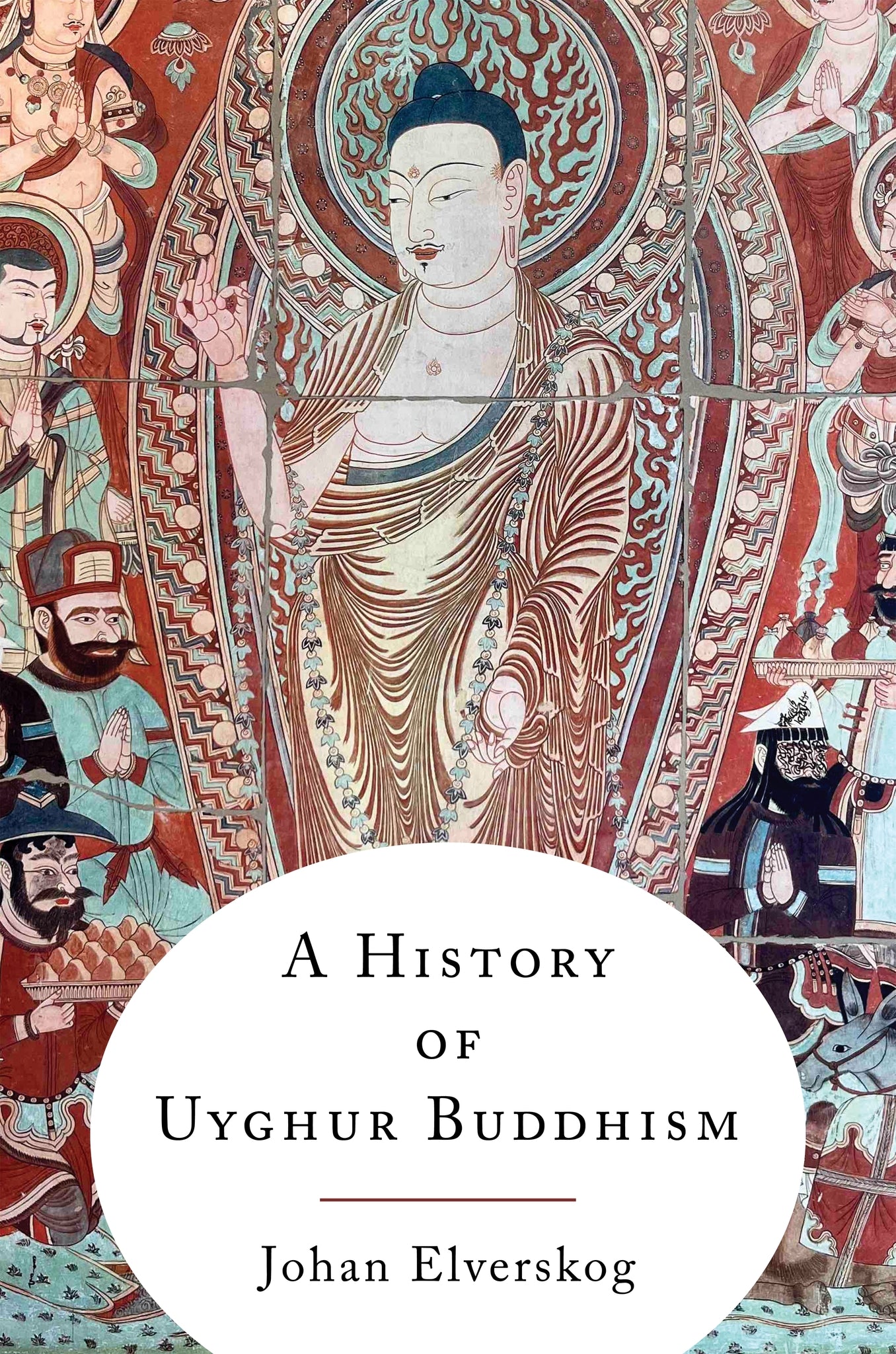
Today, most Uyghurs are Muslims. For centuries, however, Uyghurs were Buddhists. By around 1000 CE, they, like many of their neighbors, had decisively turned toward the Dharma, and a golden age of Uyghur Buddhism flourished under the Mongol empire. Dwelling along the Silk Road in what is now northwestern China, they stood at the center of Buddhist Eurasia, linking far-flung regions and traditions. But as Muslim power grew, Uyghur Buddhists converted to Islam, rewriting their past and erasing their Buddhist history.
This book presents the first comprehensive history of Buddhism among the Uyghurs from the ninth to the seventeenth century. Johan Elverskog traces how the Uyghurs forged their distinctive tradition, considering a variety of social, political, cultural, and religious contexts. He argues that the religious history of the Uyghurs challenges conventional narratives of the meeting of Buddhism and Islam, showing that conversion took place gradually and was driven by factors such as geopolitics, climate change, and technological innovation. Elverskog also provides a nuanced understanding of lived Buddhism, focusing on ritual practices and materiality as well as the religion’s entanglements with economics, politics, and violence. A groundbreaking history of Uyghur Buddhism, this book makes a compelling case for the importance of the Uyghurs in shaping the course of both Buddhist and Asian history.


The History of Uyghur Buddhism continues [the] important project of reclaiming the Uyghurs’ under-appreciated Buddhist history. ... [a] sophisticated chronicle.
A History of Uyghur Buddhism is like a long-awaited homecoming. Elverskog has produced a beautifully no-frills, understatedly direct writing style charting the Uyghur contribution to Buddhism. His story of the Uyghur Buddhists is, without exaggeration, a delight to read that will be hard to replicate for some years to come.
A History of Uyghur Buddhism is an astoundingly useful and accessible work, and one that will change the scholarly discourse and teaching around the history of Uyghurs, Xingjian, and Central Asia. Thanks to Elverskog, scholars who have previously been at sea with pre-Islamic Uyghur history will now benefit from decades of accumulated scholarship from the around the world.
A History of Uyghur Buddhismis an ambitious and valuable study that shifts the study of Buddhism away from narrow civilizational boundaries and toward a broader Eurasian frame. By grounding religious change in institutions, translation, and political economy, Elverskog not only redefines the place of the Uyghurs in Buddhist history but also offers a model for studying multilingual and multi-confessional archives with precision.
This remarkable book captivates readers interested in either history or Buddhism or the interdisciplinary study of both in the region.
[A] highly accessible and comprehensive history... Recommended.
Employing an impressive range of scholarly tools, Elverskog paints a fascinating portrait of Uyghur Buddhism, demonstrating that the Uyghurs were not simply bystanders as Buddhism made its way along the Silk Road from India to China. They developed their own important tradition of Buddhist practice, one that had largely been forgotten, until now.
— Donald S. Lopez Jr., University of Michigan
Elverskog masterfully tells a powerful and original story about Uyghur Buddhism, correcting a long-standing public misunderstanding that Uyghurs have always been Muslim. A History of Uyghur Buddhism is notable for its narrative briskness, analytical rigor, and imaginative verve.
— Eugene Y. Wang, author of Shaping the Lotus Sutra: Buddhist Visual Culture in Medieval China
A History of Uyghur Buddhism is, to put it mildly, an impressive achievement. Elverskog demonstrates a masterful command of the relevant sources based on ancient, medieval, and early modern texts as well as newly discovered manuscripts and archaeologically recovered materials, and the book is enriched by informative maps and illuminating figures.
— Victor H. Mair, editor of The Columbia History of Chinese Literature and The Columbia Anthology of Traditional Chinese Literature
List of Illustrations
Acknowledgments
Introduction
1. Becoming Buddhist
2. Buddhist Politics
3. Buddhist Economics
4. Uyghur Buddhisms
5. Becoming Muslim
Conclusion
Notes
Bibliography
Index