


Some error occured while loading the Quick View. Please close the Quick View and try reloading the page.
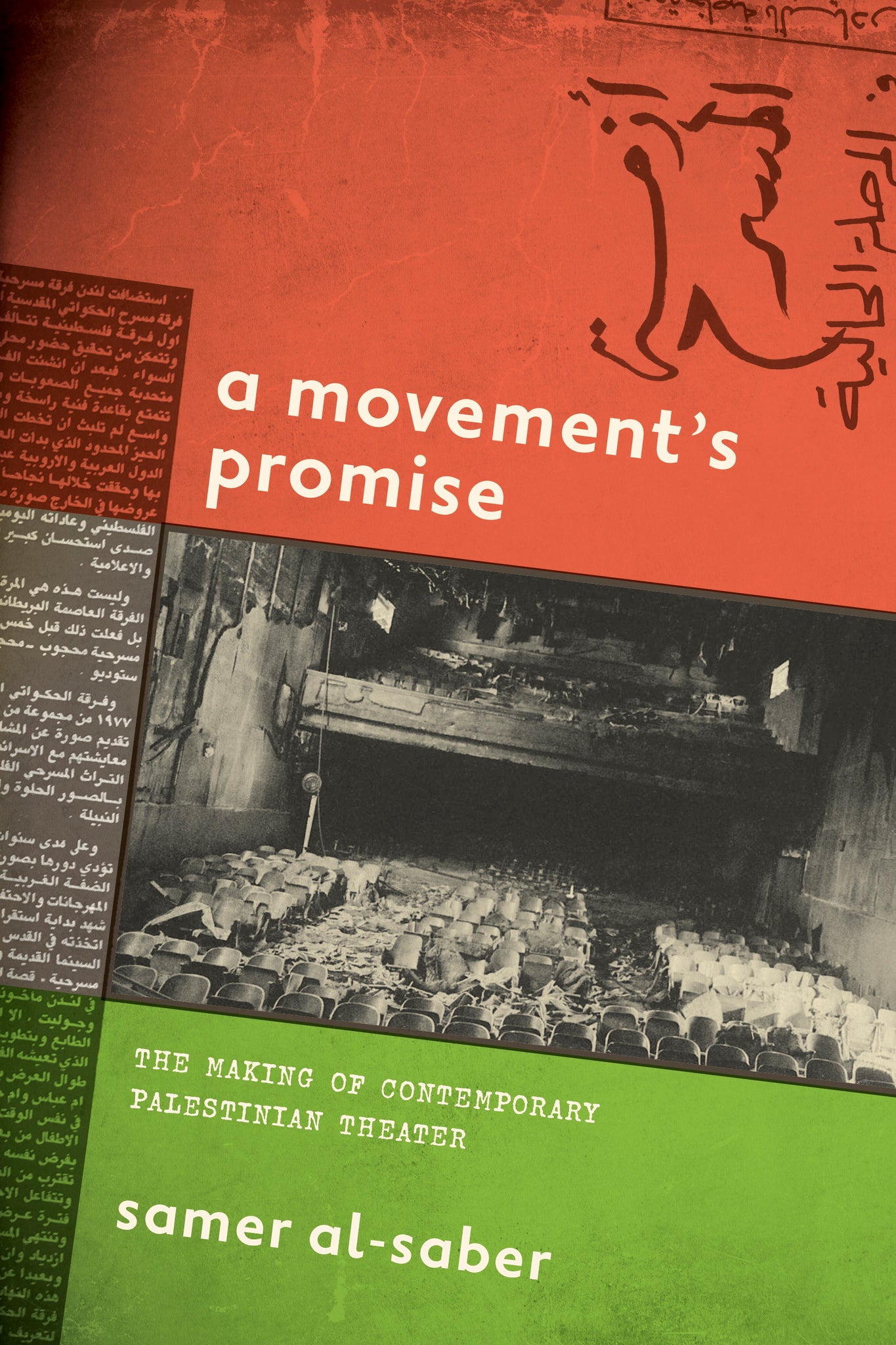
Starting in the 1970s, Palestinian theater flourished as part of a Palestinian cultural spring. In the absence of local radio, television, and uncensored journalism, theater production became the leading form of artistic expression, and Palestinian theater artists self-identified as a movement. Although resistance was not their sole function, these theater makers contributed to an active cultural resistance front. With this book, Samer Al-Saber tells the story of the Palestinian Theater Movement over nearly three decades, as they created plays and productions that articulated versions of Palestinian identity, critiqued social norms, celebrated and extended Palestinian cultural values, and challenged the power disparity created by the Occupation.
The struggles between Palestinian theater artists and Israeli authorities form the central relationships in this history. Al-Saber juxtaposes the agency of Palestinian theater artists, in their determination to perform against immense challenges, with the power of Israeli authorities to grant or deny permission to theatrical productions. The legal structure of institutionalized censorship prevented Palestinian artists from expressing their chosen message, and the theater movement's search for permission to perform illuminates the disparity in power between the occupier and the occupied. In writing the first history of the Palestinian Theater Movement, Al-Saber amplifies necessary voices in this Palestinian cultural history, told from below.


"Palestine has been, and remains, a global epicenter of insurgent theater. With depth and authority, Samer Al-Saber tells the story of a vibrant theater culture under occupation, but not obsessed with occupation. Illuminating, critical, and timely, this is cultural history at its best." —Robin D. G. Kelley, author of Freedom Dreams: The Black Radical Imagination
"Samer Al Saber's A Movement's Promise is a pioneering history of modern Palestinian theater in its 'golden years' of the 1970s, when it was a principal instrument of cultural resistance. Its use of previously unavailable archival material renders it an indispensable source for researchers and social historians of culture in the Arab World." —Salim Tamari, author of The Great War and the Remaking of Palestine
"To preserve a certain memory and keep it alive, it's important to tell its story. This is what Samer Al-Saber accomplishes in his significant book, A Movement's Promise.... Al-Saber situates the Palestinian theatrical movement as authentic and impactful in this important work." —Hadia Mousa, Arab Stages
"Al-Saber thus demonstrates that the character of the Palestinian theater movement was shaped by both a set of political ideals and its material conditions. Against this backdrop, however, the style of Palestinian theater takes on its own distinct character that cannot be reduced to its political context." —Marissa Fenley, Critical Inquiry
1. In the Shadow of War, Before 1967 and After
2. At the Cross and a Theater for Many Reasons, 1967–1970
3. A Movement Is Born, 1970–1973: Balalin Lights "The Darkness"
4. Wrestling with Commitments, Division, and Arrests, 1973–1977
5. A Movement Reconstituted, 1977–1981: El-Hakawati's Trinity, Sanabel's Cause, and a League of Their Own
6. Uncertainty, Censorship, and the Permission to Perform, 1981–1984
7. A Movement Actualized, 1984–1986: The Building, the March, and El-Hakawati Era
8. Intifada in the Streets and Crisis in the Theater, 1987–1990
9. A Movement Transformed, 1990 to Oslo: Al-Kasaba's Star-Crossed Lovers
Conclusion: Besieged NGOs and a Movement in Lore
Acknowledgments
Notes
Bibliography
Index