


Some error occured while loading the Quick View. Please close the Quick View and try reloading the page.
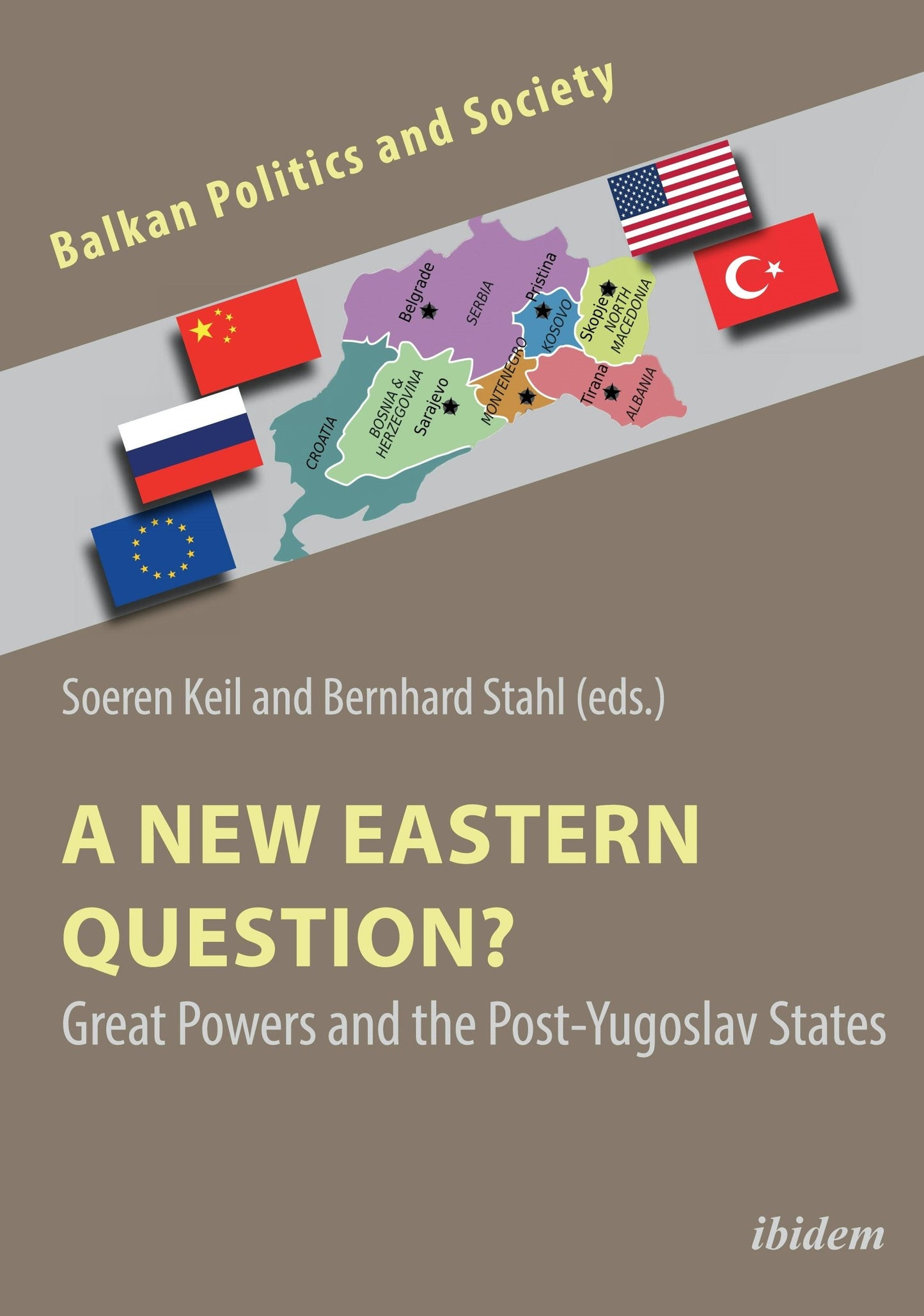
This compilation of essays by scholars from the region, Western Europe, and the US, explores the intersection of international politics in the post-Yugoslav states with a focus on the influence and impact of the European Union, the United States, Russia, China, and Turkey. The implications of external actors’ policy in the region for its Euro-Atlantic integration, its security, and stability are examined and discussed. In assessing the importance of the post-Yugoslav states for the EU and US and the current trend of disengagement by these two democratic actors in the region, answers are revealed regarding the question whether we are seeing a new Eastern Question emerging in the post-Yugoslav states. Likewise, when looking at the role of Russia, China, and Turkey in the region—and in contrast to European and US policies—, it becomes obvious to what extent the region, once again, is becoming the playground of Great Power games and wider geopolitical strategic interests.
The analytical time frame covers the period 1991–2018. The changes in the foreign policies of great powers are explored as they relate to the institutional set-up of the region. For instance, do the changes affect the EU’s hegemony in the region? Do Russia, China, and Turkey actively contribute to changing the rules of the game in the region—be it the accession process or regional cooperation?


Soeren Keil, PhD, is Reader in Politics and International Relations, and Director of the Centre for European Studies at Canterbury Christ Church University, UK.
Bernhard Stahl, PhD, is Professor of International Politics at the University of Passau, Germany.