


Some error occured while loading the Quick View. Please close the Quick View and try reloading the page.
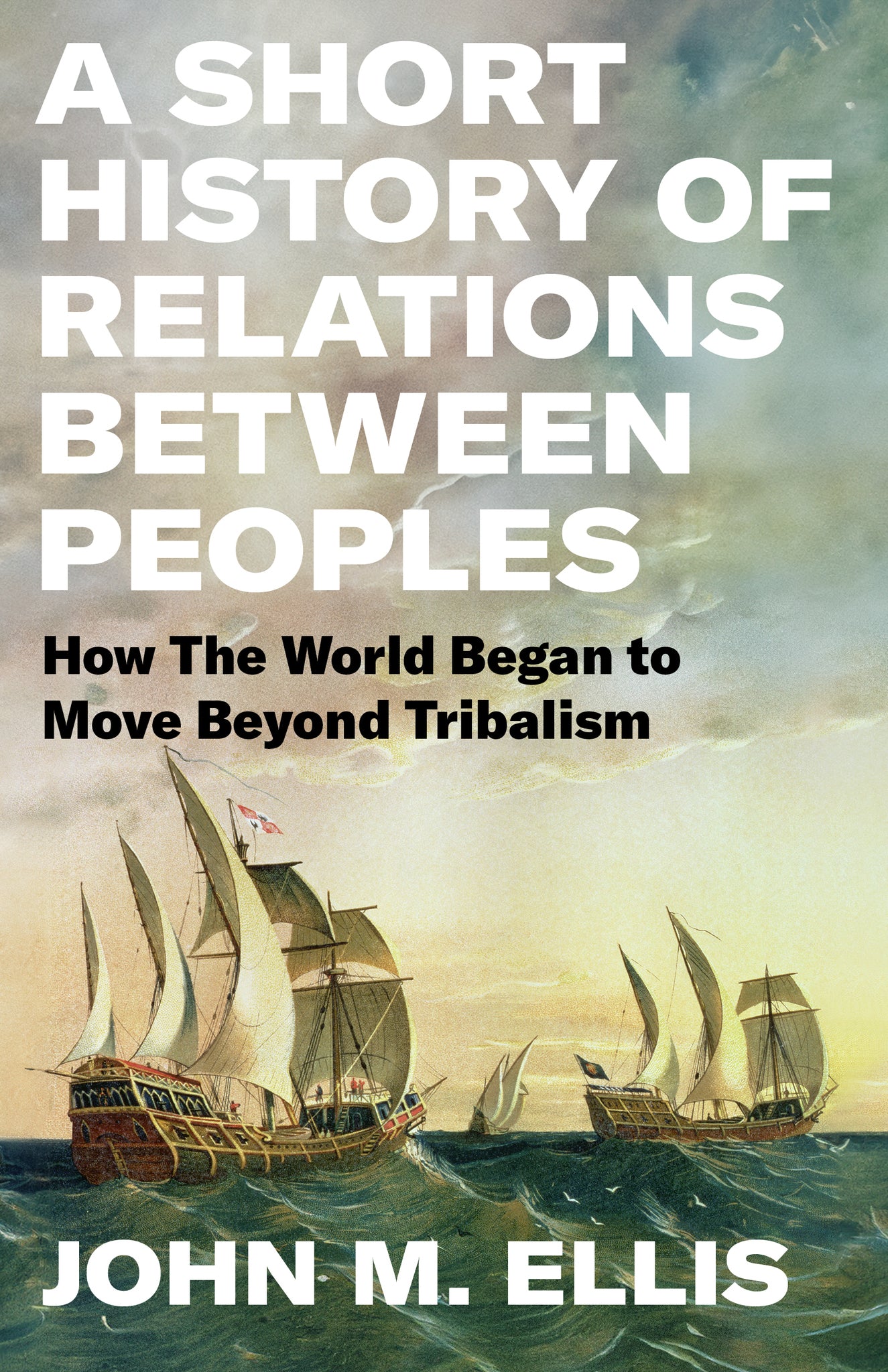
A Short History of Relations Between Peoples traces how the cultural attitudes that different peoples and nations had toward each other have undergone a profound and positive change during the last 500 years.
For most of recorded history, neighboring countries, tribes, and peoples everywhere in the world regarded each other with apprehension—when not outright fear and loathing. Tribal or racial attitudes were virtually universal, no one group being much better or worse in this respect than any other—and for good reason given the conditions of life before the modern era. But in the last 500 years, relations between different peoples have undergone a slow but profound change.
In this book, John Ellis explains how a confluence of discoveries, inventions, explorations, as well as social and political changes gave birth to a new attitude, one expressed succinctly in the Latin phrase: gens una sumus—we are all one people. This sentiment has by now become a modern orthodoxy, however inconsistently or even hypocritically it may sometimes be espoused. Ellis tells the story of how the transition happened, setting out the crucial stages in its progress as well as the key events that moved it forward, and identifying the individuals and groups that brought about the eventual dominance of this new outlook.
This is a compelling story in its own right, but it is also a useful inoculation against the destructive ideas of today’s race hustlers. An accurate grasp of how this crucial change happened contradicts everything that they want us to believe. Ideologies such as Critical Race Theory and Diversity, Equity, and Inclusion have everything touching on race and racism completely backwards.
The villains of their ignorant version of history are really the heroes. In explaining how the historical record makes nonsense of CRT, Ellis’s book amounts to the most fundamental and complete refutation of that pernicious ideology.


"The ideas that the Left uses to calumny Western civilization–accusing the West of violating equality, tolerance, and human rights—are exclusively the products of Western civilization. Sadly, the Left is getting away with this sleight-of-hand, as the would-be guardians of our civilization hang their heads and proclaim the West guilty as charged. A Short History of Relations Between Peoples is a bracing romp through five centuries of modernity, from 1500 forward, that provides the facts and arguments necessary to rebut the Left’s lies. The stunning accomplishments of European civilization should inspire gratitude and wonder; John Ellis explains why."
—Heather Mac Donald, author of When Race Trumps Merit and The War on Cops
"The most popular historical method of contemporary scholars is boiling down past civilizations into to pint-sized caricatures in order to effortlessly condemn them. It’s cheap and boring. And it hides a complicated and fascinating history. John Ellis is one of those vanishingly rare academics who looks at the popular prejudices of our time, which everyone thinks or desperately hopes are true, and dismantles them with wit, elegance, learning, and intelligence."
—Arthur Milikh, Executive Director of the Claremont Institute’s Center for the American Way of Life