


Some error occured while loading the Quick View. Please close the Quick View and try reloading the page.


— Routledge Encyclopedia of Philosophy
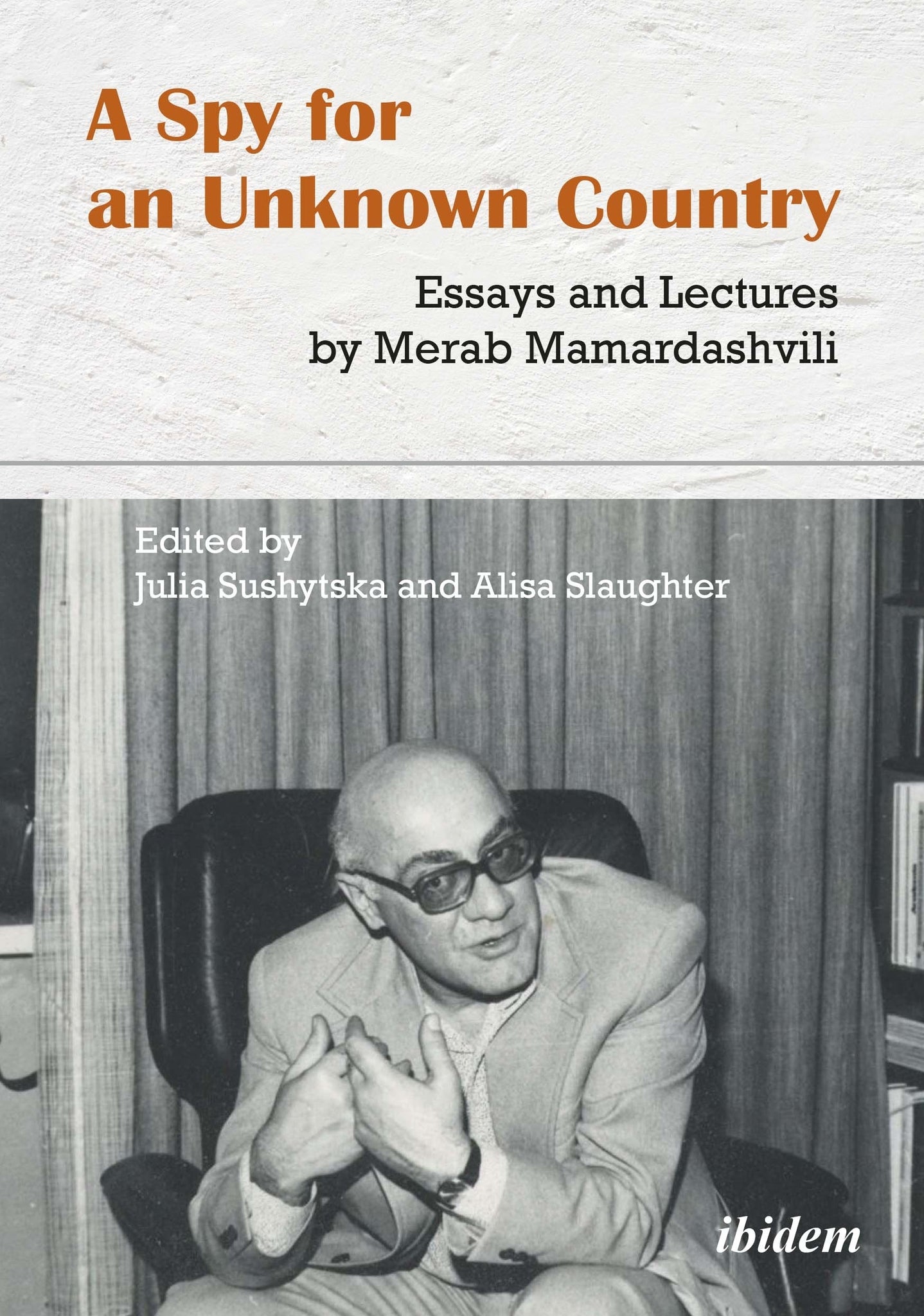
Merab Mamardashvili (1930–1990) was born in Soviet Georgia and occupied an atypical socio-political position on the margins of Europe and Russia. Early in his career, he had close contact with European philosophers active in the 1960s, but was banned from travel and visited the West again only at the end of his life, when the Soviet system was collapsing throughout Eastern Europe. From the vantage point of a scholar who lived in a totalitarian state, he emphasized the need for a vibrant civil society and the role of the humanities in maintaining it. Like many Soviet-era thinkers and philosophers, Mamardashvili disguised important thinking about freedom, democracy, and civil society in works about literature. When he died in 1990, he was known and respected in Eastern and Central Europe, and since then some of his writings have been translated into French, German, Italian, and Bulgarian, but very little into English. Jean-Pierre Vernant, a French historian specializing in ancient Greece, called Mamardashvili “the Georgian Socrates” for his singular style of thinking.
Julia Sushytska (PhD in Philosophy, SUNY Stony Brook) is an Assistant Professor in Comparative Studies in Literature and Culture at Occidental College and teaches philosophy courses at Whittier College. In 2015–2016 she was Visiting Professor at the Centre de Recherches en Philosophie Allemande et Contemporaine at the University of Strasbourg. Her research focuses on metics: those who find or place themselves in-between major cultures, languages, or ethnicities.
Alisa Slaughter (MA in Comparative Literature, University of Arizona; MFA in Creative Writing, Warren Wilson College) is a Professor of Creative Writing at the University of Redlands.
Table of Contents
Preface by Caryl Emerson
Introduction
Texts included in this volume
European Responsibility
Topology of a Path: Lectures on Proust
-Lecture 1
-Lecture 6
-Lecture 11
What Belongs to the Author
Авторское—Original Facsimile of “What Belongs to the Author”
Consciousness and Civilization
The “Third” State
On Civil Society
The Illegal Joy of Merab Mamardashvili by Annie Epelboin
Verwandlung, or the Human Crucible by Miglena Nikolchina
A Note on Primary and Secondary Literature
Selected Bibliography
Acknowledgments
Contributors