


Some error occured while loading the Quick View. Please close the Quick View and try reloading the page.
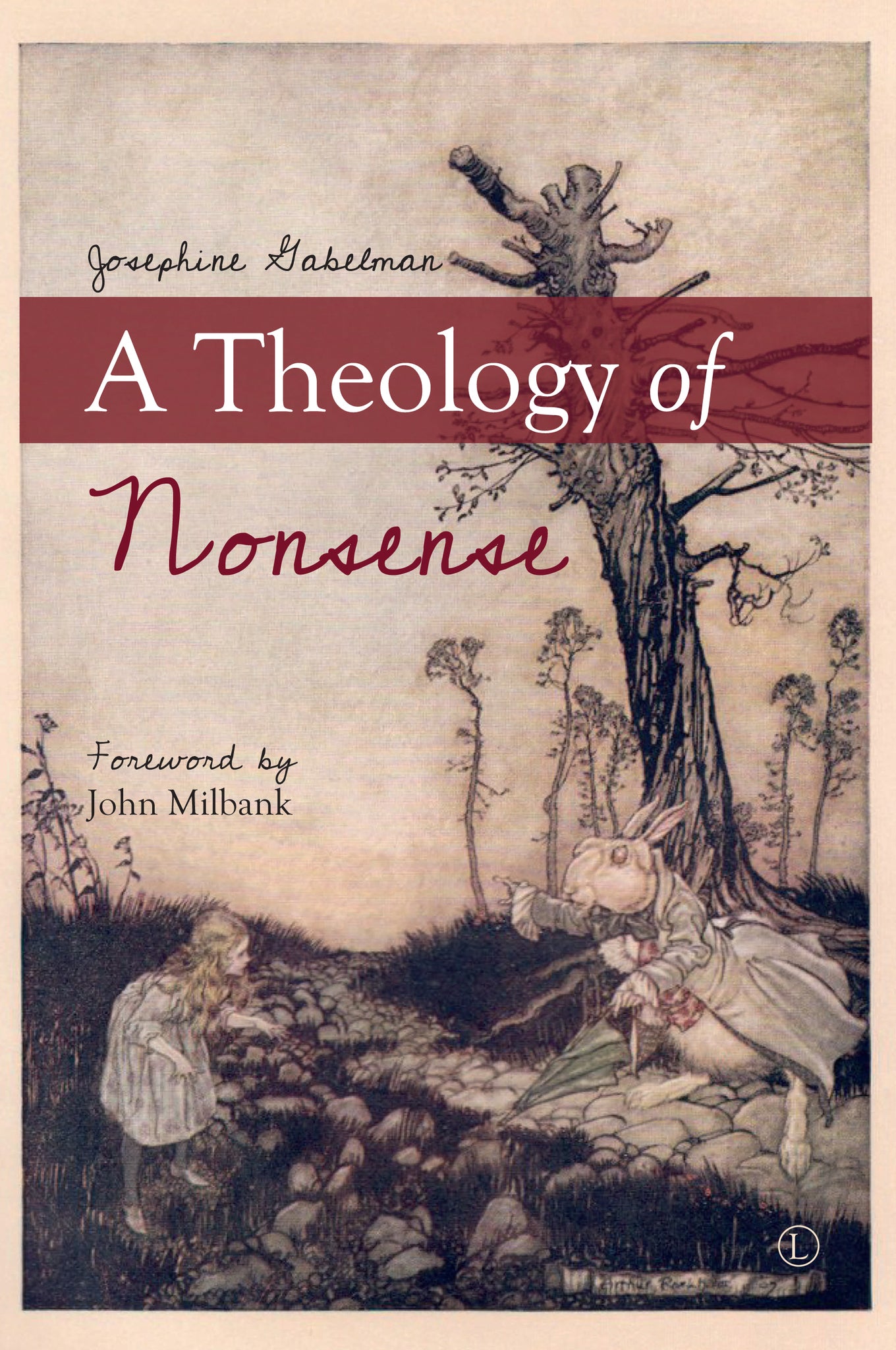
A defence of Christian theology as being both nonsensical and true, better served by comparison with the stories of Lewis Carroll than by rational apologetics.
There is within all theological utterances something of the ridiculous, perhaps more so in Christianity, given its proclivity for the paradoxical and the childlike. Few theologians are willing to discuss how consent to the Christian doctrine often requires a faith that goes beyond reason. There seems to be a fear that the association of theology with the absurd will give fuel to the sceptic's refrain: 'You can't seriously believe in all that nonsense.' Josephine Gabelman considers the legitimacy of the sceptic's objection and explores the possibility that an idea can be contrary to rationality and also true and meaningful using the systematic analysis of central stylistic features of literary non sense such as Lewis Carroll's Alice stories. Gabelman sets up a nonsense theology by considering the practical and evangelical ramifications of associating Christian faith with nonsense literature and, conversely, the value of relating theological principles to the study of literary nonsense. Ultimately, Gabelman says, faith is always a risk and a strictly rational apologetic misrepresents the nature of Christian truth.
There is within all theological utterances something of the ridiculous, perhaps more so in Christianity, given its proclivity for the paradoxical and the childlike. Few theologians are willing to discuss how consent to the Christian doctrine often requires a faith that goes beyond reason. There seems to be a fear that the association of theology with the absurd will give fuel to the sceptic's refrain: 'You can't seriously believe in all that nonsense.' Josephine Gabelman considers the legitimacy of the sceptic's objection and explores the possibility that an idea can be contrary to rationality and also true and meaningful using the systematic analysis of central stylistic features of literary non sense such as Lewis Carroll's Alice stories. Gabelman sets up a nonsense theology by considering the practical and evangelical ramifications of associating Christian faith with nonsense literature and, conversely, the value of relating theological principles to the study of literary nonsense. Ultimately, Gabelman says, faith is always a risk and a strictly rational apologetic misrepresents the nature of Christian truth.

Price: $29.99
Pages: 236
Publisher: Boydell & Brewer Inc.
Imprint: Lutterworth Press
Publication Date:
26 October 2017
Trim Size: 9.02 X 5.98 in
ISBN: 9780718895198
Format: Paperback
BISACs:
RELIGION / Christian Theology / General, Christianity, Theology

If this doesn't disturb the frowning unibrow on our pallid hyper-rationalist foreheads, nothing will. I read it as an extended meditation on Chesterton's insight that a maniac isn't someone who has lost his reason, but someone who has lost everything except his reason. Gabelman, reminding us how there are more things in heaven and earth than are dreamt of in a world of iron logic, shows the value of nonsense without taking refuge in nonsense.
— MICHAEL WARD, Fellow of Blackfriars Hall, Oxford, and Professor of Apologetics, Houston Baptist University
Josephine Gabelman exhibits a high-spirited belief that theological redescriptions of the world can disclose that world to us more fully. She combines a Wildean delight in pointing out the failure of narrowly conceived 'realism' as a literary method (because of the way it starves the human imagination's innate and essential striving for mythopoetic meaning) with a performance of something like what Dietrich Bonhoeffer once called 'hilaritas': in her case, a confidence that, in its radicalness, a Christian mythopoesis discloses the world's truest and surest goods. It is a bold and exhilarating book.
— BEN QUASH, Professor of Christianity and the Arts, King's College London
A provocative and probing exploration of the senses in which Christian theology, by being faithful to its central premise and point of departure, is bound always to appear 'nonsensical' to those wedded not just to particular rationalities, but to 'rationality' as such as a primary desideratum and aspiration to be privileged above all others. The author demonstrates persuasively that reason in its highest mode may be something rather different, and better suited to the theological circumstance.
— TREVOR HART, Professor, University of St. Andrews
This book begins with an invocation of Jane Austen at her wittiest, on the matter of balls and boredom . . . One might say that Josephine Gabelman has more boldly suggested than anyone hitherto that the Christian life, if it is true to the Christian vision, should be more like a ball than a conversation - however fascinating.
— JOHN MILBANK, Author, Theology and Social Theory
— MICHAEL WARD, Fellow of Blackfriars Hall, Oxford, and Professor of Apologetics, Houston Baptist University
Josephine Gabelman exhibits a high-spirited belief that theological redescriptions of the world can disclose that world to us more fully. She combines a Wildean delight in pointing out the failure of narrowly conceived 'realism' as a literary method (because of the way it starves the human imagination's innate and essential striving for mythopoetic meaning) with a performance of something like what Dietrich Bonhoeffer once called 'hilaritas': in her case, a confidence that, in its radicalness, a Christian mythopoesis discloses the world's truest and surest goods. It is a bold and exhilarating book.
— BEN QUASH, Professor of Christianity and the Arts, King's College London
A provocative and probing exploration of the senses in which Christian theology, by being faithful to its central premise and point of departure, is bound always to appear 'nonsensical' to those wedded not just to particular rationalities, but to 'rationality' as such as a primary desideratum and aspiration to be privileged above all others. The author demonstrates persuasively that reason in its highest mode may be something rather different, and better suited to the theological circumstance.
— TREVOR HART, Professor, University of St. Andrews
This book begins with an invocation of Jane Austen at her wittiest, on the matter of balls and boredom . . . One might say that Josephine Gabelman has more boldly suggested than anyone hitherto that the Christian life, if it is true to the Christian vision, should be more like a ball than a conversation - however fascinating.
— JOHN MILBANK, Author, Theology and Social Theory
Foreword: Theology as Anastrophe by John Milbank
Acknowledgements
Prologue: Less Rational, But More Like a Ball
Introduction: A Brief History of Faith and Reason
Contemporary Cognate Projects
PART I: Christian Unreason
1. The Paradoxical
Nonsense and Paradox
Christianity and Paradox
Who is God?
How Can I Relate to God?
How Does God Relate to the World?
Conclusion: The Wait for Synthesis
2. The Anarchic
Nonsense and Anarchy
Christianity and Anarchy
The Two Realms
Theological Estrangement
Constructive Disturbance
Conclusion: "Embodied Twilight"
3. The Childlike
Nonsense and the Childlike
Christianity and the Childlike
Simplicity
Wonder
Trust
Make-Believe
Conclusion: "A childhood into which we have to grow"
PART II: Celestial Nonsense
4. Nonsense Theology
Jerusalem and Wonderland
The Logic of Nonsense
The Great Reversal
Salvific Extravagance
Evangelizing Nonsense
Conclusion: The Lunatic's Risk
Bibliography
Index
Acknowledgements
Prologue: Less Rational, But More Like a Ball
Introduction: A Brief History of Faith and Reason
Contemporary Cognate Projects
PART I: Christian Unreason
1. The Paradoxical
Nonsense and Paradox
Christianity and Paradox
Who is God?
How Can I Relate to God?
How Does God Relate to the World?
Conclusion: The Wait for Synthesis
2. The Anarchic
Nonsense and Anarchy
Christianity and Anarchy
The Two Realms
Theological Estrangement
Constructive Disturbance
Conclusion: "Embodied Twilight"
3. The Childlike
Nonsense and the Childlike
Christianity and the Childlike
Simplicity
Wonder
Trust
Make-Believe
Conclusion: "A childhood into which we have to grow"
PART II: Celestial Nonsense
4. Nonsense Theology
Jerusalem and Wonderland
The Logic of Nonsense
The Great Reversal
Salvific Extravagance
Evangelizing Nonsense
Conclusion: The Lunatic's Risk
Bibliography
Index