


Some error occured while loading the Quick View. Please close the Quick View and try reloading the page.
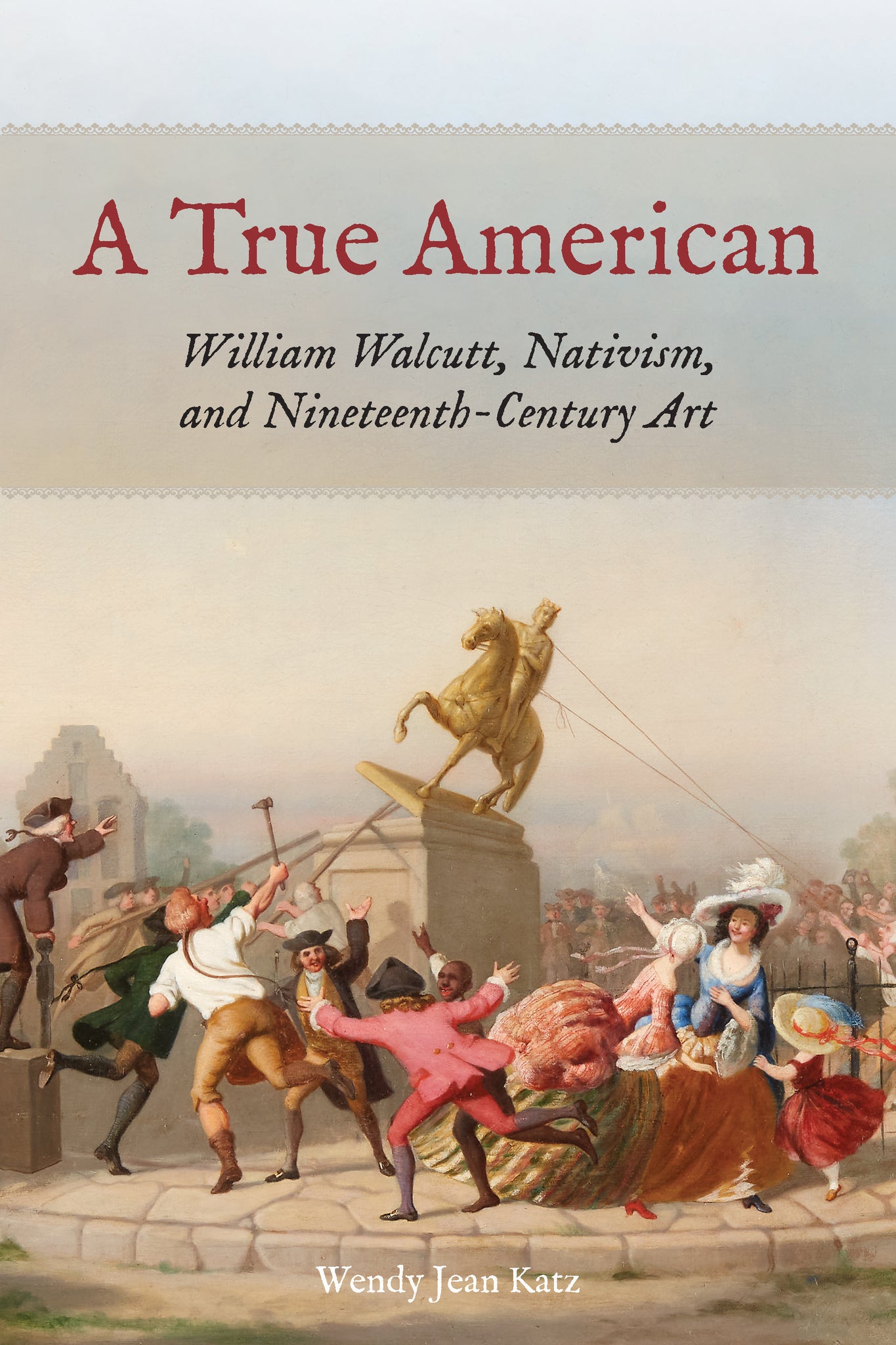
This book argues that nativism, the hostility especially to Catholic immigrants that led to the organization of political parties like the Know-Nothings, affected the meaning of nineteenthcentury American art in ways that have gone unrecognized. In an era of industrialization, nativism’s erection of barriers to immigration appealed to artisans, a category that included most male artists at some stage in their careers. But as importantly, its patriotic message about the nature of the American republic also overlapped with widely shared convictions about the necessity of democratic reform. Movements directed toward improving the human condition, including anti-slavery and temperance, often consigned Catholicism, along with monarchies and slavery, to a repressive past, not the republican American future. To demonstrate the impact of this political effort by humanitarian reformers and nativists to define a Protestant character for the country, this book tracks the work and practice of artist William Walcutt. Though he is little known today, in his own time his efforts as a painter, illustrator and sculptor were acclaimed as masterly, and his art is worth reconsidering in its own right. But this book examines him as a case study of an artist whose economic and personal ties to artisanal print culture and cultural nationalists ensured that he was surrounded by and contributed to anti-Catholic publications and organizations. Walcutt was not anti immigrant himself, nor a member of a nativist party, but his kin, friends, and patrons publicly expressed warnings about Catholic and foreign political influence. And that has implications for better-known nineteenth-century historical and narrative art. Precisely because Walcutt’s profile and milieu were so typical for artists in this period, this book is able to demonstrate how central this supposedly fringe movement was to viewers and makers of American art.

Price: $33.00
Pages: 176
Publisher: Fordham University Press
Imprint: Fordham University Press
Publication Date:
01 February 2022
Trim Size: 9.00 X 6.00 in
ISBN: 9780823298570
Format: Paperback
BISACs:
ART / Movements / Modernism, HISTORY / United States / 19th Century, SOCIAL SCIENCE / Emigration & Immigration

Arriving in New York City from small-town Ohio in 1847, William Walcutt produced prints, paintings and public sculptures that Wendy Katz argues were supported by circles hostile to “foreign” influences. Skillfully examining the output of this little-known figure against a society divided by slavery, immigration and religion, she makes a case for a “nativist iconography” pervading the broad swarth of his output: from periodical illustrations to his Commodore Oliver Hazard Perry Monument (Cleveland). Uniting artisan culture with elite patronage, Walcutt’s career provides Katz with an ideal lens for her fresh, insightful and timely study of antebellum American art.---Katherine Manthorne, Professor of Modern Art of the Americas, Graduate Center, City University of New York
Art history, cultural history, and political history are often taken as separate fields of inquiry. Professor Katz highlights their intersections. This resourcefully-researched study of mid-nineteenth century American artist and illustrator William Walcutt and his circle of New York City artists, artisans, and publishers traces the development of nationalist themes in antebellum popular art. It also reminds us that the creators and purveyors of art were, like many contemporaneous craftsmen, facing challenges posed by mechanization and emerging corporate power that led some of them to connect with the nationalist and nativist urges that helped fracture the traditional political landscape.---Dale T. Knobel, Professor of History Emeritus, Denison University.
The rise of hundreds of antebellum publications and their influence on political, economic, and social life can be compared to the twenty-four-hour news cycle and technology of recent decades. Perhaps Katz will in the future review our era in as much detail as this enlightening and engaging text. Throughout, Katz provides the American ideal and truthful identity developed through art, politics, and society. Art is a reflection of life and life is a reflection of art.
An excellent study of impressive depth and intellectual insight, this volume will certainly be of great use to both scholars and serious students of the 19th-century visual culture of the US. Highly recommended.
A True American is of interest to scholars of the early republic beyond whatever relevance it has to twenty-first century discussions of nativism. It provides a wealth of visual sources for understanding the period as well as for teaching in the classroom, many of which have been under-examined by scholars. It is useful not only for scholars of nativism and anti-Catholicism but also for those interested in the history of the industrial book, providing a visual companion to the printed “mechanic accents” of the era. Moreover, A True American brings the visual culture of fraternal orders and artisan brotherhoods to life, allowing readers to glimpse the vibrant imagery that adorned these spaces.
Art history, cultural history, and political history are often taken as separate fields of inquiry. Professor Katz highlights their intersections. This resourcefully-researched study of mid-nineteenth century American artist and illustrator William Walcutt and his circle of New York City artists, artisans, and publishers traces the development of nationalist themes in antebellum popular art. It also reminds us that the creators and purveyors of art were, like many contemporaneous craftsmen, facing challenges posed by mechanization and emerging corporate power that led some of them to connect with the nationalist and nativist urges that helped fracture the traditional political landscape.---Dale T. Knobel, Professor of History Emeritus, Denison University.
The rise of hundreds of antebellum publications and their influence on political, economic, and social life can be compared to the twenty-four-hour news cycle and technology of recent decades. Perhaps Katz will in the future review our era in as much detail as this enlightening and engaging text. Throughout, Katz provides the American ideal and truthful identity developed through art, politics, and society. Art is a reflection of life and life is a reflection of art.
An excellent study of impressive depth and intellectual insight, this volume will certainly be of great use to both scholars and serious students of the 19th-century visual culture of the US. Highly recommended.
A True American is of interest to scholars of the early republic beyond whatever relevance it has to twenty-first century discussions of nativism. It provides a wealth of visual sources for understanding the period as well as for teaching in the classroom, many of which have been under-examined by scholars. It is useful not only for scholars of nativism and anti-Catholicism but also for those interested in the history of the industrial book, providing a visual companion to the printed “mechanic accents” of the era. Moreover, A True American brings the visual culture of fraternal orders and artisan brotherhoods to life, allowing readers to glimpse the vibrant imagery that adorned these spaces.
Wendy Katz is Professor of Art History at the University of Nebraska–Lincoln. The most recent of her books are Humbug! The Politics of Art Criticism in New York City’s Penny Press (Fordham University Press) and The Trans Mississippi and International Exposition of 1898: Art, Anthropology, and Popular Culture at the Fin de Siècle.