


Some error occured while loading the Quick View. Please close the Quick View and try reloading the page.
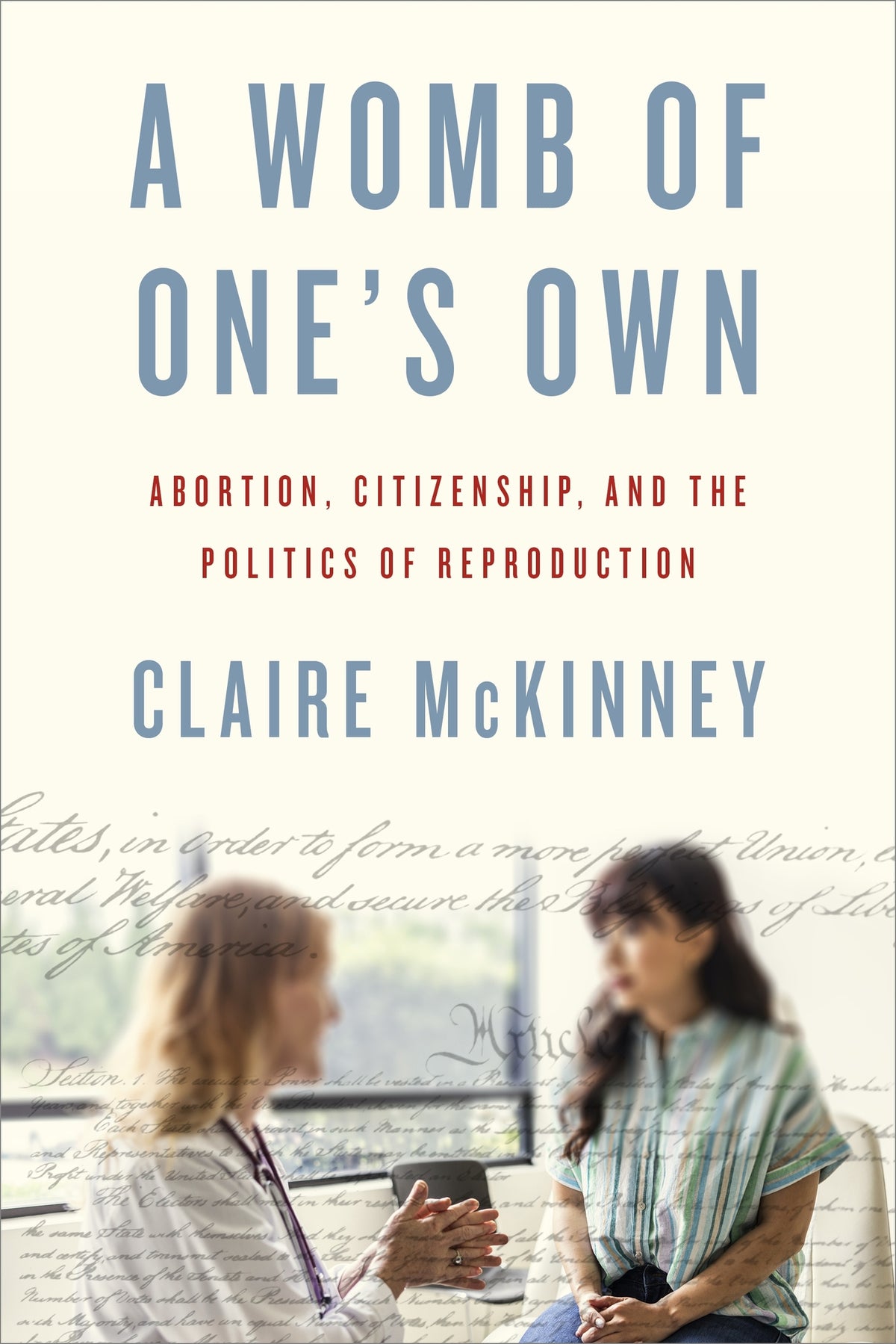
A powerful call to reconceive women’s reproductive rights by arguing to move beyond Roe for a new feminist politics of abortion
Following the Supreme Court's controversial decision in Dobbs v. Jackson, public debate over one's right to choose has dominated the landscape of American politics. In A Womb of One’s Own, Claire McKinney provides sharp, feminist insight into these shocking developments, exploring how medicine - and the question of abortion - have always shaped women's subordinate social and political roles.
Drawing on rich, archival research, as well as abortion case law, McKinney shows how doctors and other medical experts have been key political actors, either fighting for - or against - abortion access at different points in American history. Examining the 19th century anti-abortion physician’s campaign to criminalize abortion, 20th century movements for the liberalization of abortion, U.S. Supreme Court jurisprudence, and contemporary abortion politics, McKinney shows that the meaning of health, the reproductive body, and the political function of abortion law have often been influenced by what McKinney calls a “medicalized citizenship.” At this moment of extreme uncertainty in abortion politics, this new lens for thinking about how gender is made and remade through encounters with medicine and the law could not be more timely.
McKinney shows how state and medical authorities both clash and collude with one another, drawing and re-drawing the boundaries of gendered citizenship for women and pregnant people. Ultimately, A Womb of One’s Own underscores the surprising influence of medicine in politics, and its role in determining the proper treatment of women, their bodies, and their social and political roles.


"Over the past 150 years, medicine has operated as a political institution, defining women as reproductive subjects requiring expert governance rather than citizens capable of self-rule. McKinney argues that reclaiming abortion as a citizenship right – while reckoning with medicine's historical role in women’s subordination – is essential to feminism post-Dobbs. A Womb of One's Own is a powerful call for a feminist politics that holds liberty, equality, and health together as the inseparable conditions of full citizenship."
"In this excellently researched and compellingly argued book, McKinney puts abortion at the center of American politics. Feminists have long known that 'pro-life' is often code for 'controlling women,' but abortion is not just a problem for those with unwanted pregnancies, nor even for all women and queer persons who could become pregnant: it is a problem for all of us. McKinney demonstrates that, as a key ground on which women’s citizenship has become medicalized, abortion reveals the ways in which those in power manipulate the terms of citizenship to exclude certain groups from full membership and recognition and consideration. Whether women, immigrants, citizens of color, the poor, or LGBTQ+ persons, all of us -including the very doctors who wield power over abortion decisions -can be selected for exclusion on arbitrary bases when it seems convenient to those in power to control us. The role of reproduction in these exclusions and control is central. In the post-Dobbs era, this book is vital reading for the classroom and for feminist politics."