


Some error occured while loading the Quick View. Please close the Quick View and try reloading the page.
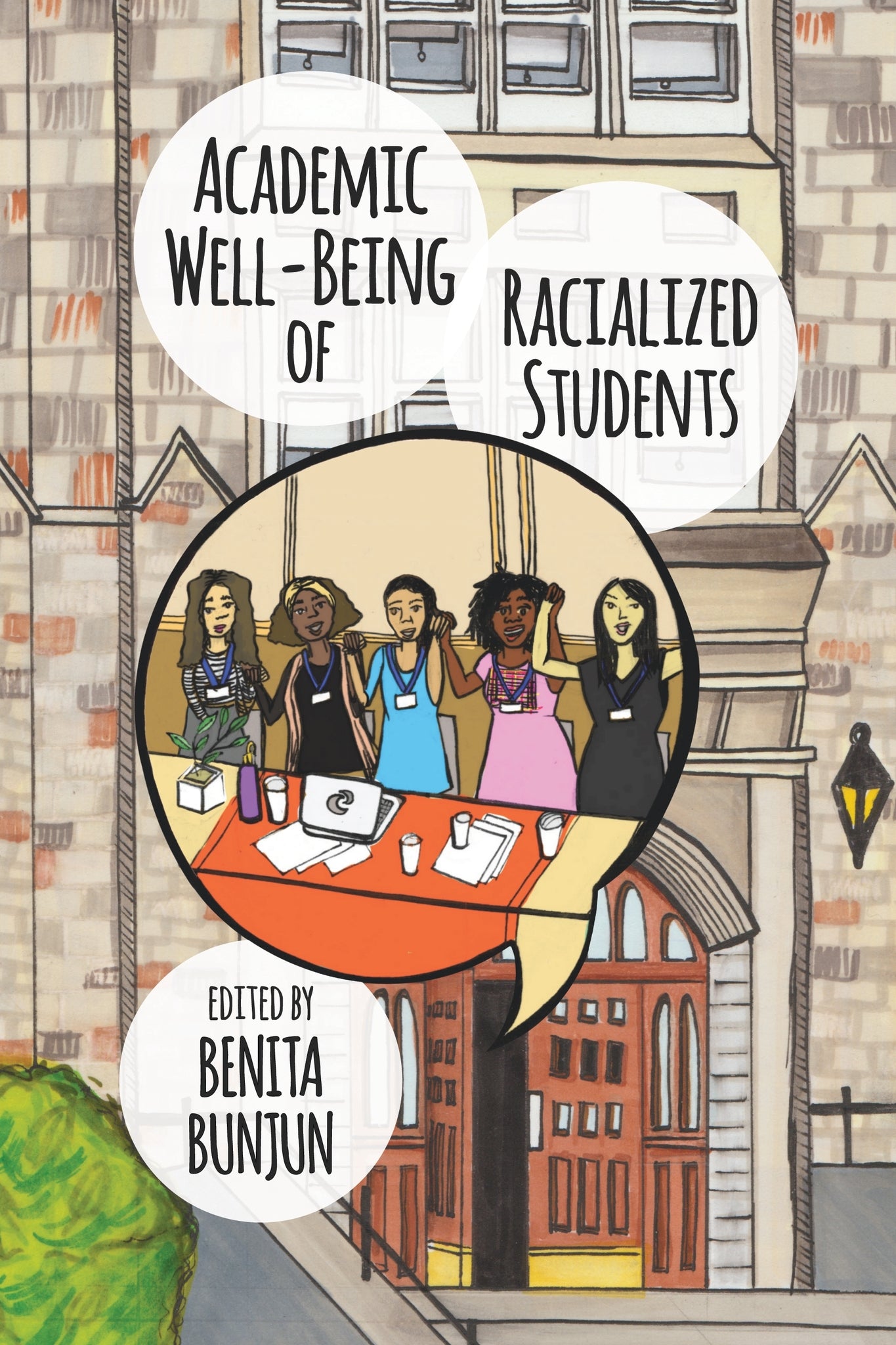
Canadian universities have an ongoing history of colonialism and racism in this white-settler society. Racialized students (Indigenous, Black and students of colour), who would once have been forbidden from academic spaces and who still feel out of place, must navigate these repressive structures in their educational journeys. Through the genres of essay, art, poetry and photography, this book examines the experiences of and effects on racialized students in the Canadian academy, while exposing academia’s lack of capacity to promote students’ academic well-being. The book emphasizes the crucial connections that racialized students forge, which transform an otherwise hostile environment into a space of intellectual collaboration, community building and transnational kinship relations. Meticulously curated by Dr. Benita Bunjun, this book is a living example of mentorship, reciprocity and resilience.
All royalties from this book will be donated to the Racialized Students Academic Network.


— Dr. Shelly Johnson (Mukwa Musayett), Canada Research Chair in Indigenizing Higher Education
This edited collection documents and makes visible what racialized students are experiencing in Canadian universities, including dealing with in-class micro-aggressions, yearning to be taught by full-time faculty members representing their own diverse backgrounds, witnessing the appropriation of ideas of non-white scholars by white scholars in academia, and unpacking how white-settler mentality is shaping their lives within Canadian post-secondary institutions. Initiatives, spaces and programs through which racialized students organize, support and mentor each other are also well highlighted, both as a way to show how empowerment and resiliency exist in the white-settler institution that is Western academia, and, implicitly, as best practices that Canadian institutions can adopt toward decolonization and equity, if they realize and adapt.
— Jean Michel Montsion, Associate Professor, Canadian Studies Program, Department of Multidisciplinary Studies, Glendon College, York University
I am honored that Professor Bunjun has invited me to reflect on the teaching and mentoring relationships that we both experienced together. Our relationship has lasted nearly twenty-five years. I applaud this very important anthology of scholarly and narrative manuscripts of her students and peers. These writings have found a unique space for self-representation and knowledge production in pursuit of repressed and subjugated truths that combine our embodied memories of our origins in the racialized class, caste, sexual, gendered and ethnic stratifications that we carry with us from locations of former colonies or dominions within overseas and territorial empires.
— Dr. Yvonne Brown, Adjunct Professor, Department of Social Justice and Community Studies, Saint Mary’s University, and author of Dead Woman Pickney: A Memoir of Childhood in Jamaica
This timely collection highlights how BIPOC students rise to the challenge of building Indigenous worlds and anti-racist communities within the oppressive whiteness of the Canadian university. Educators have much to learn from BIPOC students about the ways in which the academy subjects them to the dictates of racial and colonial power. The survival strategies recounted here are deeply courageous and highly inspiring.
— Dr. Sunera Thobani, author of Exalted Subjects: Studies in the Making of Race and Nation in Canada
: A Note from Marginalized Students to Most Faculty by Beverlee MacLellan
: Centring the Academic Well-Being of Racialized Students by Benita Bunjun
: Intersections and Contradictions by Timi (Omotimilehin) Idris
: “It’s in the Past, Get over It!” Is It in the Past? by Vanessa Mitchell
: Nobodies to Everybody: Pervasive Appropriation and Marginalized Students by Fallen Matthews
: Where Are the Black Female Faculty? Employment Equity Policy Failures and the Overrepresentation of Whiteness by Isalean Phillip
: Decolonizing Intentions by Tammy Williams (Apukji’i E’pit)
: My Long Search for Safe Spaces for Black Learners by Wayne Desmond
: Spoken Word Saved My Life – Poetry as a Form of Resistance by Zain Meghji
: Taking a Stand: Privileging Indigenous Knowledge by Dorothy Christian (Cucw-la7)
: Envisioning an Intersectional Resilience Mentorship Program for Indigenous and International Students by Tammy Williams (Apukji’i E’pit)
: Brown Folks by Jotika Chaudhary Samant
: Towards Healing: Lessons in Surviving Academia from a Queer, Brown, Femme by Jotika Chaudhary Samant
: Settler-Migrant Relationships: A Brown Woman’s Journey by Nathalie Lozano-Neira
: The Embodied Transformation of a Racialized International Student on Coast Salish and Mi’kmaq Territories by Ahrthyh Arumugam
: A Way of Being: The Making of Transnational Kinship Relations in Institutions of Higher Learning by Benita Bunjun and Yvonne Brown
: Unbecoming: Decolonizing the Settler Gaze by Diane Obed
: Contributors
: Index