


Some error occured while loading the Quick View. Please close the Quick View and try reloading the page.
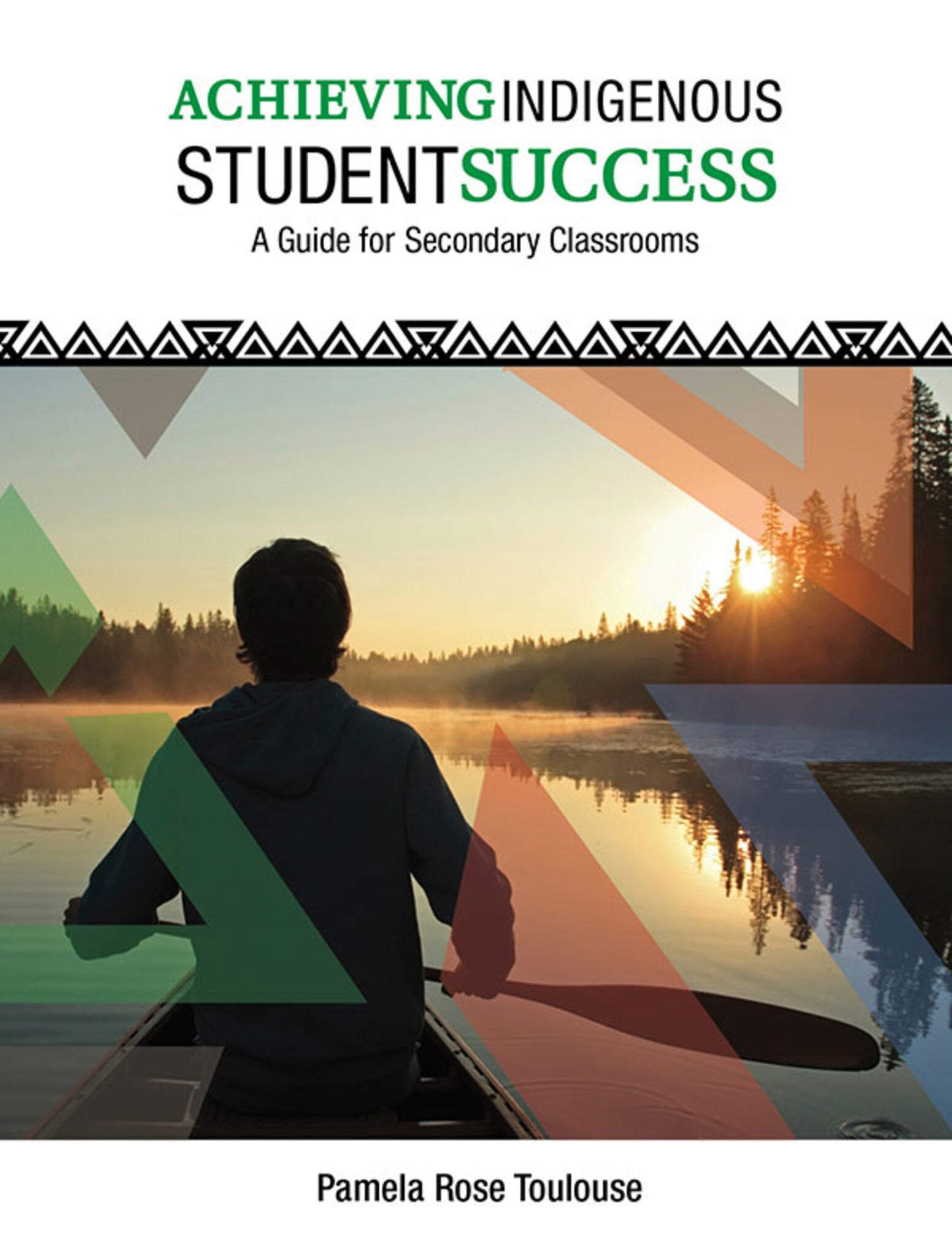
In Achieving Indigenous Student Success, author Pamela Toulouse provides strategies, lessons, and hands-on activities that support both Indigenous and non-Indigenous learners in the secondary classroom. Read chapters on topics such as:
- Indigenous Pedagogy and Classrooms Considerations
- Indigenous Self-Esteem and Mental Health Activities
- Differentiated Instruction and Bloom's Taxonomy
- Attrition, Retention, Transition, and Graduation Continuum
- Indigenous Themes and Material Resources
- Culturally Appropriate Secondary Lesson Plans by Subject (including English, Math, Science, History, Geography, Health, Physical Education, Drama, Music, Visual Arts, Technological Studies, Business Studies, Indigenous Worldviews, Guidance and Career Studies, and Social Studies and the Humanities)
This book is for all teachers of grades 9–12 who are looking for ways to infuse Indigenous perspectives into their courses. Ideas include best practices for retention/transition/graduation planning, differentiated instruction, assessment, and equity instruction. Using appropriate themes for curricular connections, the author presents a culturally relevant and holistic approach that helps to build bridges between cultures and fosters self-esteem in all students.


- Acknowledgments v
- Preface vii
- Introduction 1
- Who This Book Is For 1
- How to Use This Book 1
- Introduction to Part 1: Program Foundations 5
- An Holistic Approach 7
- The Foundation for an Effective Learning Cycle 8
- The Spiritual 8
- The Physical 10
- The Emotional 12
- The Intellectual 14
- Indigenous Innovations Across the Curriculum 16
- The Twins – Bimaadziwin and Windigos 19
- Secondary-School Teaching Strategies on Bimaadziwin/Windigos 21
- National Resources and Wise Practices 22
- Creating a Living Profile With Students 24
- Wheel of Life Teachings 27
- The Thirteen Moons 27
- The Four Colours 27
- East 27
- South 28
- West 29
- North 30
- Additional Curricular Connections on Mental Health and Self-Esteem Concepts 31
- Differentiated Instruction 33
- The Content 34
- The Process 35
- The Product 35
- The Learning Environment 36
- Examples of a DI Continuum Using Indigenous Content 36
- Bloom’s Revised Taxonomy 38
- Connecting Bloom’s Revised Taxonomy to the Ojibwe Living Wheel 39
- Remembering Questions (Level 1) and the 500 Nations 41
- Understanding Questions (Level 2) and the 500 Nations 41
- Applying Questions (Level 3) and the 500 Nations 41
- Analyzing Questions (Level 4) and the 500 Nations 41
- Evaluating Questions (Level 5) and the 500 Nations 41
- Creating Questions (Level 6) and the 500 Nations 42
- Resources 43
- Attrition 45
- Retention 46
- Transition 50
- Elementary to Secondary 50
- Secondary to Postsecondary 51
- Graduation 52
- A Critical Biography for Teachers and Education Professionals 55
- English 59
- Math 61
- Science 61
- History 62
- Geography 63
- Health and Physical Education 64
- Integrated Arts (Music, Drama, Visual Arts) 64
- Professional Development 65
- Connections to Indigenous Lifelong Learning Concepts 65
- Introduction to Part 2: Holistic Lesson Format 73
- English Lesson Plan 74
- Math Lesson Plan 80
- Science Lesson Plan 86
- History Lesson Plan 91
- Geography Lesson Plan 97
- Health and Physical Education Lesson Plan 104
- Drama Lesson Plan 110
- Music Lesson Plan 115
- Visual Arts Lesson Plan 119
- Technological Studies Lesson Plan 124
- Business Studies Lesson Plan 129
- Indigenous World-View Lesson Plan 134
- Guidance and Career Studies Lesson Plan 140
- Social Sciences and the Humanities Lesson Plan 145
- Appendix A: Maps 151
- Appendix B: Indigenous Names for First Nations and Inuit of Canada and Alternative Names for Indigenous Peoples of the United States 163
- References 171
- Image Credits 175