


Some error occured while loading the Quick View. Please close the Quick View and try reloading the page.
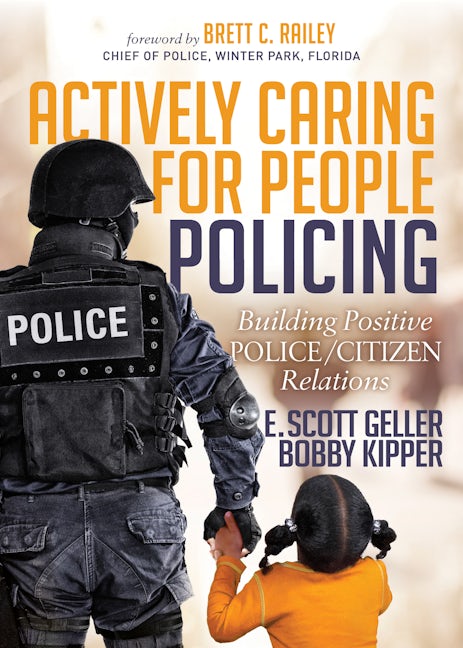
An AC4P culture can be fueled by AC4P Policing, and involves a paradigm shift regarding the role and impact of “consequences." With AC4P Policing, consequences are used to increase the quantity and improve the quality of desired behavior. Police officers are educated about the rationale behind using more positive than negative consequences to manage behavior, and then they are trained on how to deliver positive consequences in ways that help to cultivate interpersonal trust and AC4P behavior among police officers and the citizens they serve.
This teaching/learning process is founded on seven research-based lessons from psychology---the science of human experience. The first three lessons reflect the critical behavior-management fundamentals of positive reinforcement, observational learning, and behavior-based feedback. The subsequent four lessons are derived from humanism, but behaviorism or ABS is essential for bringing these humanistic principles to life. The result: humanistic behaviorism to enhance long-term positive relations between police officers and the citizens they serve, thereby preventing interpersonal conflict, violence, and harm.


E. Scott Geller, Alumni Distinguished Professor at Virginia Tech is a senior partner of Safety Performance Solutions, Blacksburg, VA. He has authored or coauthored 33 books, 82 book chapters, 259 magazine articles, and more than 350 research articles addressing the development and evaluation of behavior-change interventions to improve quality of life. Dr. Geller is a Fellow of the American Psychological Association, the Association for Psychological Science, the Association for Behavior Analysis International, and the World Academy of Productivity and Quality Sciences. He has received Lifetime Achievement Awards from the American Psychological Foundation and the International Organizational Behavior Management Network.
From Principles to Applications
Lesson 1: Employ More Positive Consequences
Lesson 2: Benefit from Observational Learning
Lesson 3: Improve with Behavioral Feedforward and Feedback
Lesson 4: Use More Supportive than Corrective Feedback
Lesson 5: Embrace and Practice Empathy
Lesson 6: Distinguish between Managing Behavior and Leading People
Lesson 7: Progress from Self-Actualization to Self-Transcendence
AC4P Policing in Action
AC4P Wristband Stories
Wristband Stories from the Field