


Some error occured while loading the Quick View. Please close the Quick View and try reloading the page.
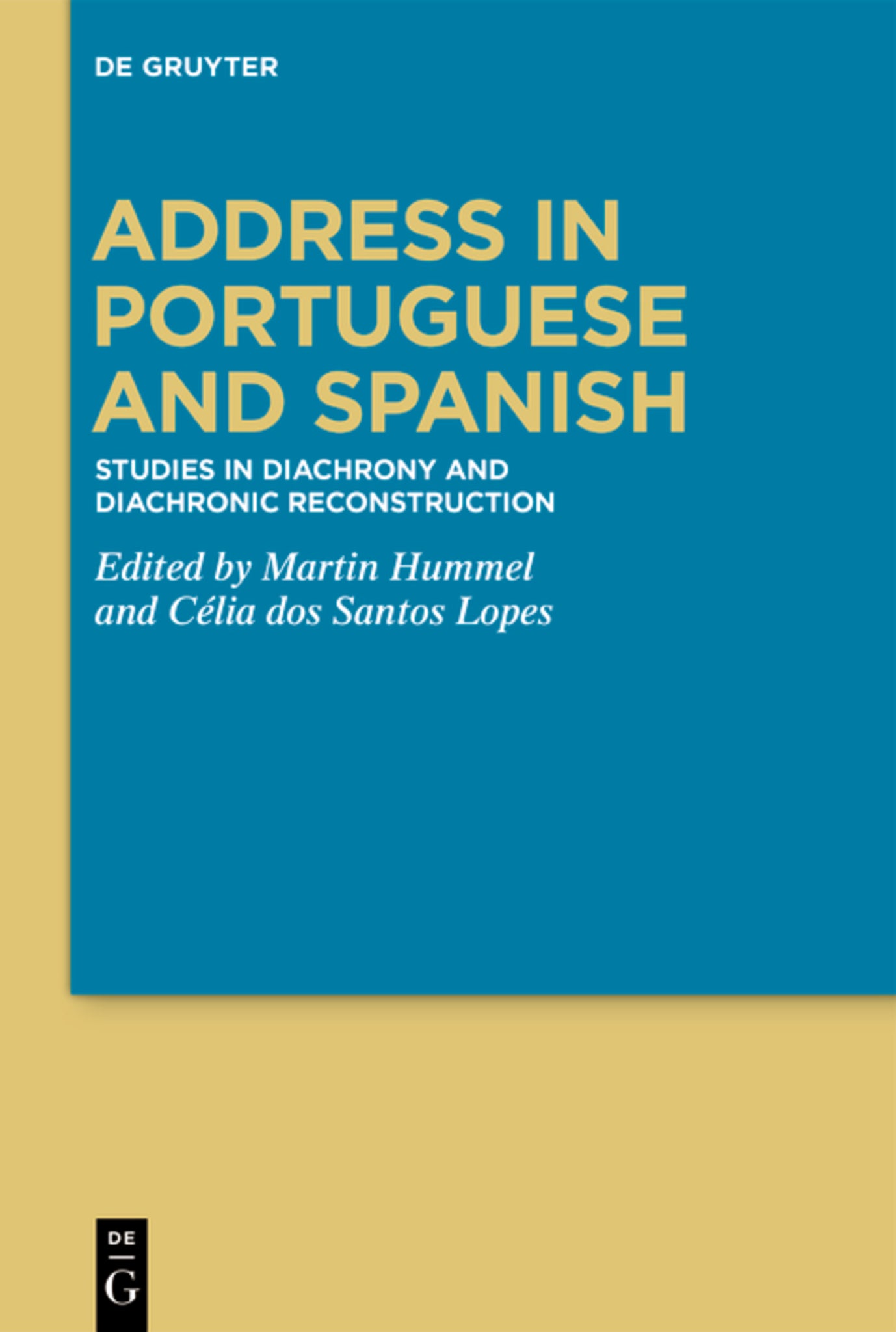
The volume provides the first systematic comparative approach to the history of forms of address in Portuguese and Spanish, in their European and American varieties. Both languages share a common history—e.g., the personal union of Philipp II of Spain and Philipp I of Portugal; the parallel colonization of the Americas by Portugal and Spain; the long-term transformation from a feudal to a democratic system—in which crucial moments in the diachrony of address took place. To give one example, empirical data show that the puzzling late spread of Sp. usted ‘you (formal, polite)’ and Pt. você ‘you’ across America can be explained for both languages by the role of the political and military colonial administration. To explore these new insights, the volume relies on an innovative methodology, as it links traditional downstream diachrony with upstream diachronic reconstruction based on synchronic variation. Including theoretical reflections as well as fine-grained empirical studies, it brings together the most relevant authors in the field.


Martin Hummel, University of Graz, Austria; Célia Regina dos Santos Lopes, Universidade Federal do Rio de Janeiro (UFRJ), Brazil.