


Some error occured while loading the Quick View. Please close the Quick View and try reloading the page.
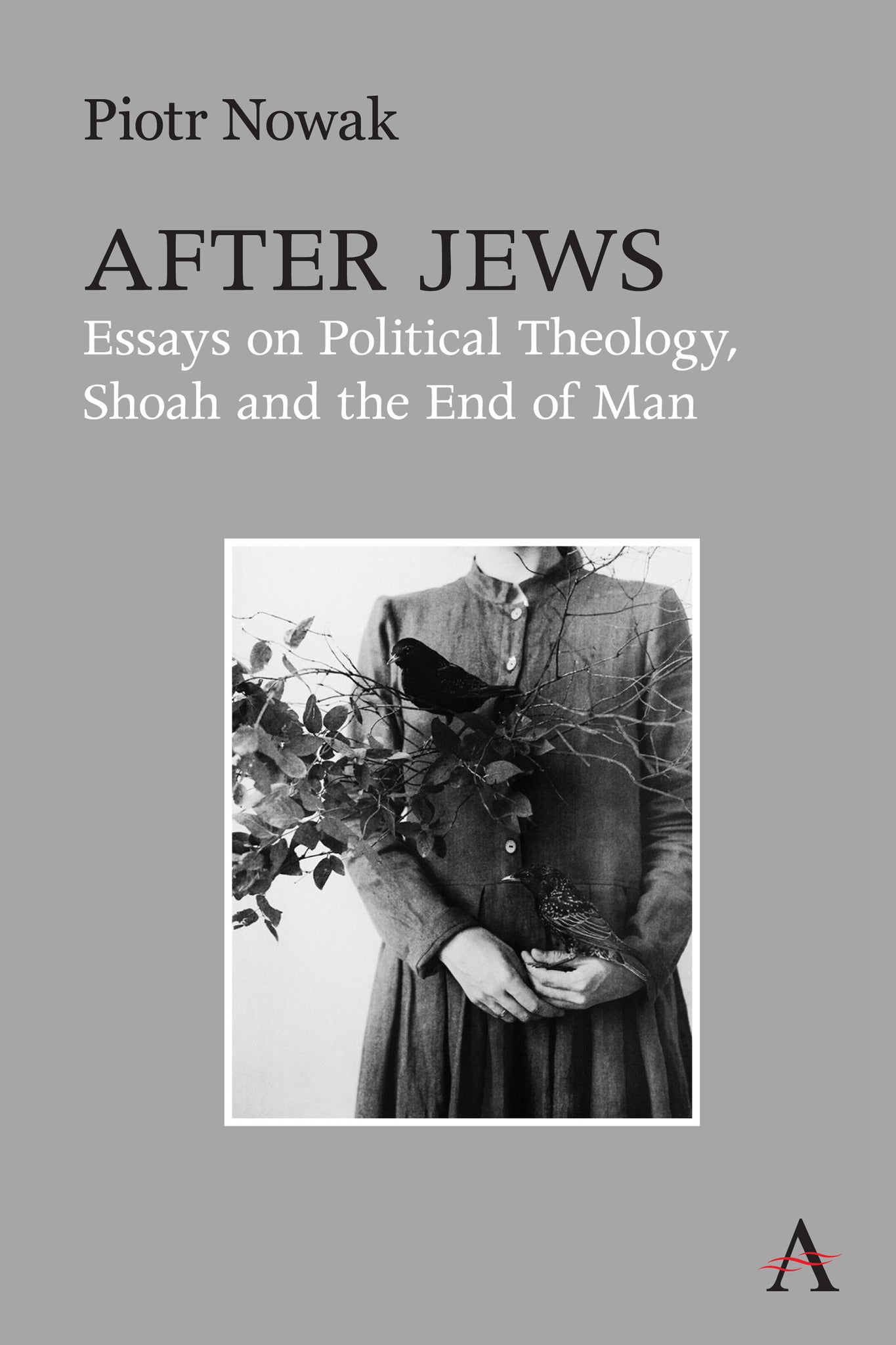
The basic idea of this book is an attempt to describe and critically interpret the condition of man living in the shadow of the Shoah, in the world “after Jews”. The author achieves this by referring to the language of political theology, renewing the meaning of such theological concepts as eternity, salvation, the idea of the chosen people, apocalypse, radical hope, and others. He seeks an answer to the question of the conditions for the possibility of the Shoah, all this in order to better understand today’s growing aggression against people of strong faith, strong traditional beliefs. Is the disturbing thought of the recurrence of the Shoah, the repetition of the worst scenario that has already happened once in the modern world, an overstated thought, an exaggerated suspicion, a neurosis? The author asks several twentieth-century writers and philosophers such as René Girard, D.H. Lawrence, Jacob Taubes, Joseph Roth, Primo Levi, Jean Améry, W.G. Sebald, K.K. Baczyński, Czesław Miłosz, Krzysztof Michalski, Jonathan Lear, Hannah Arendt, Vasily Rozanov, Giorgio Agamben, and Martin Heidegger to answer these disturbing questions. The exceptions are William Shakespeare and St. Paul, who, however, can also be considered contemporary because of their timeless presence.


“This is a deeply thought provoking set of essays, on writers and texts and themes of crucial significance, by one of our most stimulating and original contemporary thinkers.” —Prof. Thomas L. Pangle, Joe R. Long Endowed Chair in Democratic Studies, Department of Government, University of Texas at Austin, Co-Director Thomas Jefferson Center for the Study of Core Texts and Ideas.
“The book is a collection of essays that engage with a range of topics and authors dealing with Western civilization in the context of its Jewish and Christian heritage, the horrors of the twentieth century and its current crisis. Nowak’s voice and intellectual deliberations and choices are indicative of an intelligence who does not need to fit in with any consensus. This is what a reader wants from a collection of essays: to be engaged by a personality who it is worth being engaged by on a topic that is worth spending some time on.” — Dr Cristaudo Wayne, Charles Darwin University, Australia
Piotr Nowak’s passionate, thoughtful, and elegantly written book is not a systematic treatise but a literary spider’s web with many intricately related threads that can be difficult to follow but that return always to the guiding motif of the Jewish “idea of chosenness,” the “antinomies” it contains, and its meaning today (x), after secularization and the Holocaust. —Kronos. Philosophical Journal
Nowak identifies a purely theological concept as key to understanding the Holocaust. —Interpretation
Piotr Nowak is Professor of Philosophy at the Bialystok University in Poland, deputy editor‑in‑chief of the annual “Kronos. Philosophical Journal”, and the author of The Ancients and Shakespeare on Time: Some Remarks on the War of Generations (2014). He published among others in “Philosophy and Literature” (Gods and Children: Shakespeare Reads The Prince, vol. 41, no. 1A, 2017).
Preface; 1. The Chosen Ones (St. Paul); 2. The Secret of the Scapegoat (René Girard); 3. Making a Jew into a Christian (William Shakespeare); 4. There Should Be Time No Longer (D. H. Lawrence); 5. To Look Upon His Face and Yet Not Die (Jacob Taubes); 6. Ex oriente lux? (Joseph Roth, Primo Levi); 7. Pilloried by Necessity (Jean Améry); 8. German Rubble (W. G. Sebald); 9. Long Live! (K. K. Baczyński); 10. The Living against the Dead (Czesław Miłosz); 11. The Child of War (Friedrich Nietzsche, Krzysztof Michalski); 12. Plenty Coups and the End of the World (Jonathan Lear); 13. They Refugees (Hannah Arendt); 14. The Remainder of Christianity (Vasily Rozanov, Giorgio Agamben, Martin Heidegger); Bibliography; Index of Persons.