


Some error occured while loading the Quick View. Please close the Quick View and try reloading the page.
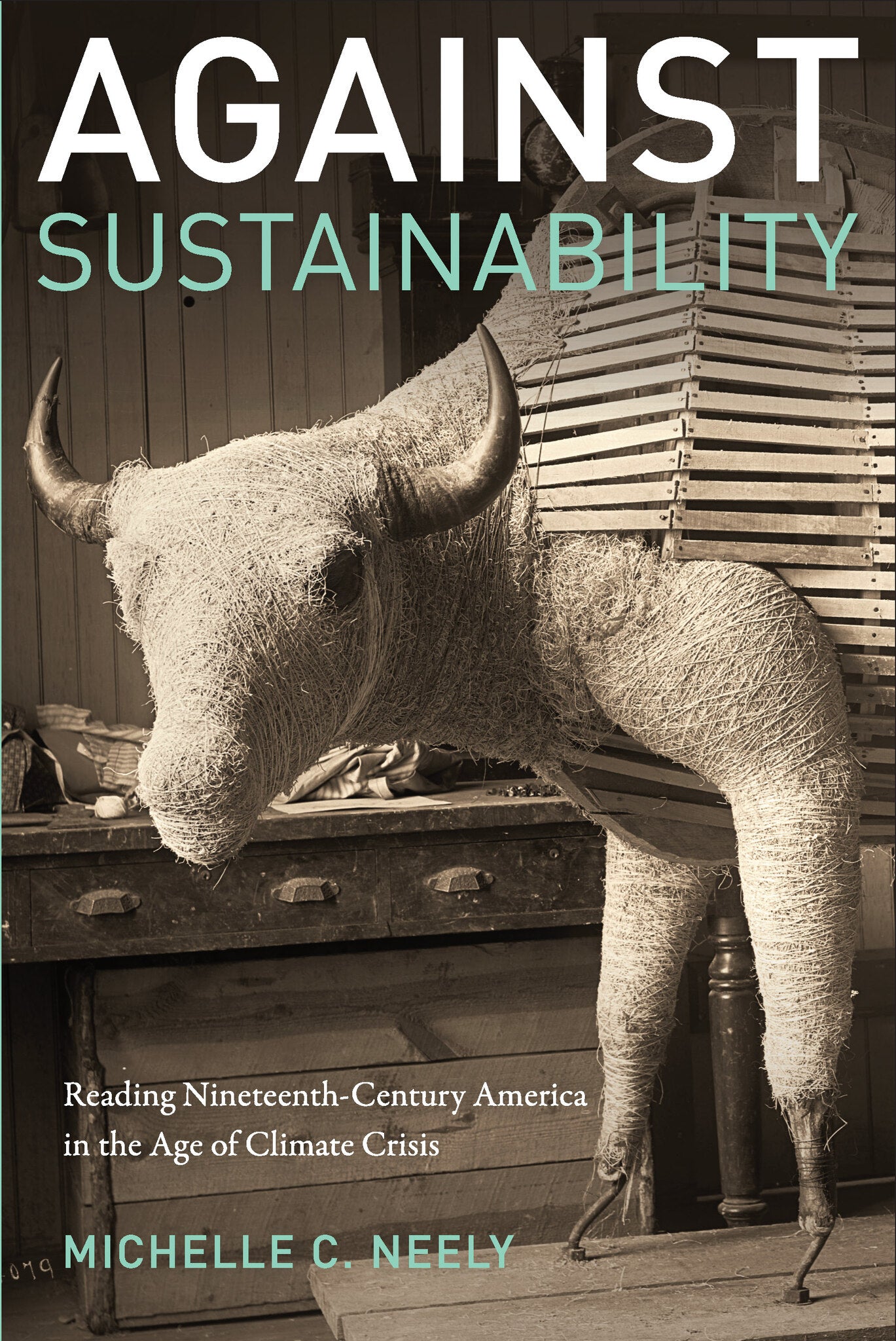
Against Sustainability responds to the twenty-first-century environmental crisis by unearthing the nineteenth-century U.S. literary, cultural, and scientific contexts that gave rise to sustainability, recycling, and preservation. Through novel pairings of antebellum and contemporary writers including Walt Whitman and Lucille Clifton, George Catlin and Louise Erdrich, and Herman Melville and A. S. Byatt, the book demonstrates that some of our most vaunted strategies to address ecological crisis in fact perpetuate environmental degradation.
Yet Michelle C. Neely also reveals that the nineteenth century offers useful and generative environmentalisms, if only we know where and how to find them. Henry David Thoreau and Emily Dickinson experimented with models of joyful, anti-consumerist frugality. Hannah Crafts and Harriet Wilson devised forms of radical pet-keeping that model more just ways of living with others. Ultimately, the book explores forms of utopianism that might more reliably guide mainstream environmental culture toward transformative forms of ecological and social justice. Through new readings of familiar texts, Against Sustainability demonstrates how nineteenth-century U.S. literature can help us rethink our environmental paradigms in order to imagine more just and environmentally sound futures.


Neely stresses the importance of literary studies and narrative to the movement for environmental change, and she provides an innovative—and necessary—means of addressing the climate crisis. Highly recommended.
In the pandemic-altered summer of 2020, protests over racial injustice spread throughout the United States, and wildfires once again ravaged California, Colorado, and other western states—twinned reminders that the problematic practices at the center of our cultural and environmental histories remain unresolved. As Michelle Neely shows throughout Against Sustainability, it is not only these past problems that linger but, too, we remain attached to outmoded solutions, hampering our ability to envision more just futures.
Introduction. The Unlikely Environmentalisms of Nineteenth-Century American Literature | 1
1. Recycling Fantasies: Whitman, Clifton, and the Dream of Compost | 21
2. Joyful Frugality: Thoreau, Dickinson, and the Pleasures of Not Consuming | 51
3. The Problem with Preservation: Aesthetics and Sanctuary in
Catlin, Parkman, Erdrich, Melville, and Byatt | 85
4. Radical Pet Keeping: Crafts, Wilson, and Living with Others in the Anthropocene | 116
Coda. Embracing Green Temporalities: Indigenous Sustainabilities, Anglo-American Utopias | 147
Acknowledgments | 157
Notes | 161
Bibliography | 201
Index | 221