


Some error occured while loading the Quick View. Please close the Quick View and try reloading the page.
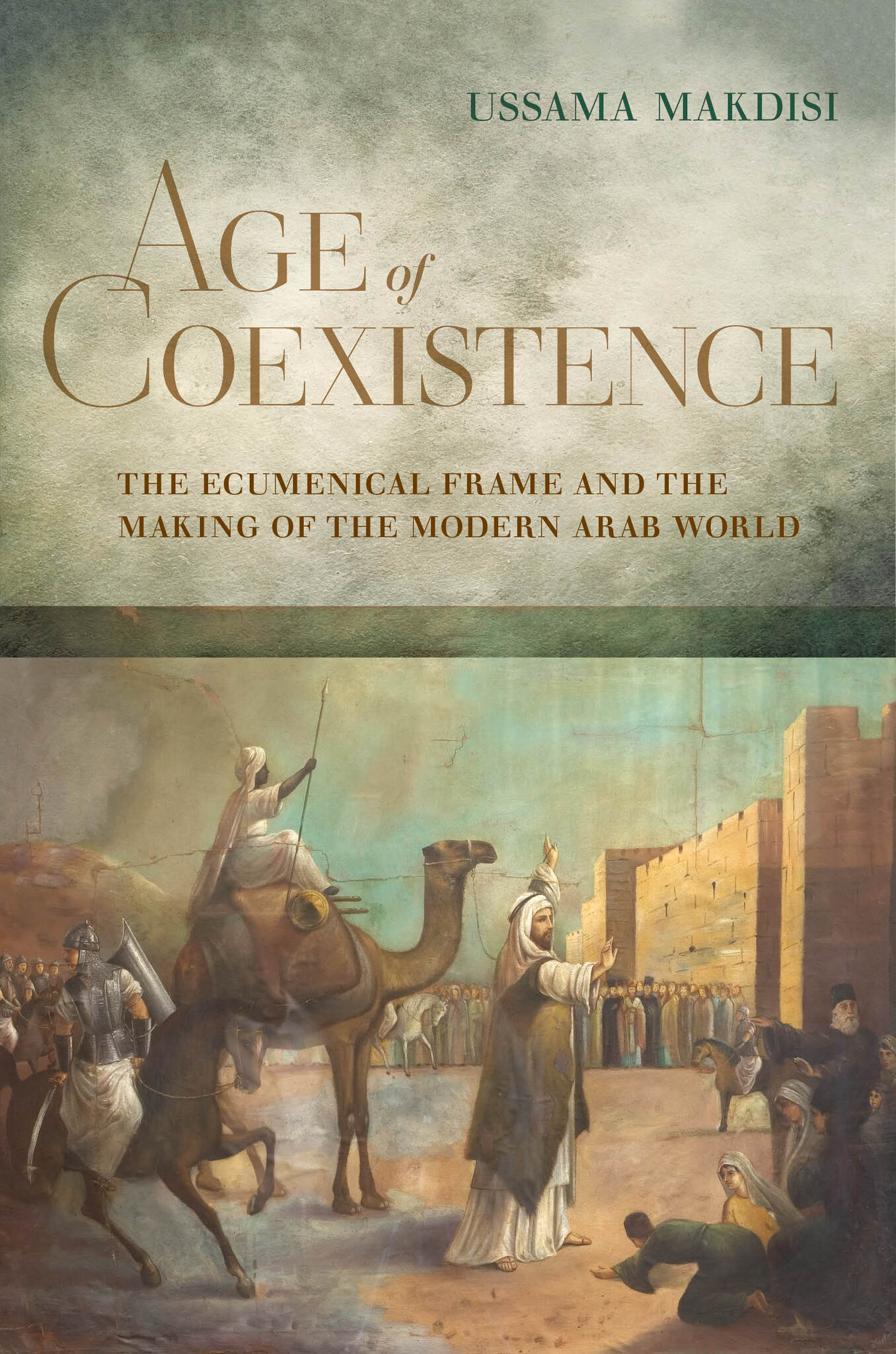
Today's headlines paint the Middle East as a collection of war-torn countries and extremist groups consumed by sectarian rage. Ussama Makdisi's Age of Coexistence reveals a hidden and hopeful story that counters this clichéd portrayal. It shows how a region rich with ethnic and religious diversity created a modern culture of coexistence amid Ottoman reformation, European colonialism, and the emergence of nationalism.
Moving from the nineteenth century to the present, this groundbreaking book explores, without denial or equivocation, the politics of pluralism during the Ottoman Empire and in the post-Ottoman Arab world. Rather than judging the Arab world as a place of age-old sectarian animosities, Age of Coexistence describes the forging of a complex system of coexistence, what Makdisi calls the "ecumenical frame." He argues that new forms of antisectarian politics, and some of the most important examples of Muslim-Christian political collaboration, crystallized to make and define the modern Arab world.
Despite massive challenges and setbacks, and despite the persistence of colonialism and authoritarianism, this framework for coexistence has endured for nearly a century. It is a reminder that religious diversity does not automatically lead to sectarianism. Instead, as Makdisi demonstrates, people of different faiths, but not necessarily of different political outlooks, have consistently tried to build modern societies that transcend religious and sectarian differences.


"What Makdisi has accomplished here is truly impressive. . . .It is my hope that as it spreads in classrooms and in public discourse, The Age of Coexistence will serve the final blow to Western-based stereotypes of a Middle East rife with senseless violence, authoritarianism, and strict religious rule."
"Offers a fresh look at the making of the modern Arab world. Given the plethora of studies that focus on contemporary wars and sectarian violence, this well-researched study employs Arabic and Western resources that challenge the prevailing perceptions about the region and its people. . . . An outstanding study with insight about the agency of Arab intellectuals, thinkers and people at large who, despite twentieth-century local and global violence, persist in struggling for a better world. This is a must-read for all scholars and students of Middle East and cultural studies."
"A major achievement. . . . This is historical analysis whose reframing of the past genuinely helps to offer possibilities for imagining future forms of coexistence."
Acknowledgments
Note on Transliteration
Introduction: The Ecumenical Frame
Part I
1. Religious Difference in an Imperial Age
2. The Crucible of Sectarian Violence
3. Coexistence in an Age of Genocide
Part II
4. Colonial Pluralism
5. Sectarianism and Antisectarianism in the
Post-Ottoman Arab World
6. Breaking the Ecumenical Frame: Arab and Jew
in Palestine
Epilogue
Notes
Works Cited
Index