


Some error occured while loading the Quick View. Please close the Quick View and try reloading the page.
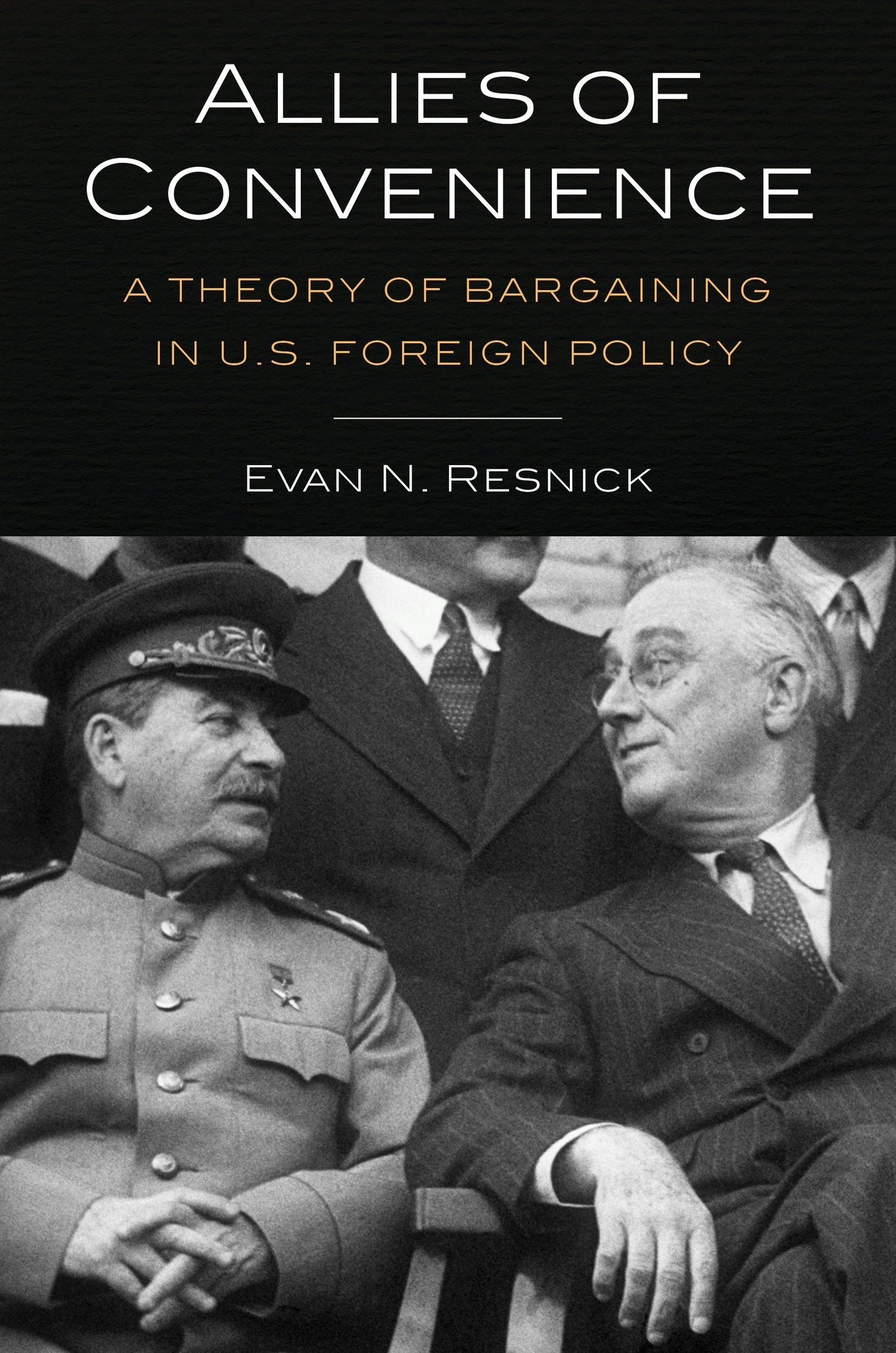
Since its founding, the United States has allied with unsavory dictatorships to thwart even more urgent security threats. How well has the United States managed such alliances, and what have been their consequences for its national security? In this book, Evan N. Resnick examines the negotiating tables between the United States and its allies of convenience since World War II and sets forth a novel theory of alliance bargaining.
Resnick’s neoclassical realist theory explains why U.S. leaders negotiate less effectively with unfriendly autocratic states than with friendly liberal ones. Since policy makers struggle to mobilize domestic support for controversial alliances, they seek to cast those allies in the most benign possible light. Yet this strategy has the perverse result of weakening leverage in intra-alliance disputes. Resnick tests his theory on America’s Cold War era alliances with China, Pakistan, and Iraq. In all three cases, otherwise hardline presidents bargained anemically on such pivotal issues as China’s sales of ballistic missiles, Pakistan’s development of nuclear weapons, and Iraq’s sponsorship of international terrorism. In contrast, U.S. leaders are more inclined to bargain aggressively with democratic allies who do not provoke domestic opposition, as occurred with the United Kingdom during the Korean War. An innovative work on a crucial and timely international relations topic, Allies of Convenience explains why the United States has mismanaged these “deals with the devil”—with deadly consequences.


Acknowledgments
Introduction: Alliances of Convenience in International Politics and U.S. Foreign Policy
1. Contending Theories of U.S. Bargaining with Allies of Convenience
2. The U.S. Alliance with the People’s Republic of China, 1971–1989
3. The U.S. Alliance with Pakistan, 1981–1988
4. The U.S. Alliance with Iraq, 1982–1988
5. The U.S. “Special Relationship” Alliance with the United Kingdom, 1950–1953
Conclusion
Notes
Index