


Some error occured while loading the Quick View. Please close the Quick View and try reloading the page.
A free ebook version of this title is available through Luminos, University of California Press’s Open Access publishing program. Visit www.luminosoa.org to learn more.
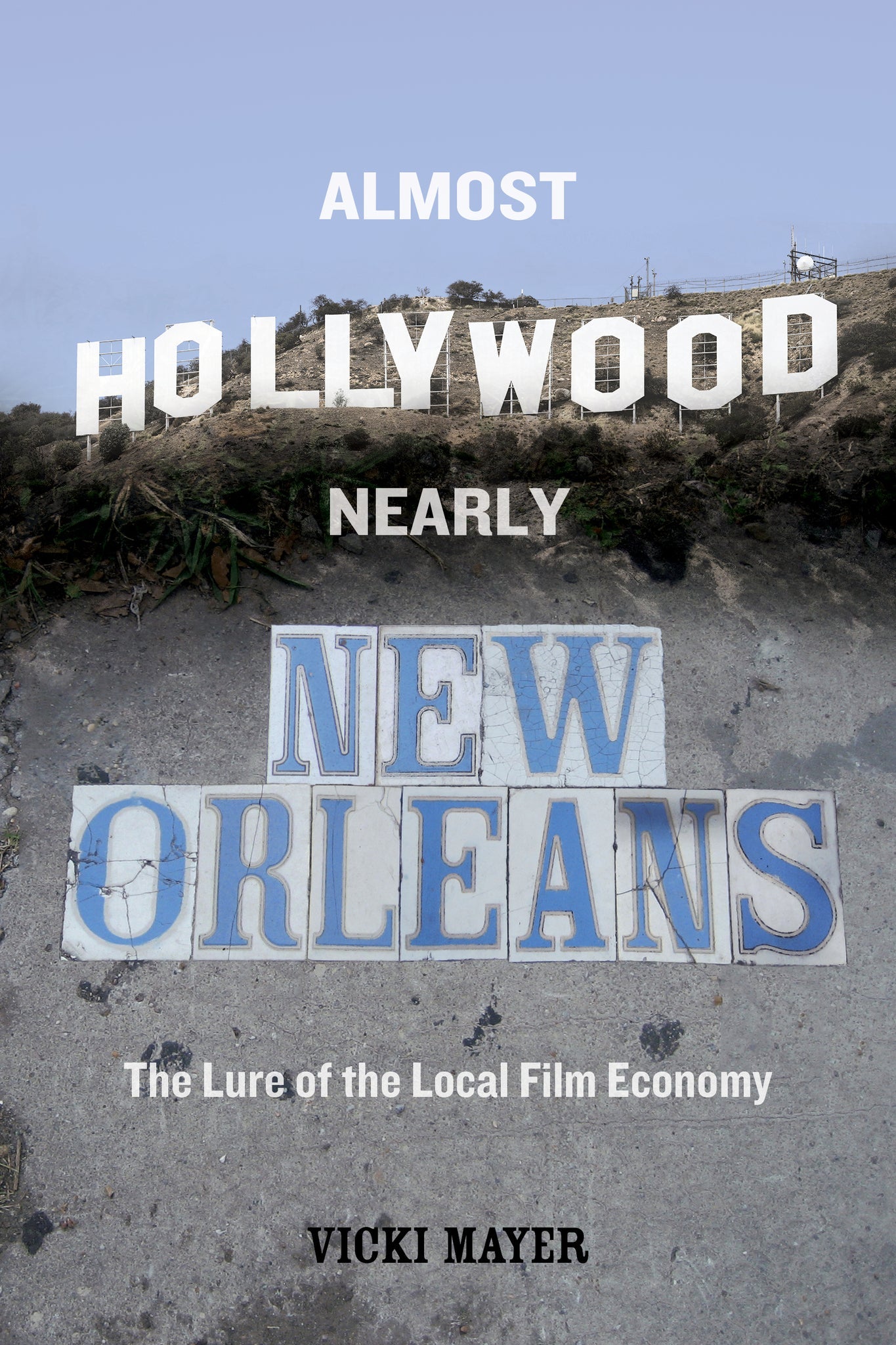
Early in the twenty-first century, Louisiana, one of the poorest states in the United States, redirected millions in tax dollars from the public coffers in an effort to become the top location site globally for the production of Hollywood films and television series. Why would lawmakers support such a policy? Why would citizens accept the policy’s uncomfortable effects on their economy and culture? Almost Hollywood, Nearly New Orleans addresses these questions through a study of the local and everyday experiences of the film economy in New Orleans, Louisiana—a city that has twice pursued the goal of becoming a movie production capital. From the silent era to today’s Hollywood South, Vicki Mayer explains that the aura of a film economy is inseparable from a prevailing sense of home, even as it changes that place irrevocably.
Early in the twenty-first century, Louisiana, one of the poorest states in the United States, redirected millions in tax dollars from the public coffers in an effort to become the top location site globally for the production of Hollywood films and television series. Why would lawmakers support such a policy? Why would citizens accept the policy’s uncomfortable effects on their economy and culture? Almost Hollywood, Nearly New Orleans addresses these questions through a study of the local and everyday experiences of the film economy in New Orleans, Louisiana—a city that has twice pursued the goal of becoming a movie production capital. From the silent era to today’s Hollywood South, Vicki Mayer explains that the aura of a film economy is inseparable from a prevailing sense of home, even as it changes that place irrevocably.

Price: $34.95
Pages: 162
Publisher: University of California Press
Imprint: University of California Press
Publication Date:
24 February 2017
Trim Size: 9.00 X 6.00 in
ISBN: 9780520293816
Format: Paperback

"Almost Hollywood, Nearly New Orleans adroitly probes The Crescent City’s ambivalent relation to its status as Hollywood South. … [the] book constitutes a timely contribution to the study of media industries for its thorough accounting of the debts incurred by a state like Louisiana and a city like New Orleans—and the unequal ways in which those burdens are distributed across racially and socioeconomically divided landscapes."
Vicki Mayer is Professor of Communication at Tulane University. She is coeditor of the journal Television & New Media and author or editor of several books and journal articles about media production, creative industries, and cultural work.
Acknowledgments
Prologue: I’m Just a Film Tax Credit
Introduction: Presenting Hollywood South
1. The Making of Regional Film Economies: Why La. Is Not L.A.
2. Hollywood South: Structural to Visceral Reorganizations of Space
3. The Place of Treme in the Film Economy: Love and Labor for Hollywood South
(Almost a) Conclusion
Appendix: A Guide to Decoding Film Economy Claims and Press Coverage
Notes
Index
Prologue: I’m Just a Film Tax Credit
Introduction: Presenting Hollywood South
1. The Making of Regional Film Economies: Why La. Is Not L.A.
2. Hollywood South: Structural to Visceral Reorganizations of Space
3. The Place of Treme in the Film Economy: Love and Labor for Hollywood South
(Almost a) Conclusion
Appendix: A Guide to Decoding Film Economy Claims and Press Coverage
Notes
Index