


Some error occured while loading the Quick View. Please close the Quick View and try reloading the page.
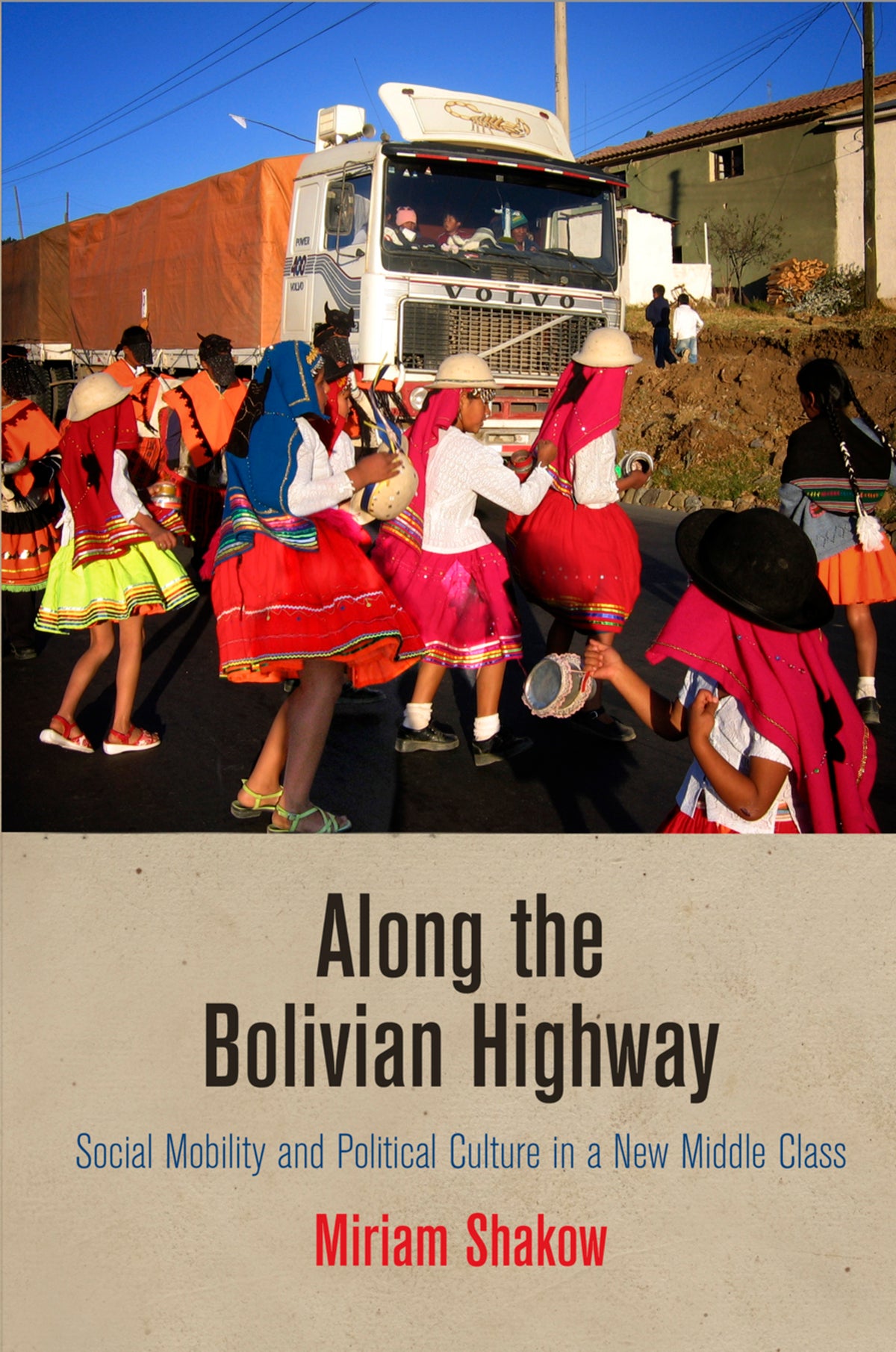
Along the Bolivian Highway traces the emergence of a new middle class in Bolivia, a society commonly portrayed as the site of struggle between a superwealthy white minority and a destitute indigenous majority. Miriam Shakow shows how Bolivian middle classes have deeply shaped politics and social life. While national political leaders like Evo Morales have proclaimed a new era of indigenous power and state-led capitalism in place of racial exclusion and neoliberal free trade, Bolivians of indigenous descent who aspire to upward mobility have debated whether to try to rise within their country's longstanding hierarchies of race and class or to break down those hierarchies. The ascent of indigenous politics, and a boom in coca and cocaine production beginning in the 1970s, have created dilemmas for "middling" Bolivians who do not fit the prevailing social binaries of white elite and indigenous poor. In their family relationships, political activism, and community life, the new middle class confronted competing moral imperatives.
Focusing on social and political struggles that hinged on class and racial status in a provincial boomtown in central Bolivia, Shakow recounts the experiences of first-generation teachers, agronomists, lawyers, and prosperous merchants. They puzzled over whom to marry, how to claim public interest in the face of accusations of selfishness, and whether to seek political patronage jobs amid high unemployment. By linking the intimate politics within families to regional and national power struggles, Along the Bolivian Highway sheds light on what it means to be middle class in the global south.


"This detailed and insightful ethnography focuses on the ambiguities and complexities of race, class, and political-economic transformation in the Bolivian middle classes, which are often ignored in studies of power and resistance."
"Along the Bolivian Highway draws upon rich ethnographic research to document changes in class and other civic sensibilities across a dramatic period of change in contemporary Bolivian society."
Note on Language
Introduction
Chapter 1. The Formation of a New Middle Class
Chapter 2. The Intimate Politics of New Middle Classes in Sacaba
Chapter 3. Middling Sacabans Respond to Evo and MAS
Chapter 4. Condemning Clientelism
Chapter 5. Laments of Betrayal
Chapter 6. Middle Classes and Debates over the Definition of Community
Conclusion
Notes
Family Tree of Doña Saturnina Ramírez
Glossary
Bibliography
Index
Acknowledgments