


Some error occured while loading the Quick View. Please close the Quick View and try reloading the page.
Part of the American Literatures Initiative Series
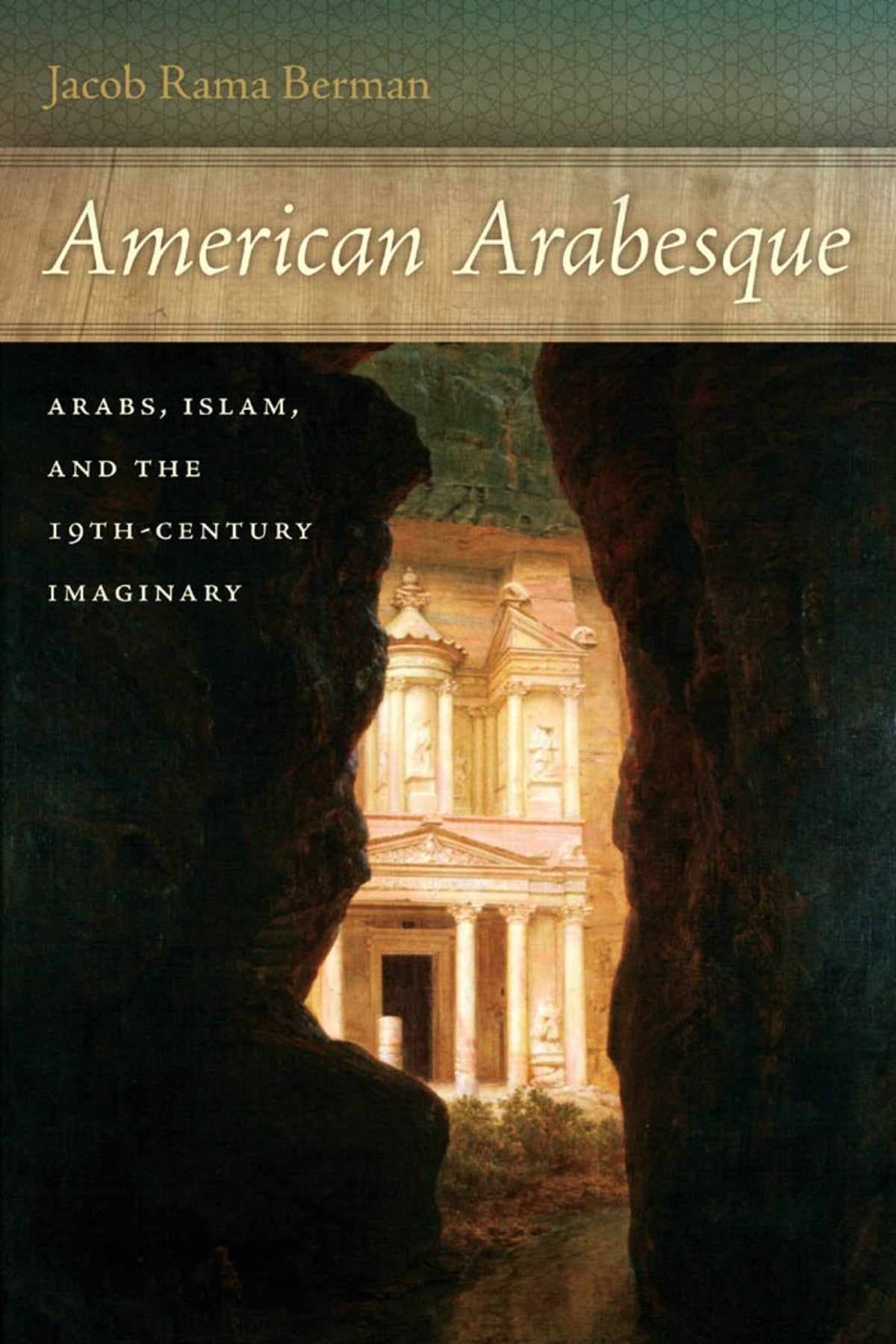
American Arabesque examines representations of Arabs, Islam and the Near East in nineteenth-century American culture, arguing that these representations play a significant role in the development of American national identity over the century, revealing largely unexplored exchanges between these two cultural traditions that will alter how we understand them
today.
Moving from the period of America's engagement in the
Barbary Wars through the Holy Land travel mania in the years of Jacksonian expansion and into the writings of romantics such as Edgar Allen Poe, the book argues that not only were Arabs and Muslims prominently featured in nineteenth-century literature, but that the differences writers established between figures such as Moors, Bedouins, Turks and Orientals provide proof of the transnational scope of domestic racial politics. Drawing on both English and Arabic language sources, Berman contends that the fluidity and instability
of the term Arab as it appears in captivity narratives, travel narratives,
imaginative literature, and ethnic literature simultaneously instantiate and undermine definitions of the American nation and American citizenship.


"Berman's work opens up extended vistas for consideration, and the central accomplishment of the book is immense: by reading Arabic-language texts from North Africa contrapuntally in relation to English-language texts, Berman points toward the possibility of reading nineteenth-century American literature through frames that are far more genuinely planetary and cosmopolitan that has yet been achieved. Berman's study makes an important, indeed vital, contribution to the field of studies of American Orientalism and of Orientalism in Poe's work specifically."
"[T]his book will prove useful to both historians and literary scholars....always stimulating and rewarding...it should inspire many new avenues of research."
— Anna Suranyi
"Berman's American Arabesquemakes an original contribution to the fields of American, Arab American, and Middle East studies through a combination of a novel comparative angle, bold theoretical argument, keenly perceptive and nuanced textual analyses, and an elegant, fluid style. This book will no doubt become required reading for scholars in this field."
— Wail S. Hassan
"American Arabesque is daringly ambitious.As a work of scholarship, it ventures an extraordinary range of reference, involving old and new works in English and Arabic. As a challenge to think differently about the United States in a larger world, it ventures to name its perspective & dirty cosmopolitanism. It makes good on both these risks."— Jonathan Arac,author of Impure Worlds
"Berman evokes the figure of the arabesque as a mediation between what is & Arab and its representation in the U.S. context, thereby turning the duality of Us vs. Them into a fluid field of interplay and modulation of representations that perform discrete ideological functions for different agents and under different circumstances. Yet Berman is not content to read American literature with a focus on the arabesque; he employs a theoretical perspective that blends classical Arabic hermeneutics and contemporary literary and cultural theory. This is an original contribution to American and Arab American studies that displays genuine intellectual imagination."
— Wail S. Hassan,author of Immigrant Narratives
"This is an original, erudite, and nuanced book that significantly contributes to expanding American studies and to relocating it in a transnational context."
— Amal Amireh,George Mason University