


Some error occured while loading the Quick View. Please close the Quick View and try reloading the page.
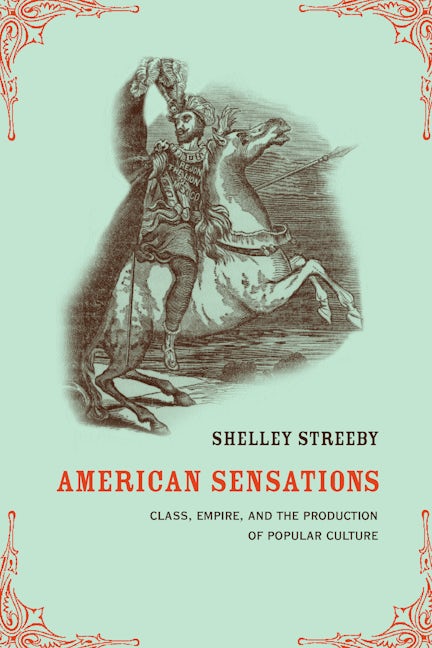
This innovative cultural history investigates an intriguing, thrilling, and often lurid assortment of sensational literature that was extremely popular in the United States in 1848--including dime novels, cheap story paper literature, and journalism for working-class Americans. Shelley Streeby uncovers themes and images in this "literature of sensation" that reveal the profound influence that the U.S.-Mexican War and other nineteenth-century imperial ventures throughout the Americas had on U.S. politics and culture. Streeby's analysis of this fascinating body of popular literature and mass culture broadens into a sweeping demonstration of the importance of the concept of empire for understanding U.S. history and literature.
This accessible, interdisciplinary book brilliantly analyzes the sensational literature of George Lippard, A.J.H Duganne, Ned Buntline, Metta Victor, Mary Denison, John Rollin Ridge, Louisa May Alcott, and many other writers. Streeby also discusses antiwar articles in the labor and land reform press; ideas about Mexico, Cuba, and Nicaragua in popular culture; and much more. Although the Civil War has traditionally been a major period marker in U.S. history and literature, Streeby proposes a major paradigm shift by using mass culture to show that the U.S.-Mexican War and other conflicts with Mexicans and Native Americans in the borderlands were fundamental in forming the complex nexus of race, gender, and class in the United States.
This accessible, interdisciplinary book brilliantly analyzes the sensational literature of George Lippard, A.J.H Duganne, Ned Buntline, Metta Victor, Mary Denison, John Rollin Ridge, Louisa May Alcott, and many other writers. Streeby also discusses antiwar articles in the labor and land reform press; ideas about Mexico, Cuba, and Nicaragua in popular culture; and much more. Although the Civil War has traditionally been a major period marker in U.S. history and literature, Streeby proposes a major paradigm shift by using mass culture to show that the U.S.-Mexican War and other conflicts with Mexicans and Native Americans in the borderlands were fundamental in forming the complex nexus of race, gender, and class in the United States.

Price: $36.95
Pages: 399
Publisher: University of California Press
Imprint: University of California Press
Series: American Crossroads
Publication Date:
10 May 2002
ISBN: 9780520935877
Format: eBook

List of Illustrations
Preface
Part 1 American Sensations
1. Introduction: City and Empire in the American 1848
2. George Lippard’s 1848:
Empire, Amnesia, and the U.S.-Mexican War
Part 2 Foreign Bodies and International Race Romance in the Story Papers
3. The Story Paper Empire
4. Foreign Bodies and International Race Romance
5. From Imperial Adventure to Bowery B’hoys and Buffalo Bill:
Ned Buntline, Nativism, and Class
Part 3 Land, Labor, and Empire in the Dime Novel
6. The Contradictions of Anti-Imperialism
7. The Hacienda, the Factory, and the Plantation
8. The Dime Novel, the Civil War, and Empire
Part 4: Beyond 1848
9. Joaquín Murrieta and Popular Culture
Notes
Bibliography
Index
Preface
Part 1 American Sensations
1. Introduction: City and Empire in the American 1848
2. George Lippard’s 1848:
Empire, Amnesia, and the U.S.-Mexican War
Part 2 Foreign Bodies and International Race Romance in the Story Papers
3. The Story Paper Empire
4. Foreign Bodies and International Race Romance
5. From Imperial Adventure to Bowery B’hoys and Buffalo Bill:
Ned Buntline, Nativism, and Class
Part 3 Land, Labor, and Empire in the Dime Novel
6. The Contradictions of Anti-Imperialism
7. The Hacienda, the Factory, and the Plantation
8. The Dime Novel, the Civil War, and Empire
Part 4: Beyond 1848
9. Joaquín Murrieta and Popular Culture
Notes
Bibliography
Index