


Some error occured while loading the Quick View. Please close the Quick View and try reloading the page.
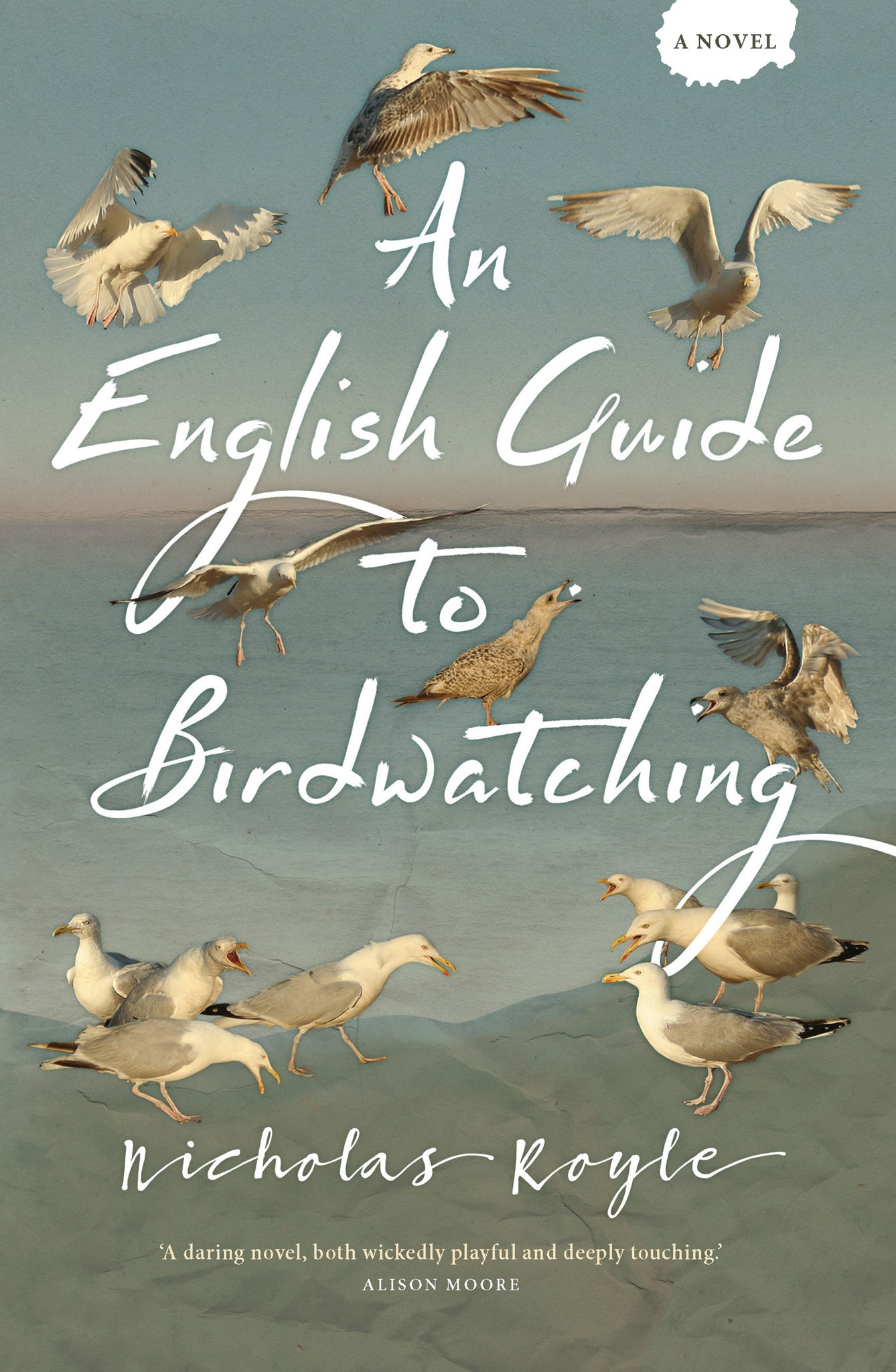
Silas and Ethel Woodlock have retired from the business of undertaking to spend their twilight years by the sea but things are not as easy as they’d hoped, and it’s all to do with herring gulls. Stephen Osmer and Lily Lynch are a glamorous young couple on the London literary scene. While Lily pursues an ambitious public art project about ‘cinematic intentions’, we encounter Osmer’s brilliance as an arts journalist, writing a dangerously provocative essay about social justice and the banking crisis, as well as a diatribe about two people called Nicholas Royle, one a novelist, the other a literary critic.
Nicholas Royle’s magnificent novel combines a page-turning story about literary theft, adultery and ambition with a poetic and moving investigation into our relationship to birds and to the environment. It is exquisitely inventive and very funny, juxtaposing the stuff of scandalous gossip with scathing reports of how the world has gone to hell in a handcart. Playfully commenting on the main story are 17 interlinked ‘Hides’. Beautifully illustrated by artist Natalia Gasson, these short texts — primarily about birds, ornithology and films (including Hitchcock’s) — give us a different view of the themes that fly out of the novel: the messy business of being human, the fragility of the physical world we inhabit and the nature of writing itself.
Compelling, audacious and dazzling in its linguistic playfulness and formal invention, An English Guide to Birdwatching explores the fertile hinterland between fact and fiction. In its focus on birds, climate change, the banking crisis, social justice and human migration, it is intensely relevant to wider political concerns; in its mischievous wit and wordplay, and post-modern (or ‘post-fiction’) sensibility, it pushes the boundaries of what a novel might be.
Nicholas Royle is also the author of Quilt.


‘Nicholas Royle, in his novel An English Guide to Birdwatching has achieved what no other British writer has yet managed to achieve: to write about birds, people, bankers, capitalism, and climate change all together and in a way that asks us not only to listen but also moves us to act upon what we hear.’ – Alex Lockwood
‘If you’ve ever been curious about the Icarus-like life of gulls, this is the novel for you.’ – Watching the Birds in An English Guide to Birdwatching by Bethan Stevens
‘An ambitious and far-reaching work that tackles many subjects… It’s also sexy, funny and, in quieter moments, very touching. There is heartfelt writing here… we come to think about the nature of love, and about our taking for granted the world beyond language; the sea, the sky, and the birds. Marvellous.’ – Big Issue
‘This is a novel operating at the outer edges of the form, deep in the avant-garde... play[ing] brilliantly in the fertile ground between fiction and memoir. An English Guide to Birdwatching is Rachel Cusk rewritten by Georges Bataille, full of strange sex, sudden violence and surreal twists. Illuminated throughout with gorgeous illustrations by Natalia Gasson, this is a novel that will charm, unsettle and baffle in equal measure.’ – Alex Preston, Financial Times
‘A mischievous, comic and inventive literary achievement.’ – Booktime magazine
‘Great books are still written, they just have to take place in Literature, the continent that never forgets. While reading An English Guide to Birdwatching, I travelled in all the time periods, places, countries of literature. It was more than an odyssey...’ – Recalled to Life by Hélène Cixous
‘This is a book that will bring delight to anyone who likes the idea of a novel in a novel in a novel... An English Guide To Birdwatching is a fantastic work of literary fiction... Breaking boundaries and fourth walls to become something unique and highly enjoyable.’ – The Worm Hole
‘A metafictional fever dream.’ – The Guardian
‘This is one of the strangest novels I've read in years. Digressive but coercive, impassioned but fey (digressive and coercive, impassioned and fey), it's a curiously compelling investigation of the nature of writing and the writing of nature. I ended it moved in ways I could not explain; I also ended it rather dizzied and thoroughly gulled.’ – Robert Macfarlane
‘A daring novel, both wickedly playful and deeply touching.’ – Alison Moore