


Some error occured while loading the Quick View. Please close the Quick View and try reloading the page.
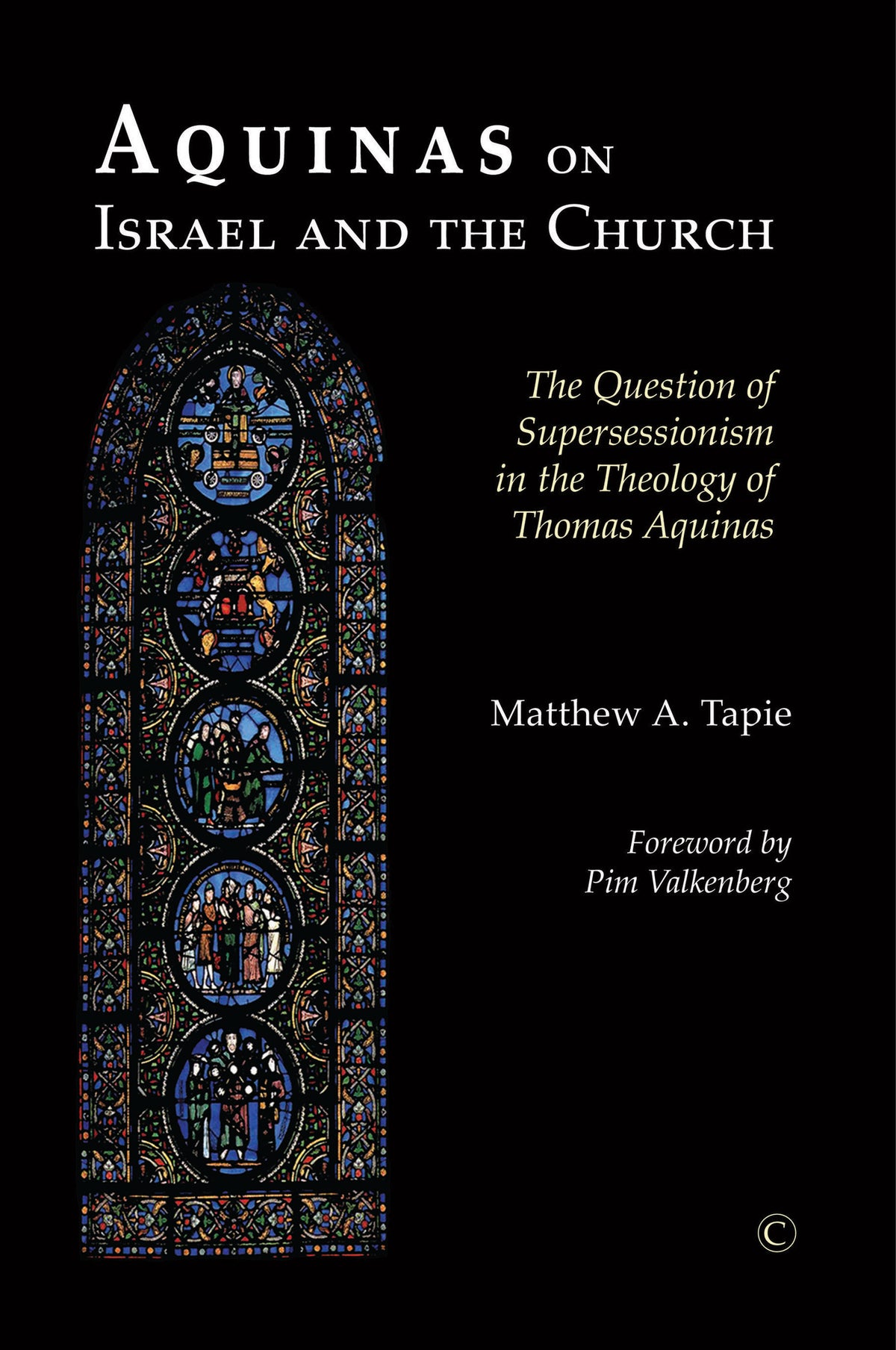
A subtle teasing out of Aquinas's thoughts on the relationship between Judaism and the Church, showing the wealth and ambiguity of his ideas.
Theologians have long debated the significance of the Jewish religion for the Christian Church. Some scholars see Thomas Aquinas as the leading advocate of the belief that Israel has been superceded by the Church, while others hold that Aquinas avoids supersessionism altogether. The discussion has, however, not always analysed the terminology, nor has it taken into account some of Aquinas's commentaries on Paul's letters, his writings most relevant to the subject.
Drawing upon the Pauline commentaries, Matthew Tapie shows that while Aquinas's most commonly articulated view is that the passion of Christ made Jewish worship and the Mosaic law obsolete, Aquinas also advanced views that set this into question, in ways that support Christian teachings affirming the value of post-biblical Judaism. In doing so, he provides both a rich and timely reminder of the ambiguities in Aquinas's thought and makes an important contribution to the literature of supersessionism.
Theologians have long debated the significance of the Jewish religion for the Christian Church. Some scholars see Thomas Aquinas as the leading advocate of the belief that Israel has been superceded by the Church, while others hold that Aquinas avoids supersessionism altogether. The discussion has, however, not always analysed the terminology, nor has it taken into account some of Aquinas's commentaries on Paul's letters, his writings most relevant to the subject.
Drawing upon the Pauline commentaries, Matthew Tapie shows that while Aquinas's most commonly articulated view is that the passion of Christ made Jewish worship and the Mosaic law obsolete, Aquinas also advanced views that set this into question, in ways that support Christian teachings affirming the value of post-biblical Judaism. In doing so, he provides both a rich and timely reminder of the ambiguities in Aquinas's thought and makes an important contribution to the literature of supersessionism.

Price: $29.99
Pages: 216
Publisher: Boydell & Brewer Inc.
Imprint: James Clarke
Publication Date:
26 February 2015
Trim Size: 9.02 X 5.98 in
ISBN: 9780227175071
Format: Paperback
BISACs:
RELIGION / Christian Theology / General, Christianity, Theology

This work is a positive contribution to an understanding of a very significant phase in the evolution of this relationship [Jewish-Christian relations] as well as recalling an influential mode of scriptural interpretation within theology.
— Anthony O'Leary
The study of Aquinas's theology is carried out by the author with great care and honesty, benefiting from nuance provided by the inclusion of the context surrounding each epistle. The work is characterised by lucidity and balance.
— J. Radermakers s.j., Nouvelle revue théologique, 138/2, 2016
...the process of close reading and the conceptual definition of supersessionism undertaken by Tapie make this an important book.
— Gavin D'Costa
Advanced masters and docteral students conversant with the theology of Thomas Aquinas and the present question of Jewish-Christian relations would benefit the best from this study.
— -J. David Moser
— Anthony O'Leary
The study of Aquinas's theology is carried out by the author with great care and honesty, benefiting from nuance provided by the inclusion of the context surrounding each epistle. The work is characterised by lucidity and balance.
— J. Radermakers s.j., Nouvelle revue théologique, 138/2, 2016
...the process of close reading and the conceptual definition of supersessionism undertaken by Tapie make this an important book.
— Gavin D'Costa
Advanced masters and docteral students conversant with the theology of Thomas Aquinas and the present question of Jewish-Christian relations would benefit the best from this study.
— -J. David Moser
Foreword by Pim Valkenberg
Acknowledgments
Abbreviations
Introduction
1 The Language of Supersessionism
2 Aquinas and the Question of Supersessionism
3 Israel and the Church in Aquinas's Pauline Commentaries
4 The Ceremonial Law as a Shadow of the Night (Hebrews)
5 The Ceremonial Law as Present Spiritual Benefit for Jews (Romans)
6 The Ceremonial Law as Fulfilled, Dead, and Deadly (Galatians)
7 The Replacement of Israel as Societas Sanctorum (Ephesians)
8 Rival Versions of Christ's Fulfillment of the Law: The Tension in Aquinas's Thought between Galatians 5:2 and Romans 3:1-2
9 Aquinas as Resource for Jewish-Christian Relations
Bibliography
Acknowledgments
Abbreviations
Introduction
1 The Language of Supersessionism
2 Aquinas and the Question of Supersessionism
3 Israel and the Church in Aquinas's Pauline Commentaries
4 The Ceremonial Law as a Shadow of the Night (Hebrews)
5 The Ceremonial Law as Present Spiritual Benefit for Jews (Romans)
6 The Ceremonial Law as Fulfilled, Dead, and Deadly (Galatians)
7 The Replacement of Israel as Societas Sanctorum (Ephesians)
8 Rival Versions of Christ's Fulfillment of the Law: The Tension in Aquinas's Thought between Galatians 5:2 and Romans 3:1-2
9 Aquinas as Resource for Jewish-Christian Relations
Bibliography