


Some error occured while loading the Quick View. Please close the Quick View and try reloading the page.
Honorable Mention, 2021 Latinx Studies Section Outstanding Book Award, given by the Latin American Studies Association
Winner, 2020 Latino Book Awards in the LGBTQ+ Themed Section
Finalist, 2019 Lambda Literary Award in LGBTQ Studies
Critically reimagines Chicanx art, unmasking its queer afterlife
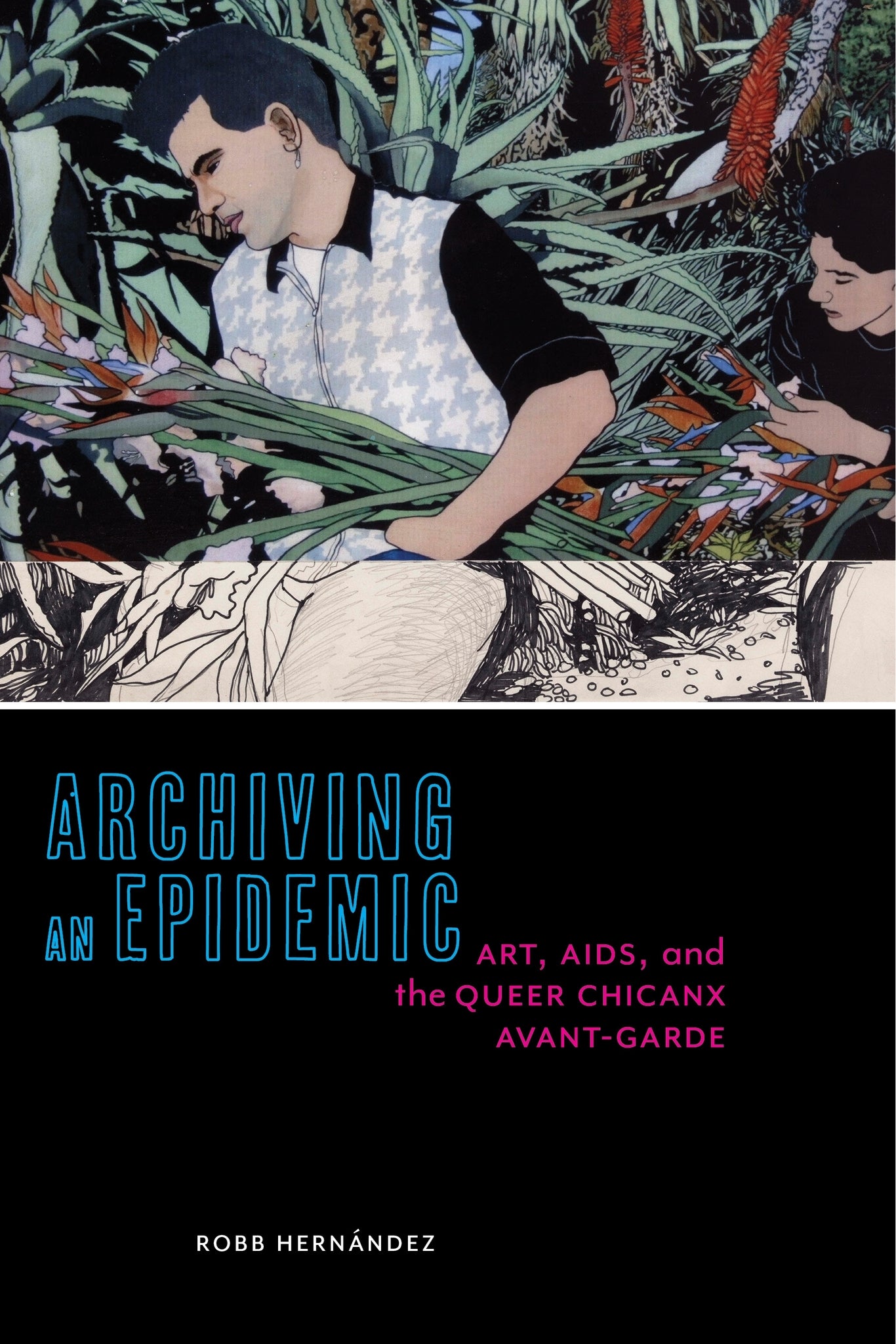
Emboldened by the boom in art, fashion, music, and retail culture in 1980s Los Angeles, the iconoclasts of queer Aztlán—as Robb Hernández terms the group of artists who emerged from East LA, Orange County, and other parts of Southern California during this period—developed a new vernacular with which to read the city in bloom. Tracing this important but understudied body of work, Archiving an Epidemic catalogs a queer retelling of the Chicana and Chicano art movement, from its origins in the 1960s, to the AIDS crisis and the destruction it wrought in the 1980s, and onto the remnants and legacies of these artists in the current moment. Hernández offers a vocabulary for this multi-modal avant-garde—one that contests the heteromasculinity and ocular surveillance visited upon it by the larger Chicanx community, as well as the formally straight conditions of traditional archive-building, museum institutions, and the art world writ large.
With a focus on works by Mundo Meza (1955–85), Teddy Sandoval (1949–1995), and Joey Terrill (1955– ), and with appearances by Laura Aguilar, David Hockney, Robert Mapplethorpe, and even Eddie Murphy, Archiving an Epidemic composes a complex picture of queer Chicanx avant-gardisms. With over sixty images—many of which are published here for the first time—Hernández’s work excavates this archive to question not what Chicanx art is, but what it could have been.


— David J. Getsy, School of the Art Institute of Chicago
"Hernández queers the archive while also stepping outside its institutional limits and into the realm of the absences and shards of human loss from AIDS. In doing so, Hernández develops an alternative methodology for 'queer detrital analysis' that brings the body and space to bear. A tour de force in its archival and critical breadth, this book vividly reimagines the American avant-garde since the 1960s through queer Chicanx artists, groups, and spaces in Southern California."
— Chon Noriega, University of California, Los Angeles