


Some error occured while loading the Quick View. Please close the Quick View and try reloading the page.
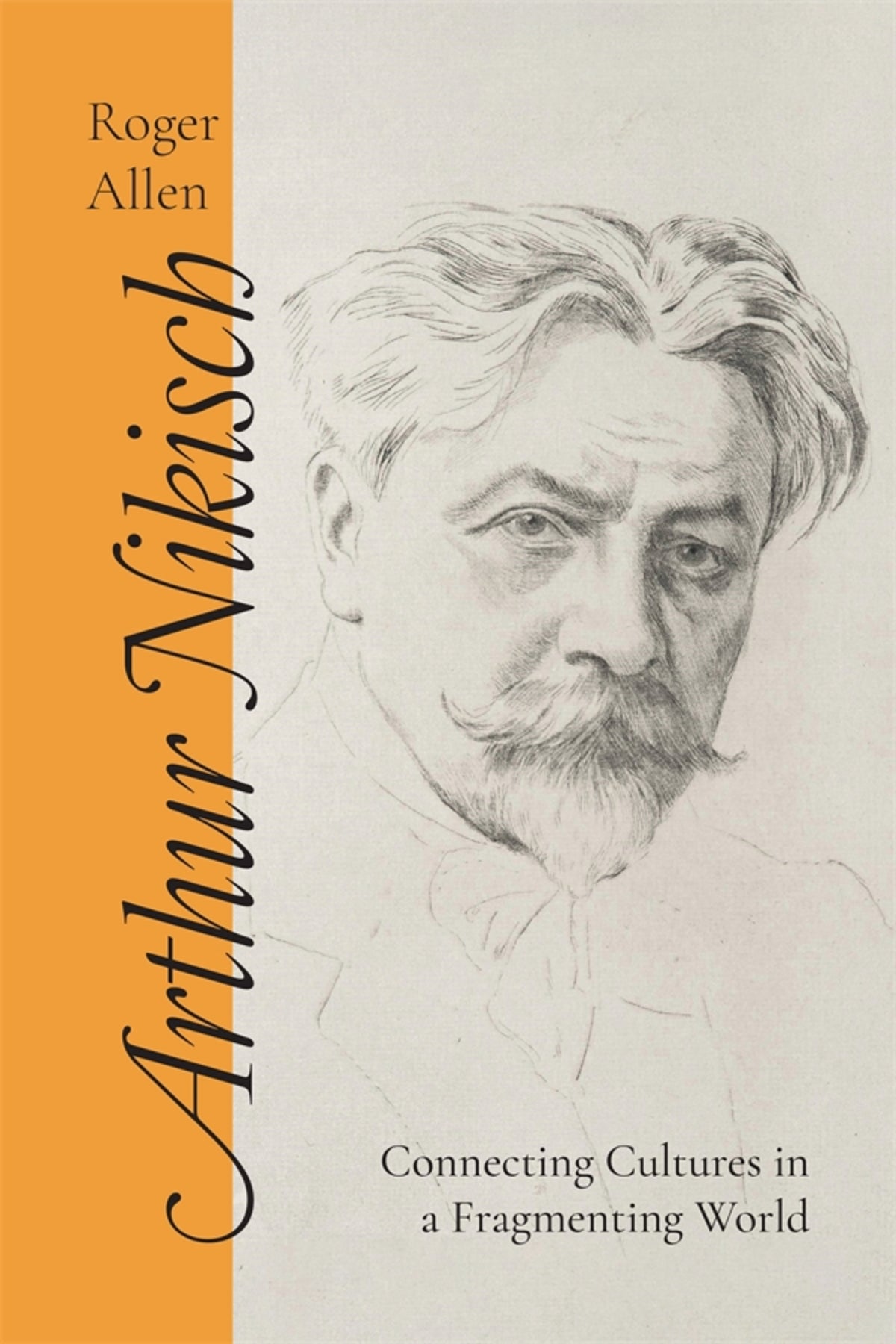
Considers Nikisch as a primary link between the later nineteenth century performance practice, and the twentieth-century 'fetishisation' of the superstar conductor as a commercially driven phenomenon.
The Hungarian-born conductor Arthur Nikisch (1855-1922) was among the first of the new breed of virtuoso conductors who came to prominence in the immediate aftermath of Wagner. As a youthful violinist in the Vienna Court Orchestra, he played under Wagner, Verdi and Brahms; in 1895 he reached the pinnacle of German musical life as Chief Conductor of the Leipzig Gewandhaus and Berlin Philharmonic Orchestras. His career was, however, by no means confined to Austro-German lands. He spent four seasons in the USA as Director of the Boston Symphony Orchestra and travelled regularly to conduct in Imperial Russia. His visits to Britain had a significant impact on London's concert life through his associations with the newly opened Queen's Hall, the fledgling London Symphony Orchestra, Covent Garden Opera House and even as piano accompanist at the Bechstein (later Wigmore) Hall. He was also a fervent champion of the music of non-Austro German composers such as the Russian Pyotr Ilyich Tchaikovsky and the Englishman Edward Elgar.
This book considers Nikisch's role and influence as a leading musical executant within the declining Habsburg monarchy and the ascendant German Empire. It also examines how the newly established phenomenon of the virtuoso conductor reached across international boundaries at a time when hardening ideologies and shifting political allegiances were leading towards the disintegration of the old Europe in the carnage of the First World War. It considers Nikisch as a primary link between the later nineteenth century performance practice and aesthetics of Wagner and the twentieth century phenomenon of the all-powerful superstar conductor who came to surpass even the composer in importance.
The Hungarian-born conductor Arthur Nikisch (1855-1922) was among the first of the new breed of virtuoso conductors who came to prominence in the immediate aftermath of Wagner. As a youthful violinist in the Vienna Court Orchestra, he played under Wagner, Verdi and Brahms; in 1895 he reached the pinnacle of German musical life as Chief Conductor of the Leipzig Gewandhaus and Berlin Philharmonic Orchestras. His career was, however, by no means confined to Austro-German lands. He spent four seasons in the USA as Director of the Boston Symphony Orchestra and travelled regularly to conduct in Imperial Russia. His visits to Britain had a significant impact on London's concert life through his associations with the newly opened Queen's Hall, the fledgling London Symphony Orchestra, Covent Garden Opera House and even as piano accompanist at the Bechstein (later Wigmore) Hall. He was also a fervent champion of the music of non-Austro German composers such as the Russian Pyotr Ilyich Tchaikovsky and the Englishman Edward Elgar.
This book considers Nikisch's role and influence as a leading musical executant within the declining Habsburg monarchy and the ascendant German Empire. It also examines how the newly established phenomenon of the virtuoso conductor reached across international boundaries at a time when hardening ideologies and shifting political allegiances were leading towards the disintegration of the old Europe in the carnage of the First World War. It considers Nikisch as a primary link between the later nineteenth century performance practice and aesthetics of Wagner and the twentieth century phenomenon of the all-powerful superstar conductor who came to surpass even the composer in importance.

Price: $130.00
Pages: 244
Publisher: Boydell & Brewer Inc.
Imprint: Boydell Press
Publication Date:
April 15, 2025
Trim Size: 9.21 X 6.14 in
ISBN: 9781837650040
Format: Hardcover
BISACs:
MUSIC / Instruction & Study / Conducting, Techniques of music / music tutorials / teaching of music, MUSIC / Genres & Styles / Classical, History of music, Art music, orchestral and formal music

Roger Allen's fine account of Nikisch's career should interest anyone fascinated by this charismatic musician - or by the history of conducting more generally. Warmly recommended.
Roger Allen has succeeded in bringing to life an individual who left no memoirs and few autobiographical notes and in placing him in his artistic and temporal context. His material is well marshalled, and he wears his erudition lightly, not least in a memorable joke involving Reger.
Roger Allen has succeeded in bringing to life an individual who left no memoirs and few autobiographical notes and in placing him in his artistic and temporal context. His material is well marshalled, and he wears his erudition lightly, not least in a memorable joke involving Reger.
List of Illustrations
Prelude
Preface and Acknowledgements
Chronology
Introduction
1. Music, Empire and Monarchy (1848-1918)
2. Childhood and Youth (1855-1877)
3. Encounters with Wagner (1872-1875)
4. Leipzig (1878-1889)
5. Boston, USA (1889-1893)
6. Budapest (1893-1895)
7. Leipzig: Gewandhaus Kapellmeister (1895-1922)
8. Nikisch and the Berlin Philharmonic (1895-1922)
9. Nikisch and Russia (1895-1913)
10. Nikisch and Great Britain (1895-1914)
11. Nikisch and the Early Years of Recording
12. The Art of Arthur Nikisch
Coda (1918-1922)
Appendix 1 Arthur Nikisch, 'Recollections of my Viennese Youth'
Appendix 2 Sample Tour Itineraries: Boston Symphony Orchestra (1890) and London Symphony Orchestra in the USA (1912)
Appendix 3 Paul Bekker, 'Nikisch'
Bibliography
Discography and Filmography
Index
Prelude
Preface and Acknowledgements
Chronology
Introduction
1. Music, Empire and Monarchy (1848-1918)
2. Childhood and Youth (1855-1877)
3. Encounters with Wagner (1872-1875)
4. Leipzig (1878-1889)
5. Boston, USA (1889-1893)
6. Budapest (1893-1895)
7. Leipzig: Gewandhaus Kapellmeister (1895-1922)
8. Nikisch and the Berlin Philharmonic (1895-1922)
9. Nikisch and Russia (1895-1913)
10. Nikisch and Great Britain (1895-1914)
11. Nikisch and the Early Years of Recording
12. The Art of Arthur Nikisch
Coda (1918-1922)
Appendix 1 Arthur Nikisch, 'Recollections of my Viennese Youth'
Appendix 2 Sample Tour Itineraries: Boston Symphony Orchestra (1890) and London Symphony Orchestra in the USA (1912)
Appendix 3 Paul Bekker, 'Nikisch'
Bibliography
Discography and Filmography
Index