


Some error occured while loading the Quick View. Please close the Quick View and try reloading the page.
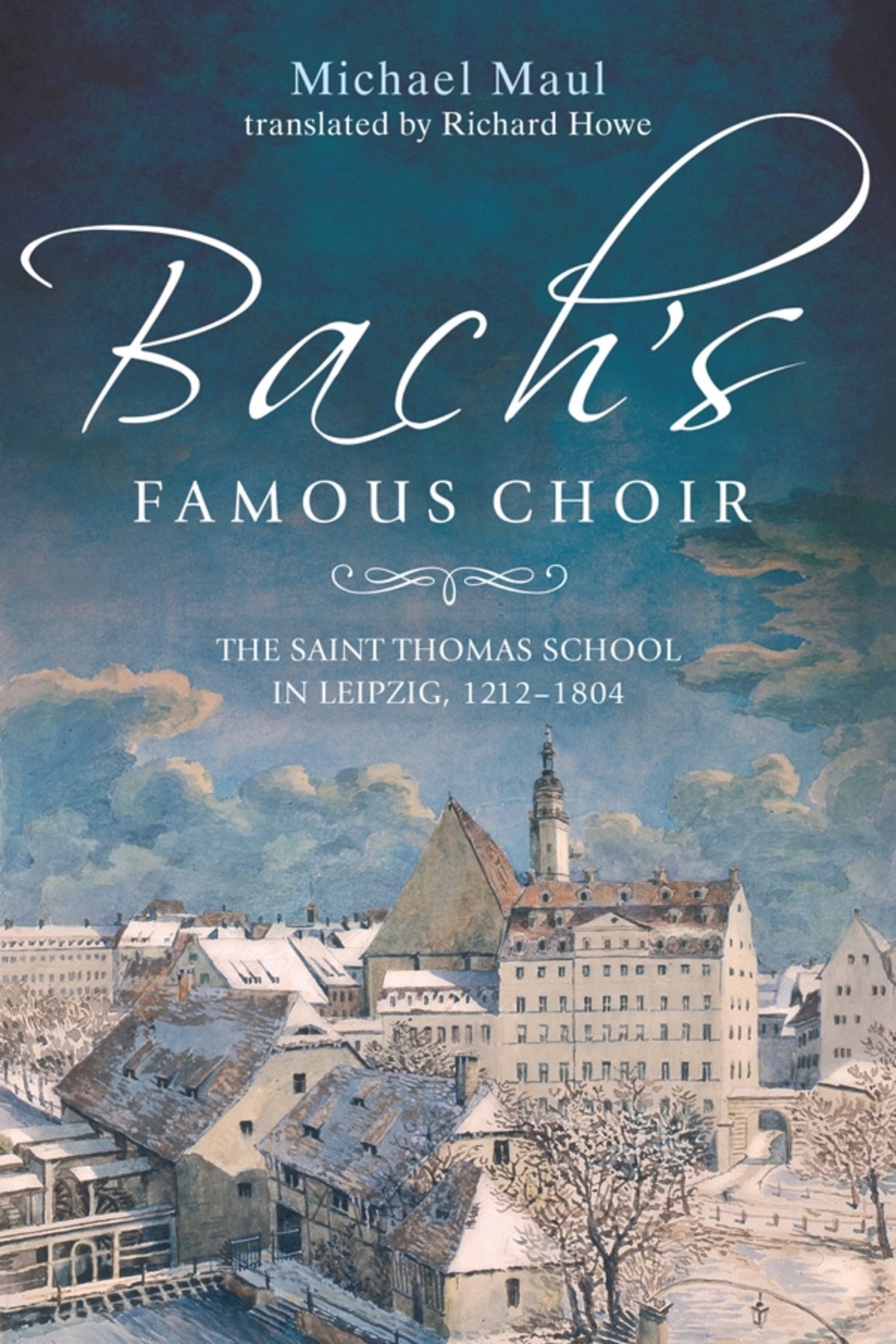
The musical, social and political history of the renowned St Thomas School and Church
In the seventeenth and eighteenth centuries, the cantors of the St. Thomas School and Church in Leipzig could be counted among the most significant German composers of their times. But what attracted these artists - from Seth Calvisius to J.S. Bach to Johann Adam Hiller - to the music school and choir and inspired them to explore new repertoire of the highest standing? And how did the cantors influence the musical profile of the school - a profile that often became a bone of contention between school and city hall?
The success of the St. Thomas School was not a foregone conclusion; its history is replete with challenges and setbacks as well as triumphs. The school was caughtbetween the conflicting interests of enthusiastic mayors and townspeople, who wanted to showcase the city's musical culture, and opposing parties, including jealous rectors and elitist sponsors, who argued for the traditional subordination of the cantorate to the school system.
Drawing on many new, recently discovered sources, Michael Maul explores the phenomenon of the St Thomas School. He shows how cantors, local luminaries and municipal politicians overcame the School's detractors to make it a remarkable success, with a world-famous choir. Illuminating the social and political history of the cantorate and the musical life of an important German city, the book will be ofinterest to scholars of Baroque music and J.S. Bach, cultural historians, choral directors, and musicologists and performers studying historical performance practice.
MICHAEL MAUL is Senior Scholar at the Bach-Archiv Leipzig and lecturer in musicology at the universities of Leipzig/Halle. He is also the artistic director of the annual Leipzig Bach Festival.
In the seventeenth and eighteenth centuries, the cantors of the St. Thomas School and Church in Leipzig could be counted among the most significant German composers of their times. But what attracted these artists - from Seth Calvisius to J.S. Bach to Johann Adam Hiller - to the music school and choir and inspired them to explore new repertoire of the highest standing? And how did the cantors influence the musical profile of the school - a profile that often became a bone of contention between school and city hall?
The success of the St. Thomas School was not a foregone conclusion; its history is replete with challenges and setbacks as well as triumphs. The school was caughtbetween the conflicting interests of enthusiastic mayors and townspeople, who wanted to showcase the city's musical culture, and opposing parties, including jealous rectors and elitist sponsors, who argued for the traditional subordination of the cantorate to the school system.
Drawing on many new, recently discovered sources, Michael Maul explores the phenomenon of the St Thomas School. He shows how cantors, local luminaries and municipal politicians overcame the School's detractors to make it a remarkable success, with a world-famous choir. Illuminating the social and political history of the cantorate and the musical life of an important German city, the book will be ofinterest to scholars of Baroque music and J.S. Bach, cultural historians, choral directors, and musicologists and performers studying historical performance practice.
MICHAEL MAUL is Senior Scholar at the Bach-Archiv Leipzig and lecturer in musicology at the universities of Leipzig/Halle. He is also the artistic director of the annual Leipzig Bach Festival.

Price: $70.00
Pages: 462
Publisher: Boydell & Brewer Inc.
Imprint: Boydell Press
Publication Date:
November 16, 2018
Trim Size: 9.21 X 6.14 in
ISBN: 9781783271696
Format: Hardcover
BISACs:
MUSIC / Genres & Styles / Classical, Art music, orchestral and formal music, MUSIC / Religious / General, Sacred and religious music

An absorbing account of the development of a remarkable musical institution as well as a further insight into the environment in which Bach spent the last quarter-century of his life and during which he produced, in increasingly straitened circumstances, some of the world's greatest music.
This book should interest every serious student of Bach. Michael Maul, one of the most systematic and productive . . . of living Bach scholars, has produced a volume that fills in many gaps but also offers fascinating new information about St. Thomas School in Leipzig over the centuries. The German edition of the book appeared in 2012, but now English readers have the benefit of Richard Howe's fluent translation.
— Raymond Erickson
[The] long-awaited English translation...the scope of the content is vast.Maul's eye for humour injects life...excellent.
[A] thorough, extensive, and meticulous examination . . . . Readers seeking an in-depth and detailed study of a remarkable institution will not be disappointed.
This is a book that was just aching to be written. Originally in German, at last we have the long-awaited English edition of it that sheds considerable light on a great institution which, by its existence, had been a catalyst for and source of musical creativity that had acquired a significant standing throughout Germany long before Bach arrived on the scene in 1723.
Engaging...Maul's study offers an outstanding musical, social and political history of this intriguing site of German music-making.
The English-speaking world should welcome the translation of this work . . . . It is no small accomplishment of Richard Howe not only to translate Maul's text but also to turn all the quotations from early modern documents into readable English. . . . [T]his study broadens our understanding of Bach's life by placing him within the long history of an institution that was already noteworthy before he arrived. With this volume and Maul's ongoing archival research, he is making major contributions to Bach scholarship.
— Joyce Irwin
This book should interest every serious student of Bach. Michael Maul, one of the most systematic and productive . . . of living Bach scholars, has produced a volume that fills in many gaps but also offers fascinating new information about St. Thomas School in Leipzig over the centuries. The German edition of the book appeared in 2012, but now English readers have the benefit of Richard Howe's fluent translation.
— Raymond Erickson
[The] long-awaited English translation...the scope of the content is vast.Maul's eye for humour injects life...excellent.
[A] thorough, extensive, and meticulous examination . . . . Readers seeking an in-depth and detailed study of a remarkable institution will not be disappointed.
This is a book that was just aching to be written. Originally in German, at last we have the long-awaited English edition of it that sheds considerable light on a great institution which, by its existence, had been a catalyst for and source of musical creativity that had acquired a significant standing throughout Germany long before Bach arrived on the scene in 1723.
Engaging...Maul's study offers an outstanding musical, social and political history of this intriguing site of German music-making.
The English-speaking world should welcome the translation of this work . . . . It is no small accomplishment of Richard Howe not only to translate Maul's text but also to turn all the quotations from early modern documents into readable English. . . . [T]his study broadens our understanding of Bach's life by placing him within the long history of an institution that was already noteworthy before he arrived. With this volume and Maul's ongoing archival research, he is making major contributions to Bach scholarship.
— Joyce Irwin
Introduction
From Monastery to Municipal Music School 1212-1593
How the St. Thomas School Became a Music School 1594-1640
'Famous Throughout the Whole World of Music' 1640-1701
'Odd authorities with Little Interest in Music': the St. Thomas School in Crisis 1701-1730
School for Scholars or 'Conservatory of Music'? An ongoing conflict 1730-1804
Appendices
Bibliography
From Monastery to Municipal Music School 1212-1593
How the St. Thomas School Became a Music School 1594-1640
'Famous Throughout the Whole World of Music' 1640-1701
'Odd authorities with Little Interest in Music': the St. Thomas School in Crisis 1701-1730
School for Scholars or 'Conservatory of Music'? An ongoing conflict 1730-1804
Appendices
Bibliography