Skip to product information
1 of 1

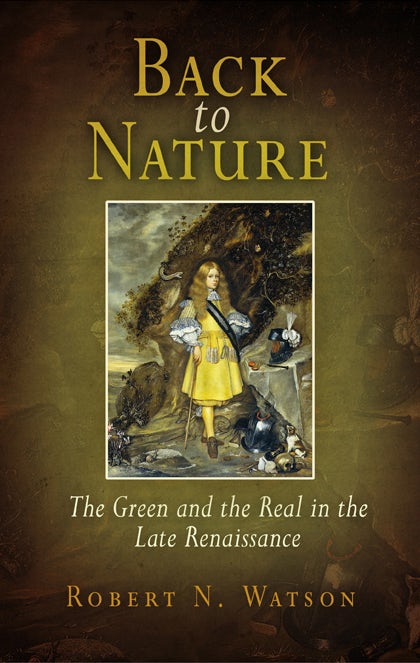
Back to Nature

Regular price $39.95
Regular price $39.95 Sale price $39.95
Sold out
Selected by Choice magazine as an Outstanding Academic TitleSweeping across scholarly disciplines, Back to Nature shows that, from the moment of their conception, modern ecological and epistemologi...
Read More
  • 29 May 2013
View Product Details

Selected by Choice magazine as an Outstanding Academic Title

Sweeping across scholarly disciplines, Back to Nature shows that, from the moment of their conception, modern ecological and epistemological anxieties were conjoined twins. Urbanization, capitalism, Protestantism, colonialism, revived Skepticism, empirical science, and optical technologies conspired to alienate people from both the earth and reality itself in the seventeenth century. Literary and visual arts explored the resulting cultural wounds, expressing the pain and proposing some ingenious cures. The stakes, Robert N. Watson demonstrates, were huge.

Shakespeare's comedies, Marvell's pastoral lyrics, Traherne's visionary Centuries, and Dutch painting all illuminate a fierce submerged debate about what love of nature has to do with perception of reality.

files/i.png Icon
Price: $39.95
Pages: 448
Publisher: University of Pennsylvania Press, Inc.
Imprint: University of Pennsylvania Press
Publication Date: 29 May 2013
ISBN: 9780812204254
Format: eBook
BISACs: LITERARY CRITICISM / European / English, Irish, Scottish, Welsh, Literary studies: general
REVIEWS Icon
"Back to Nature is demanding, at times dizzying, in its range and boldness, the all-encompassing and often surprising nature of its conjunctions. . . . Sections of the book amount to the most powerful and wide-ranging 'green' reading of early modern literature that has yet emerged."
Robert N. Watson is Professor of English and Associate Vice-Provost for Educational Innovation at the University of California, Los Angeles. His previous books include The Rest Is Silence: Death as Annihilation in the English Renaissance, Ben Jonson's Parodic Strategy: Literary Imperialism in the Comedies, and Shakespeare and the Hazards of Ambition.