


Some error occured while loading the Quick View. Please close the Quick View and try reloading the page.
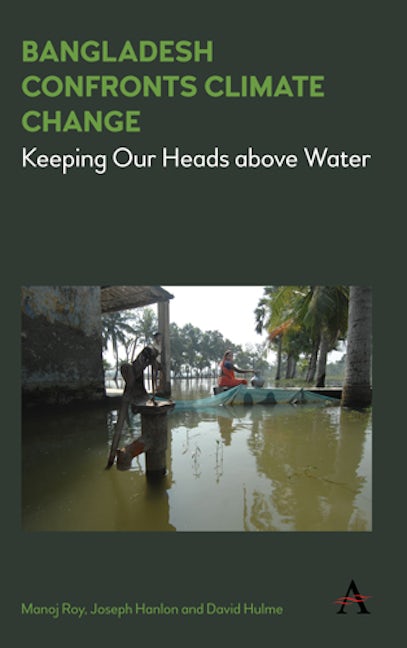
Living in a low-lying and densely populated country on the front line of climate change, Bangladeshis are taking a lead in adapting to rising temperatures and campaigning to limit climate change. Global warming will worsen this country's existing environmental problems – causing a rise in sea level, more flooding and stronger, more damaging cyclones.
Bangladeshis know what is coming, and how to respond, because they are already effectively combating environmental and social challenges. Cyclone shelters and warning systems have cut the fatality rate dramatically; new varieties of rice have raised nutrition levels; women's education has slowed population growth; land is being raised to respond to sea level rise. Bangladeshis will keep their heads above water, but at huge costs. Will the industrialised countries curb their greenhouse gas emissions and pay for the damage they have already done?


Manoj Roy is a lecturer in sustainability at Lancaster Environment Centre, Lancaster University, UK.
Joseph Hanlon is a visiting senior fellow at the London School of Economics and a visiting senior research fellow at the Open University, Milton Keynes, UK.
David Hulme is a professor of development studies and executive director of the Global Development Institute, University of Manchester, UK.
1. Actors, not victims; 2. How will climate change hit Bangladesh; 3. Taking the lead in negotiations – and moving forward; 4. Sea level rise and the vulnerable coast, where farmers know more than engineers; 5. Saving lives with cyclone shelters; 6. Living with floods; 7. Agronomists keeping ahead of climate change; 8. No climate change migrants – yet; 9. How can the privatised megacity cope with climate change?; 10. Is climate change only a problem for the urban poor?; 11. Power – political, financial and electrical; 12. The front line of climate change; Index.