


Some error occured while loading the Quick View. Please close the Quick View and try reloading the page.
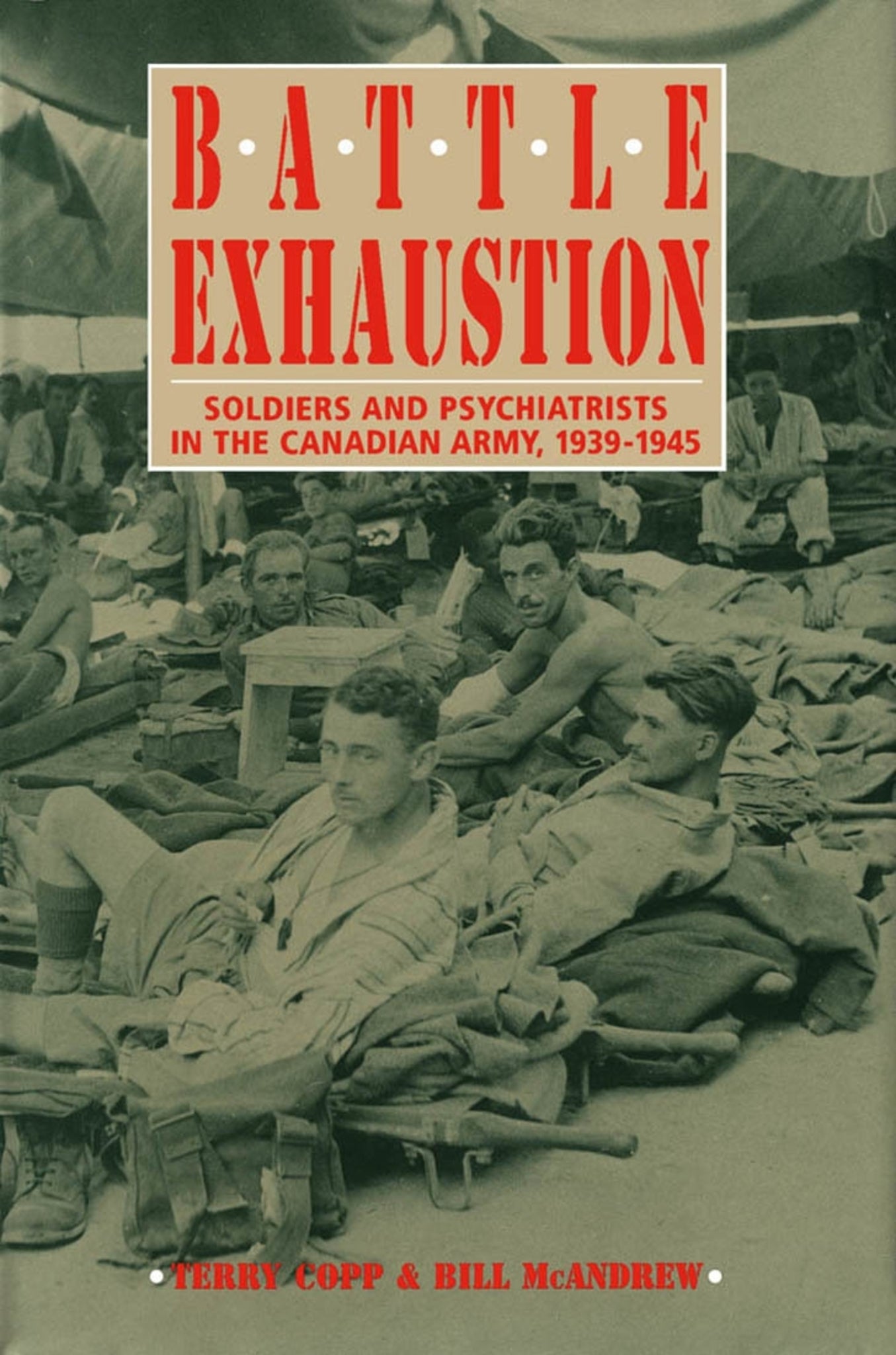
Battle Exhaustion introduces a new kind of military history that will transform existing views of the Canadian Army's experience during the Second World War. Terry Copp and Bill McAndrew examine the behaviour of soldiers under the extreme stress of war and the medical and military attempts to manage this behaviour. Unlike previous studies, Battle Exhaustion is based essentially on primary sources and includes sufficient comparative material to establish its applicability to studies of the British, American, and other armies.
At the outset of the Second World War Canadians wanted to avoid the horrors encountered on the western front in 1914-18, one of the most significant of which was "shell shock." Most medical personnel preferred not to assign to combat those who showed neurotic symptoms during training, but this approach was challenged by the Canadian Psychological Association and by the new Personnel Selection Directorate established in 1941. Personnel Selection claimed to be able to distinguish, before training, between those suited and those unsuited to combat duty.
However, when Canadian troops went into battle in Italy, the preparatory work seemed to have had little impact. Canadian losses due to "battle exhaustion" were no less than those of other allied forces. Front-line treatment allowed about half of these to return to their units, but eventually a very large number of soldiers were assigned to non-combat roles because it was judged they could no longer function effectively in battle. Similar problems were encountered in Normandy, Belgium, Holland, and Germany.
Copp and McAndrew are critical of military commanders who thought strict discipline coupled with high morale from good training and success in battle would keep battle exhaustion in check, and of officers in the Royal Canadian Army Medical Corps who tried to impose theoretical solutions that did not fit the circumstances. The authors show how some doctors, using energy and common sense, contributed to the evolution of contemporary psychiatric ideas about the realities of large-scale psychological casualties.

