


Some error occured while loading the Quick View. Please close the Quick View and try reloading the page.
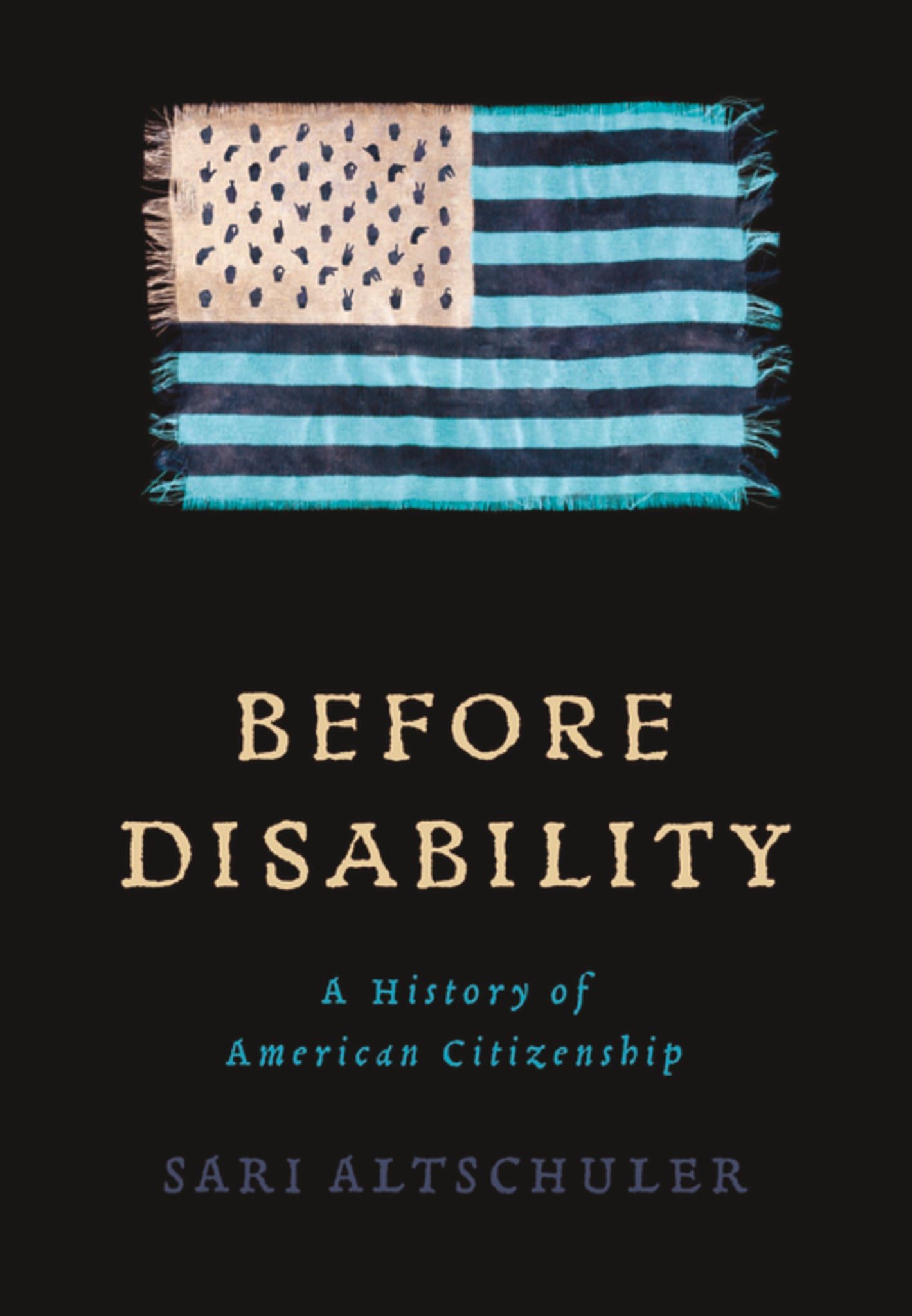
A literary, legal, and cultural history of disability, race, and citizenship between the Revolution and the Civil War
The history of disability rights is often told as a recent one, but it is not. In the wake of the American Revolution, many of the differences we now call disabilities could be accommodated into citizenship—and for some even exemplified its promises. By the antebellum period, however, disability was becoming a powerful, racialized tool of civic exclusion and, by the century’s end, a target for eugenic elimination. In Before Disability, Sari Altschuler tells the story of how this dramatic transformation occurred.
Before Disability is a literary, legal, and cultural history of the relationship between disability, race, and citizenship. It shows how disability helped to shape US citizenship and, in turn, how the formation of US citizenship shaped disability. There were two key drivers of the transformation from accommodation to exclusion and eugenics: the difficulty aligning the reality with the rhetoric of civic inclusion and the co-opting of mental and physical difference as evidence in debates about Black citizenship. The stigmatizing ways race came together with mental and physical difference to deny Americans rights were, however, not inevitable.
Before citizenship was federally defined in the late 1860s, Americans were still working out what it meant. They used the narrative forms available to them—from melodrama and the gothic to the slave narrative and the criminal confession—to do this work. While possibilities narrowed by the antebellum era, Americans continued to imagine, articulate, and enact broader definitions. As we seek to imagine the relationship between disability and citizenship more equitably and expansively for ourselves, we should begin by remembering that many disabled and nondisabled Americans before us did, too.


"Before Disability is a terrific book. It will take its place alongside the exciting new work that is offering an ambitious and generative rewriting of US citizenship from the perspective of race and disability. Sari Altschuler shows how ideas about race, disability, and capacity were baked into conceptions of American citizenship from the outset—and she reads those complex conceptions through literary texts by Charles Brockden Brown, Nathaniel Hawthorne, Herman Melville, Harriet Jacobs, Frances E. W. Harper, Harriet Wilson, Frederick Douglass, and Hannah Crafts."
"In Before Disability, Sari Altschuler brings the history of age-old categories such as blind, deaf, and mad into our current concepts of disability as a civil and human rights category and identity. This meticulous history connects Americans’ experience and understanding of bodily difference from the country’s earliest years to our present moment, tracing the arc of disability through lives and across communities. This eloquent and graceful story clarifies the persisting endurance of disability experience as a force that shaped the history of American citizenship."