


Some error occured while loading the Quick View. Please close the Quick View and try reloading the page.
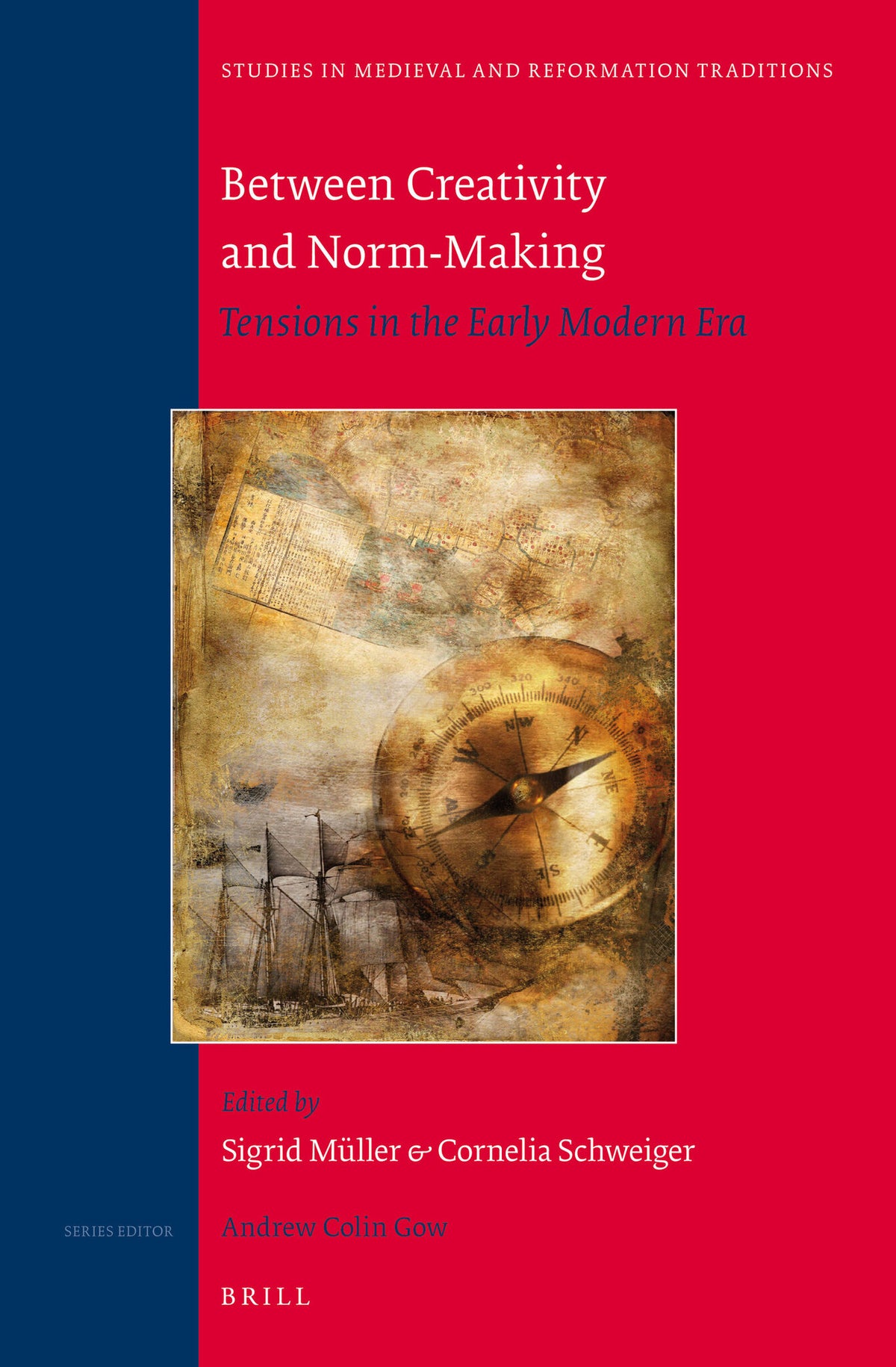
The time of the transition from the Middle Ages to the onset of early modernity (c. 1400-1550) is a very complex one. It brought what on first sight appear to be contradictory developments. Human creativity and freedom became much more important; yet, at the same time, the foundations were laid for systems that allowed control to be exercised over virtually every aspect of human social life. How can we put these two phenomena together? Which tendency is the stronger one? The contributions in this volume focus on the tension between creativity and norm-making from the perspective of different academic disciplines, so as to shed light on this fascinating period in our history.

Price: $189.00
Pages: 302
Publisher: Brill
Imprint: Brill
Publication Date:
November 9, 2012
ISBN: 9789004240681
Format: Hardcover

‘’This is a valuable contribution to the growing study of the transitions between the medieval and early modern period, one which provides valuable food for thought and space for further examination of important aspects of a crucial period of historical and cultural transition and innovation’’.
Jennifer L. Welsh, College of Charleston. In: Sixteenth Century Journal, Vol. 45, No. 2, 2014, p. 567.
Jennifer L. Welsh, College of Charleston. In: Sixteenth Century Journal, Vol. 45, No. 2, 2014, p. 567.
Sigrid Müller, Dr. (1999) in Theology, University of Tübingen, is Professor of Moral Theology at the University of Vienna. She has done extensive research in the fields of Late Medieval nominalism and history of ethics, including Handeln in einer kontingenten Welt: Zu Begriff und Bedeutung der recta ratio bei Wilhelm von Ockham (Tübingen/Basel, 2000).
Mag. Cornelia Schweiger is research assistant in Moral Theology at the University of Vienna. She has worked on the History of Moral Theology (especially on the question of Natural Law) and on the relationship between faith and ethics with a special focus on John Rawls.
Contributors include: Heribert Smolinsky, Volker Leppin, Renate Dürr, Thomas Simon, Rudolf Schüßler, Marianne Schlosser, Hans Schelkshorn, Christian Thomas Leitmeir, Thomas Brogl, Meta Niederkorn-Bruck, Henrik Wels, Hermann Hold, Sigrid Müller and Cornelia Schweiger.
Mag. Cornelia Schweiger is research assistant in Moral Theology at the University of Vienna. She has worked on the History of Moral Theology (especially on the question of Natural Law) and on the relationship between faith and ethics with a special focus on John Rawls.
Contributors include: Heribert Smolinsky, Volker Leppin, Renate Dürr, Thomas Simon, Rudolf Schüßler, Marianne Schlosser, Hans Schelkshorn, Christian Thomas Leitmeir, Thomas Brogl, Meta Niederkorn-Bruck, Henrik Wels, Hermann Hold, Sigrid Müller and Cornelia Schweiger.