


Some error occured while loading the Quick View. Please close the Quick View and try reloading the page.
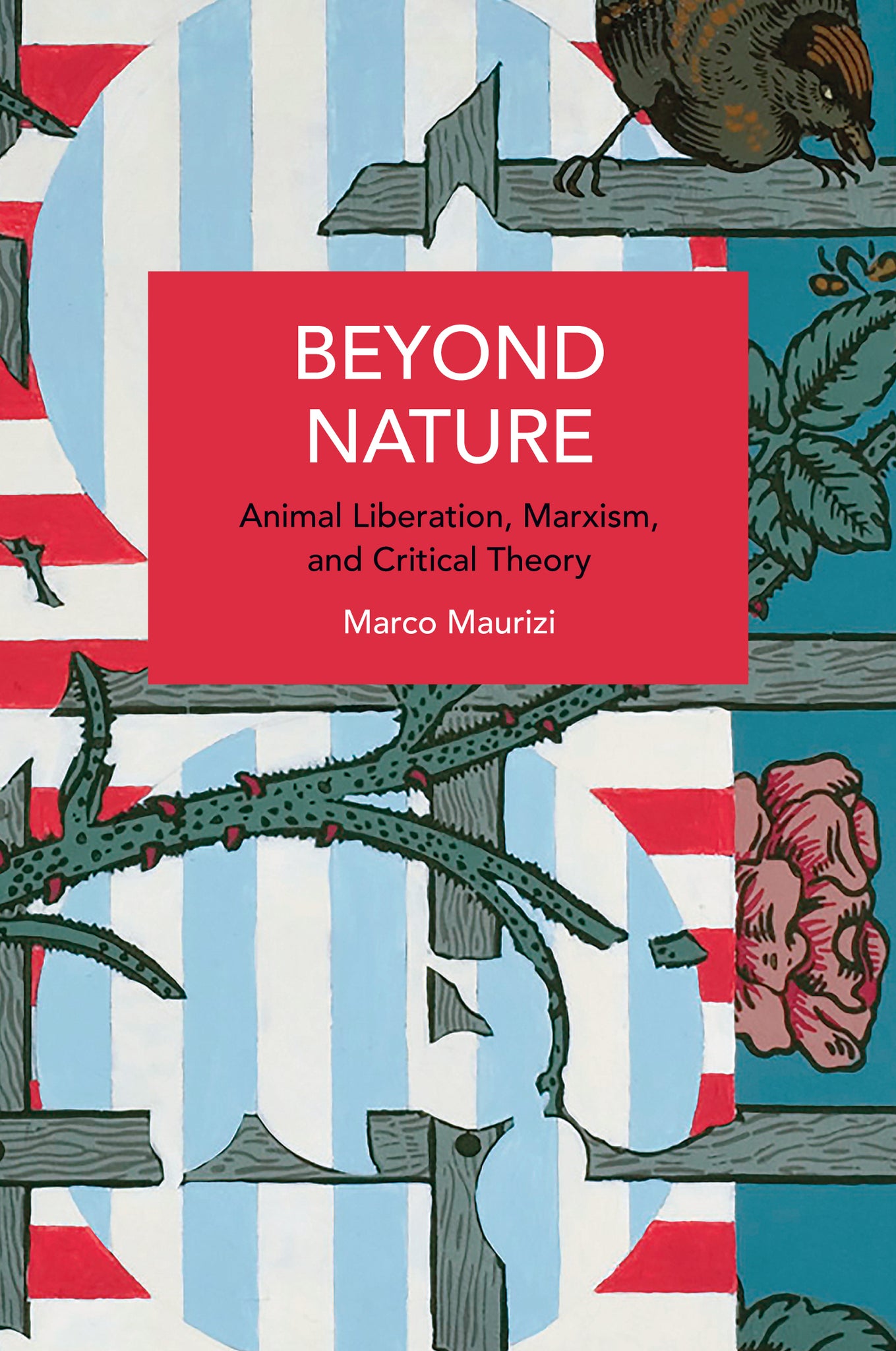
In Beyond Nature Marco Maurizi offers a unique perspective on the question of animal liberation. Because animal rights activism has hitherto been characterized by an abstract moralism, Maurizi proposes instead a historical-materialist analysis of the relationship between humans and non-human animals.
By contrasting the thinking of Hegel, Marx, and the Frankfurt School with classical authors in the field of animal rights (such as Singer, Regan, and Francione) this text offers an alternative, social, and dialectical theory of animality and a different practical approach to the problem of animal suffering. The hopes for change placed in veganism, liberationism and animal activism are here assumed in a political, revolutionary perspective, in which human and animal liberation finally cease to oppose each other.


“In order to properly illustrate the importance of this book [...] a comparison seems appropriate. Parts of this publication mean to animalist Marxism what the Theses on Feuerbach or the German Ideology meant for the evolution of historical materialism as a whole.”
—Christian Stache, Capital & Class
Marco Maurizi teaches Philosophy and History at the Lombardo Radice Institute in Rome, and holds courses and seminaries at the University of Tor Vergata. He has published several books, translations and articles on animal liberation, Critical Theory and Marxism.
Introduction
1 The Soul of Animals under Socialism
2 Did You Say ‘Dialectics’?
3 Singer & Sons
4 Against Animal Liberation Ideology
5 Critical Failures
6 Hegelian Animal Spirits
7 The Structure of the Book
Part 1 Critique of Animal Liberation Ideology
1 What Is Antispeciesism?
1 Three Different Definitions
2 A Sociological Fallacy
3 Metaphysical and Historical Antispeciesism
4 Animal Liberation and Human Liberation?
2 On the Genesis of Speciesism
1 The Ambiguity of Speciesism
2 The Origin of Speciesism
3 How?
4 Speciesism and Human Liberation
3 Animal Right Activism and Its Discontents
1 Two Forms of Praxis: Conflict and Inclusion
2 Conflict
3 Inclusion
4 The ‘Bottom-Up’ Change Is a Disguised Hierarchical Change
5 Veganism Is Not a Mode of Production
Part 2 Marxism and Animal Liberation
4 Marxism and Animal Rights
1 One Struggle?
2 Animal Rights vs. Marx
3 The Role of Animals in Marxism
4 The Real Problem: Animal Alienation
5 Marxism and the Repression of Nature
1 Animal and Capital
2 History and Natural History in Marx and Engels
3 From Primitive Communism to the Early States
4 Conclusion
6 The Dialectical Animal
1 Animality and Anthropopoiesis
2 From the Institute for Social Research to the ‘Frankfurt School’
3 From Nature to Animals
4 The Structure of Domination
5 The Specific Role of Animals in the General Scheme of Domination
6 The Dialectical Animal
7 Materialistic Solidarity
8 A New ‘Dialectics of Nature’
9 The Reconciliation of Nature
Part 3 Conclusion: Beyond Nature
7 Towards a Post-Neolithic Society
1 Materialism and Technē
2 Universal History as a Catastrophe
3 The Universal Human Being and the Enlarged Animal Society
4 Rien faire comme une bête
8 The Aporetic Nature of the Theory/Praxis Opposition
Epilogue: Antispeciesism and Anticapitalism
References
Index