


Some error occured while loading the Quick View. Please close the Quick View and try reloading the page.
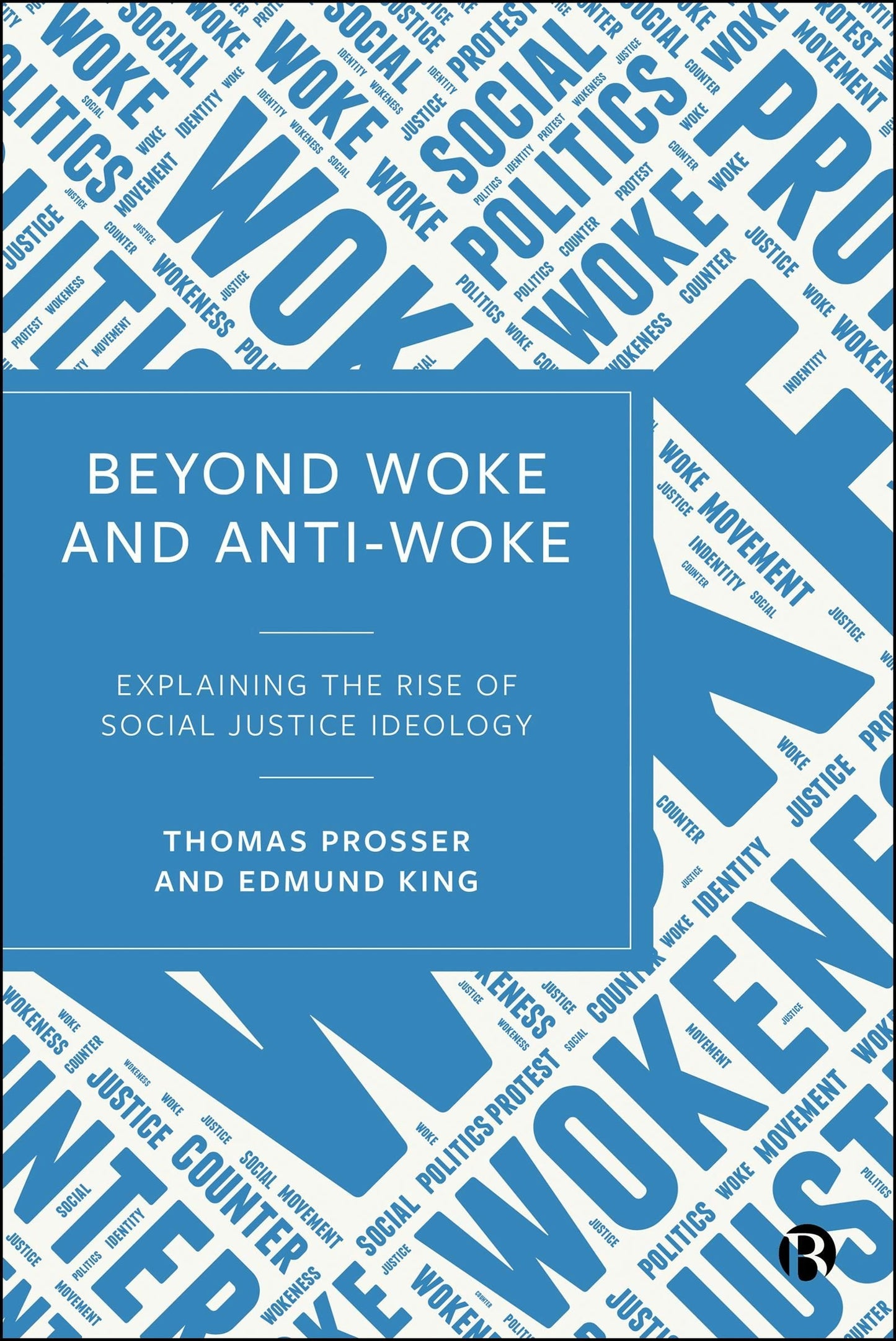
Many rail against ‘woke’ ideology. Others dismiss the backlash as a rebranding of conservative concerns. Taking a third way, this book argues that social justice ideology centres identity and direct action and expands concepts of harm, distinguishing it from liberalism. Drawing on the latest datasets, the book offers a sober, evidence-based account of the ideology’s emergence.
As women and minorities have gained visibility and new generations have come of age, progressive ideologies have shifted under pressure. Post-2008 economic crises weakened liberalism, giving social justice ideology mass appeal.
Amid polarized debates over ‘woke’ culture, this is a vital resource for scholars and students seeking an objective study of social justice ideology beyond the usual culture-war framing.


‘This is an excellent, balanced, and scholarly analysis of the usually polarized debate over Social Justice Ideology (SJI). It is broad-ranging theoretically and empirically, but also communicated in a commendably clear and engaging style that will appeal to readers of all persuasions. The authors grip the reader from the first sentence by opening with the high-profile Jo Phoenix case against the Open University. They then dissect the distinctions between social justice ideology, traditional liberalism, and Marxism, before engaging in a clear and thoughtful conceptual analysis of progressive ideologies more generally. This conceptual clarity is accompanied by similarly informed discussions of the potential reasons for the rise of SJI – economic disruption, demographic change, the growth of socio-cultural professions, and the role of social media and corporate wokeness. Public opinion, and even the psychological profiles of SJI supporters and opponents, are examined using large datasets and newly collected surveys in the US and UK. These rigorous quantitative analyses are visualised appealingly in the main text, with appendices for the hardcore aficionado. The book also considers the future prospects of SJI in the face of Trumpian pushback and popular disapproval.
In sum, this book is essential reading for commentators and consumers on both sides of the many debates engendered by the rise of woke and anti-woke movements.’ Geoffrey Evans, University of Oxford
Thomas Prosser is Professor of European Political Economy at Cardiff University.
Edmund G.C. King is Senior Lecturer in English at the Open University.
Introduction: Beyond Woke and Anti-Woke
1. What Is Social Justice Ideology?
2. Who Supports Social Justice Ideology? with Travis Proulx, Elena Magazin and Geoff Haddock
3. What Are the Functions of Social Justice Ideology?
4. Was It the Economy?
5. Was It the Sociocultural Sectors?
6. Was It Social Media?
7. Why Did Corporations Embrace Social Justice Ideology?
8. Understanding the Relationship with Liberal Democracy
9. What Explains the Rise of Social Justice Ideology?