


Some error occured while loading the Quick View. Please close the Quick View and try reloading the page.
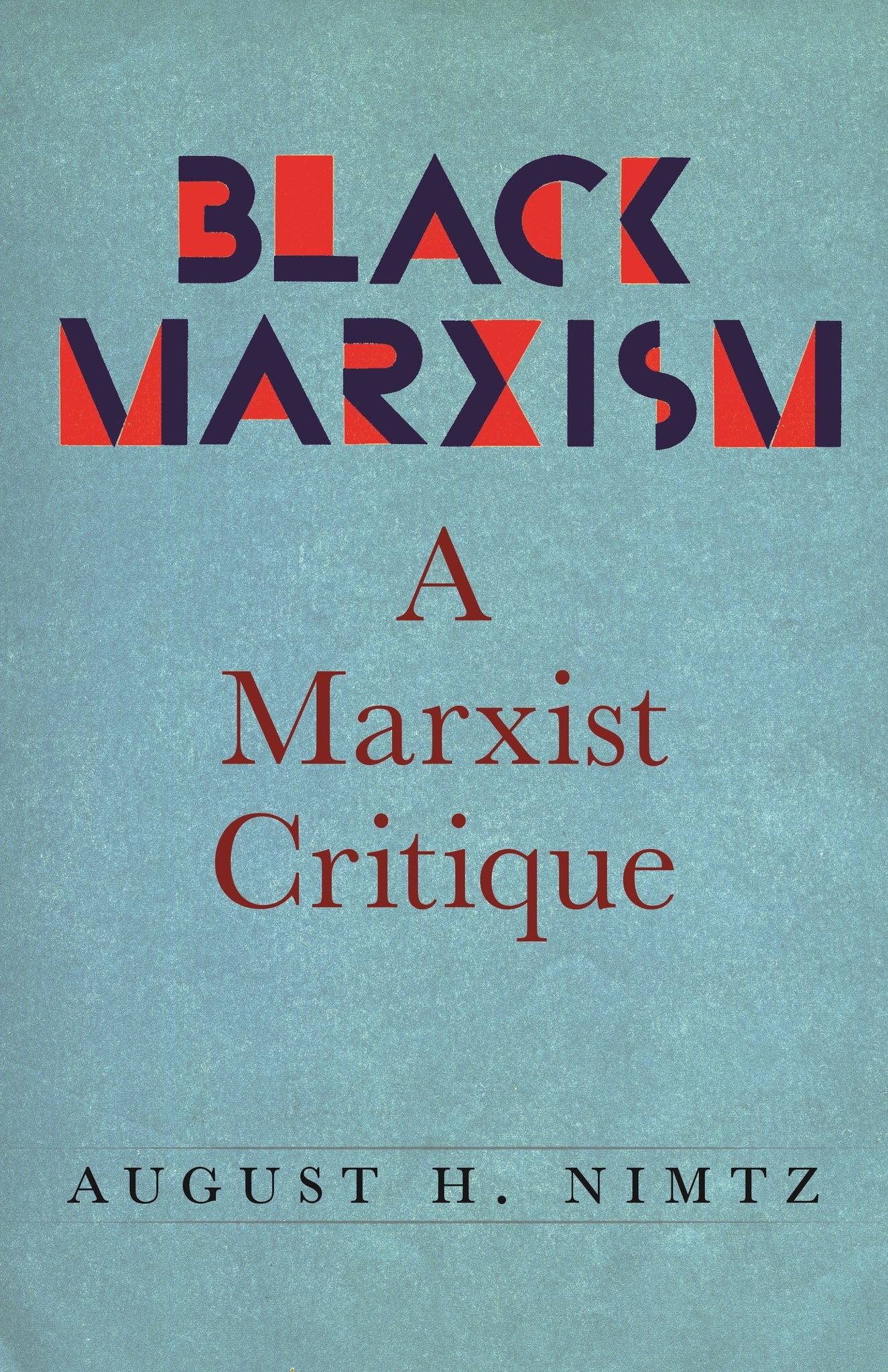
Over the last decade, Cedric Robinson’s Black Marxism: The Making of the Black Radical Tradition has had a tremendous influence on scholars and activists alike, deeply shaping debates on the place of race within capitalist societies. Is race subsumed by class, with the latter the sine qua non of capitalism? Do race and class act independently within modern societies? Or does capitalism inevitably express a deeper racial impetus in the West? In this, the first book-length discussion of Black Marxism, Nimtz lays out the limits of Robinson’s much-celebrated text, showing it represents a sophisticated, but ultimately flawed, version of Black nationalism. Nimtz defends Marxism from Robinson’s accusations of myopia on matters of race, suggesting that, in charging Marx and Engels with Eurocentrism, he either failed to understand, or misrepresented, their work—and that, in effect, many thinkers inspired by Black Marxism blatantly misrepresented Marxist texts. Especially in his writings about the U.S. Civil War, Marx had far more to say about race than is commonly understood, Nimtz shows.
An authentic Marxism, argues Nimtz, remains the most reliable real-world method for human liberation, not least among peoples of African descent. Speaking for himself as a contemporary of Robinson’s, Nimtz grounds Black Marxism: A Marxist Critique in an account of his own upbringing in New Orleans, and his development throughout the struggles of the 1960s, explaining how and why he came to radically different conclusions. Accessible and engaging,
Black Marxism: A Marxist Critique will be a significant intervention in the race-versus-class debate on the U.S. Left. No doubt, Nimtz’s trenchant critique will generate controversy, highlighting how more possibilities for transracial class alliances exist than ever before—and misguided theories like Robinson’s prevent us from seeing that potential. His detailed rejoinder to Black Marxism is much needed.


— William I. Robinson
August Nimtz was the first to offer a critical review of Cedric Robinson's 1983 book, Black Marxism. Since Robinson's passing in 2016, his notions of "racial capitalism" and the "black radical tradition" have generated more confusion than insight regarding the origins of race and capitalism, and the historical power of socialism. Thankfully, Nimtz has expanded his formative criticism of Robinson here, providing us with the kind of materialist analysis we so desperately need in these grim political times. There is simply no better antidote to the analytical flaws and mischief of Robinson's work than the book you are holding right now.