


Some error occured while loading the Quick View. Please close the Quick View and try reloading the page.
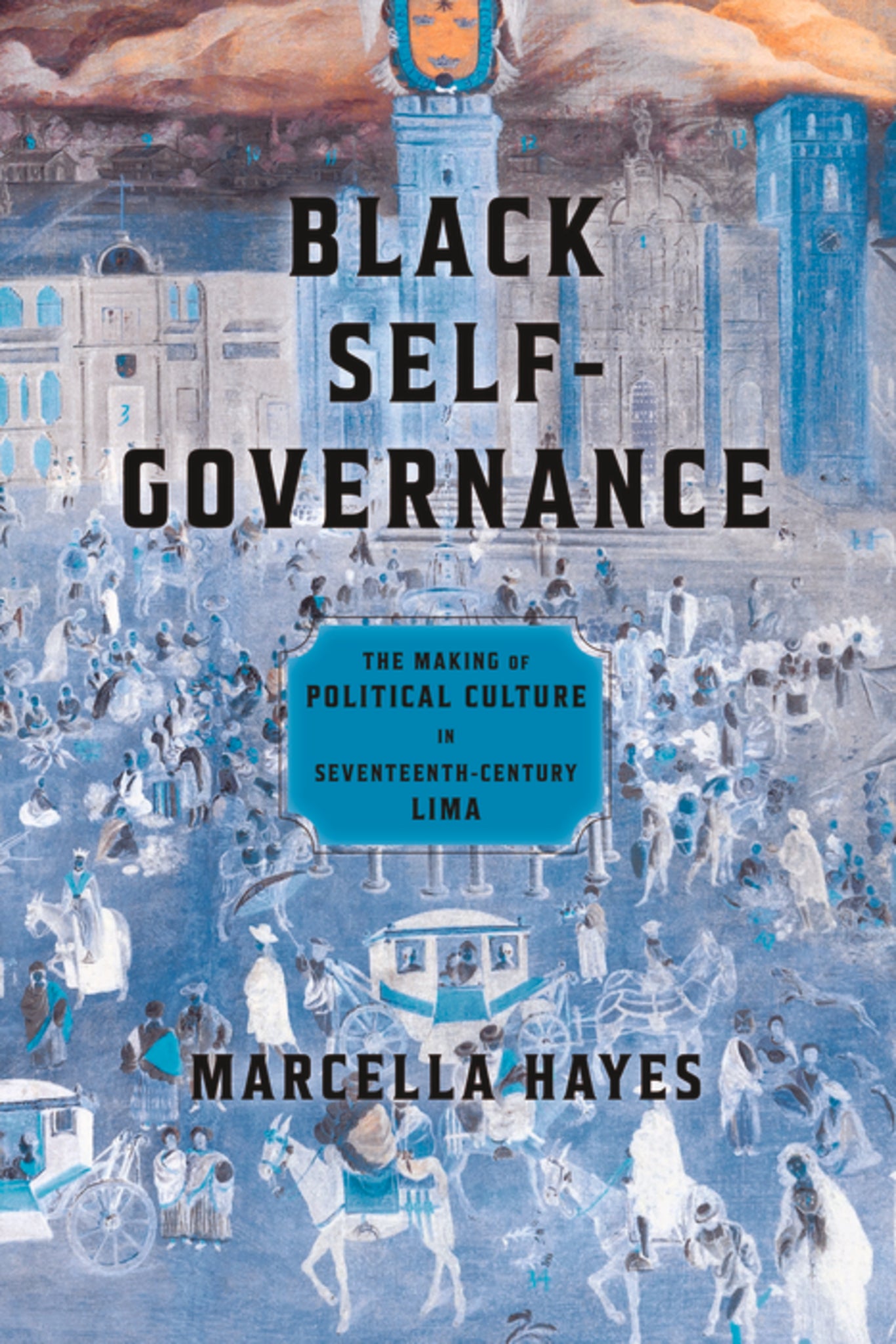
Enslaved and free Black people in seventeenth-century Lima created self-governing corporations that negotiated with colonial authorities
Black Self-Governance argues that Black men and women living in seventeenth-century Lima, Peru (a majority Black city) created their own political corporations that enabled them to govern themselves and effectively negotiate with authorities. Based on a careful examination of lawsuits, wills, notarial records, petitions, chronicles, and poetry centering free and enslaved Black people in Lima, Marcella Hayes reconstructs their political status as it emerged from their daily lives, negotiations, and contestations.
The book focuses on three types of self-governing corporations: lay confraternities, militias, and guilds. Within these groups, women as well as men took on prominent roles. In some contexts, enslaved people could also take part as civic leaders. Members of these corporations argued, with some success, that they formed a legitimate part of the Spanish kingdom. What is more, they also made both implicit and explicit references to their African origins as they did so. Hayes argues that tracing their relationships with political authority is necessary to illuminate not only their lives, but also their place in the emerging colonial order and nation-making projects. Her insights help us rethink early modern concepts of citizenship and belonging.


"Black Self-Governance powerfully recreates a vibrant world of women and men who fought for individual dignity and their communities’ autonomy. With each chapter, Marcella Hayes skillfully layers complex stories of the human condition, from celebratory scenes to somber losses of capital but also trust. Black Self-Governance demonstrates just how dynamic life was in the famed ‘City of Kings,’ as self-interest and duty clashed among those navigating secular and religious landscapes of the seventeenth century."