


Some error occured while loading the Quick View. Please close the Quick View and try reloading the page.
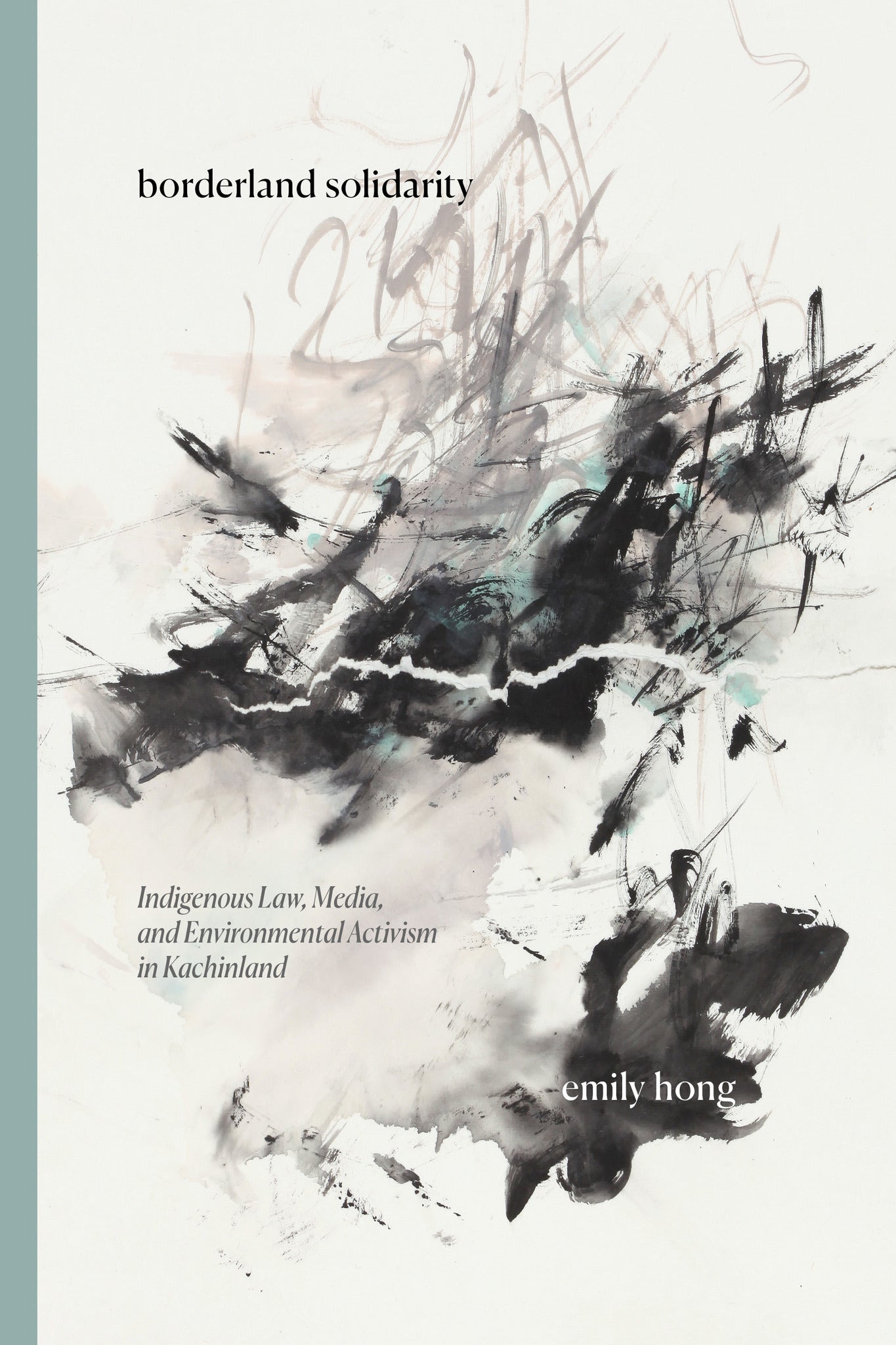
Kachinland is an unrecognized state in the borderlands of Myanmar, India, China, and Thailand. Its geography throws into sharp relief the intersecting dynamics of British colonialism, settler colonialism, and protracted war between the Kachin Independence Army and the Myanmar Army. Kachinland's rich natural resources—including jade and hydropower—are coveted by the junta-led Myanmar government and its energy hungry neighbor, China. As resource extraction and land confiscation intensifies, Kachin activists and artists turn to Indigenous law and media to stem the tide of displacement and dispossession.
Emily Hong follows a diverse cast of Kachin activists, punk rock musicians, women farmers, and armed group leaders dreaming up new futures for Kachinland. She examines how they draw on the infrastructures of the borderlands—cross-border media tactics, inter-ethnic solidarity, and an expanded sense of the law and political possibility—to sustain activism for the long-haul. With critical awareness of the colonial legacies of the region and of anthropology itself, Hong uncovers the limitations and liberatory potential of borderland solidarity, offering a powerful lens for understanding global activism and for navigating collaborative ethnography. Through evocative storytelling and sensory ethnography, Hong's book challenges readers to move beyond a Western lens on solidarity to ask what activists, artists, and anthropologists alike can learn from centering non-Western ways of theorizing and embodying political sensation and collective action.


"Grounded in rich ethnography of music, law, and indigeneity in Kachinland, anthropologist and filmmaker Emily Hong's urgent ethnography traverses and undoes a series of borders to illuminate how dispossession both comes naturally to capital and becomes the center of community-building political struggle. Her concept of borderland solidarity, in which researching activism and creating activist scholarship must intertwine, is the kind of clarion and challenging intervention needed in a moment in which authoritarianism has entrenched itself in and beyond Myanmar." —Tyrell Haberkorn, University of Wisconsin-Madison
"Borderland Solidarity offers a brilliant theorization of solidarity at the intersection of political activism and ethnographic engagement. Hong centers Indigenous epistemologies of political affect, sensation, and collective action. A beautifully written, moving account of the borderland struggles for self-determination of Kachinland, Hong develops a narrative that foregrounds the 'touch and feel' of political desire by examining Indigenous media and the enactment of Indigenous land law by Kachin women farmers. Full of unexpected insights and methodological innovation, this book is a must read for all scholar-activists involved in fieldwork in the context of political struggles for freedom." —Chandra Talpade Mohanty, Syracuse University
Acknowledgments
Introduction
1. Nightmares and Visions: Bamar Settler Colonialism and Indigenous Sovereignty
2. Zin Lum: The Touch and Feel of Activism
3. The Texture of Law: Land, Natural Resources, and Self-Determination
4. Hidden Cuts and Long Takes: Borderland Solidarity as Collaborative Method
5. A Handful of Earth: An Intersectional Remix of Indigenous Law
Coda
Glossary
Notes
References
Index