


Some error occured while loading the Quick View. Please close the Quick View and try reloading the page.
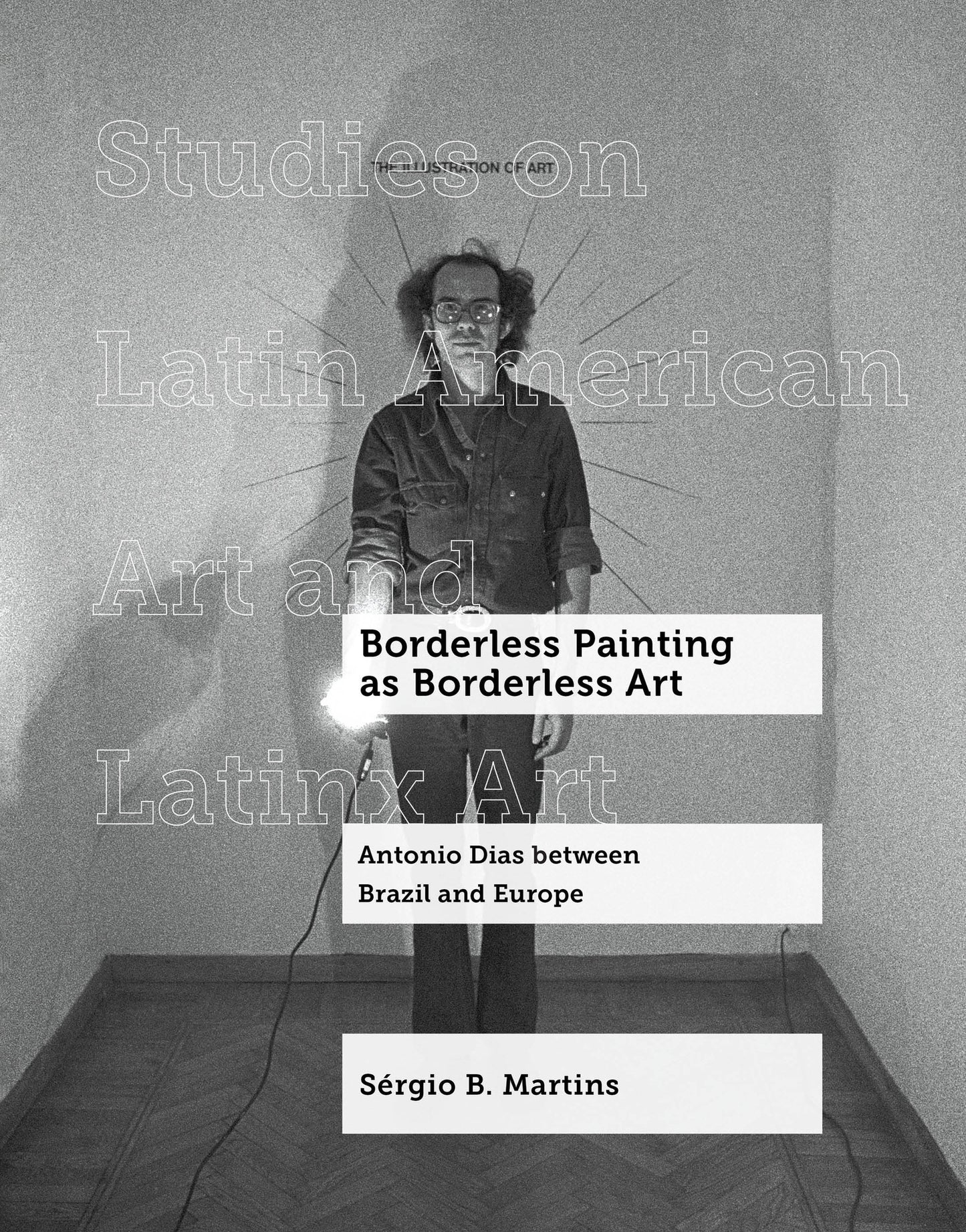
Sérgio B. Martins uses Dias’s trajectory as a lens to explore different approaches to avant-gardism and its crisis in Brazil, France, and northern Italy, weaving in the perspectives of figures such as Hélio Oiticica, Harald Szeemann, Pierre Restany, Giulio Paolini, and Tommaso Trini, as well as the Fluxus movement. The book ultimately argues that Dias pitted his formation in a semi-peripheral avant-garde against a post–avant-gardist milieu where commodity culture and market relations were far more pervasive and determinant vis-à-vis the arts scene.


"An interesting and valuable contribution to art history brimming with plates of his work and photographs from his career, Borderless Painting as Borderless Art: Antonio Dias between Brazil and Europe represents a well-informed and original source of reference."
“As Martins demonstrates, Dias actively sought out indeterminate spaces . . . trading on the instability of the binary oppositions through which he was received: universal and particular, national and global, core and periphery. If his art embraced positive universality, it was in order to expose it as a form of exclusion, as becomes clear from [a] line in his notebooks, almost a manifesto: ‘NEGATIVE ART FOR A NEGATIVE COUNTRY.’”
Acknowledgments
Introduction
1 Realism and Underdevelopment
2 Object and Environment
3 Painting and Project
4 Art and Commodity
Notes
Selected Bibliography
List of Illustrations
Index