


Some error occured while loading the Quick View. Please close the Quick View and try reloading the page.
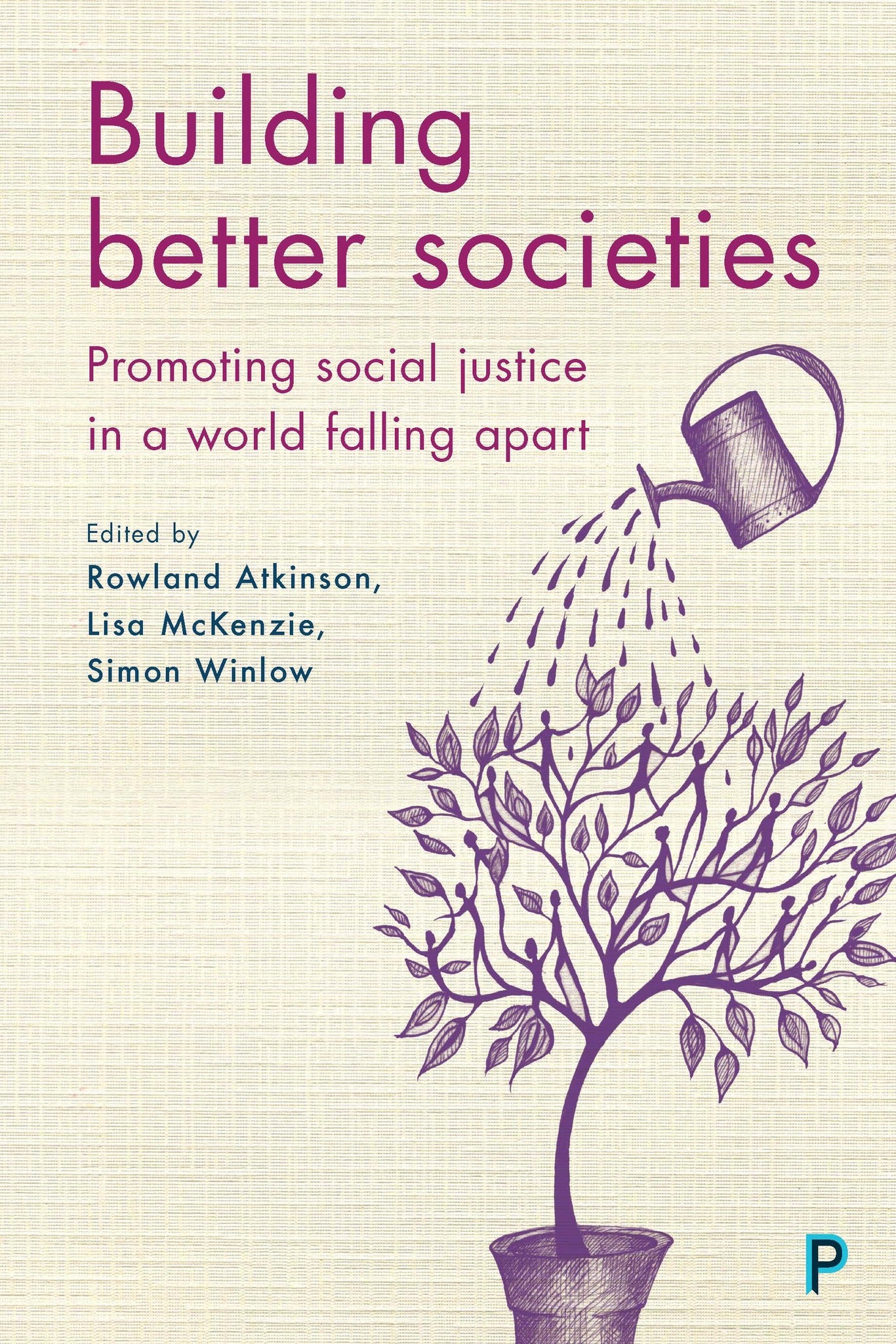
What would it take to make society better? For the majority, conditions are getting worse and this will continue unless strong action is taken. This book offers a wide range of expert contributors outlining what might help to make better societies and which mechanisms, interventions and evidence are needed when we think about a better society.
The book looks at what is needed to prevent the proliferation of harm and the gradual collapse of civil society. It argues that social scientists need to cast aside their commitment to the established order and its ideological support systems, look ahead at the likely outcomes of various interventions and move to the forefront of informed political debate.
Providing practical steps and policy programmes, this is ideal for academics and students across a wide range of social science fields and those interested in social inequality.


Rowland Atkinson is Chair in Inclusive Societies, in the Faculty of Social Sciences at the University of Sheffield. His research crosses urban studies, sociology, geography and criminology and looks at different forms of exclusion and inequality. Among other interests his work has focused on questions of wealth and poverty in societies and the often invisible harms generated by social inequality in urban settings. Rowland lead the first study of gated communities in the UK as well as the first key study of the rich in London and continues to work to connect the lives of the affluent to social problems, he is the author of (with Sarah Blandy) Domestic Fortress.
Dr Lisa Mckenzie is a research fellow at the London School of Economics & Political Science, working as part of the Great British Class Survey Team. Her previous research focused upon the poor working class and her current research interests relate to the precarious and vulnerable nature of particular groups in our society through insecure housing, work, social benefits, health care, and education. She is author of the bestselling Getting by: Estates, Class and Culture in Austerity Britain (Policy Press, 2015).
Professor Simon Winlow, is at the Centre for Realist Criminology, Teesside University. He has research expertise in both sociology and criminology and has published widely on violence, criminal markets and cultures, and social, political and economic change.
Who would not be For Society? ~ Rowland Atkinson, Lisa McKenzie and Simon Winlow
Part 1: Problems
The social question and the urgency of care ~ Iain Wilkinson
Better politics - narratives of indignation and the possibility of a prosocial politics ~ Keith Jacobs
Valuing and strengthening community ~ Lisa McKenzie
Part 2: Ideas
Confronting the roots of violent behaviour ~ Anthony Ellis
In defence of the public city ~ Martin Coward
Artfully thinking the prosocial ~ Deborah Joy-Warr, Gretel Taylor and Richard Williams
Re-visioning exclusion in local communities ~ Kate Pahl and Paul Ward
Putting ‘the social’ back into social policy ~ Steve Corbett and Alan Walker
Part 3: Futures
Progress through protest ~ Sam Burgum
Cities, crises and the future ~ Sophie Body-Gendrot
Policy steps towards a better social future ~ Michael Orton
The (in)visibility of riches, urban life and exclusion ~ Rowland Atkinson
The uses of catastrophism ~ Simon Winlow
Conclusion: Thinking the Prosocial ~ Rowland Atkinson, Simon Winlow and Lisa Mckenzie