


Some error occured while loading the Quick View. Please close the Quick View and try reloading the page.
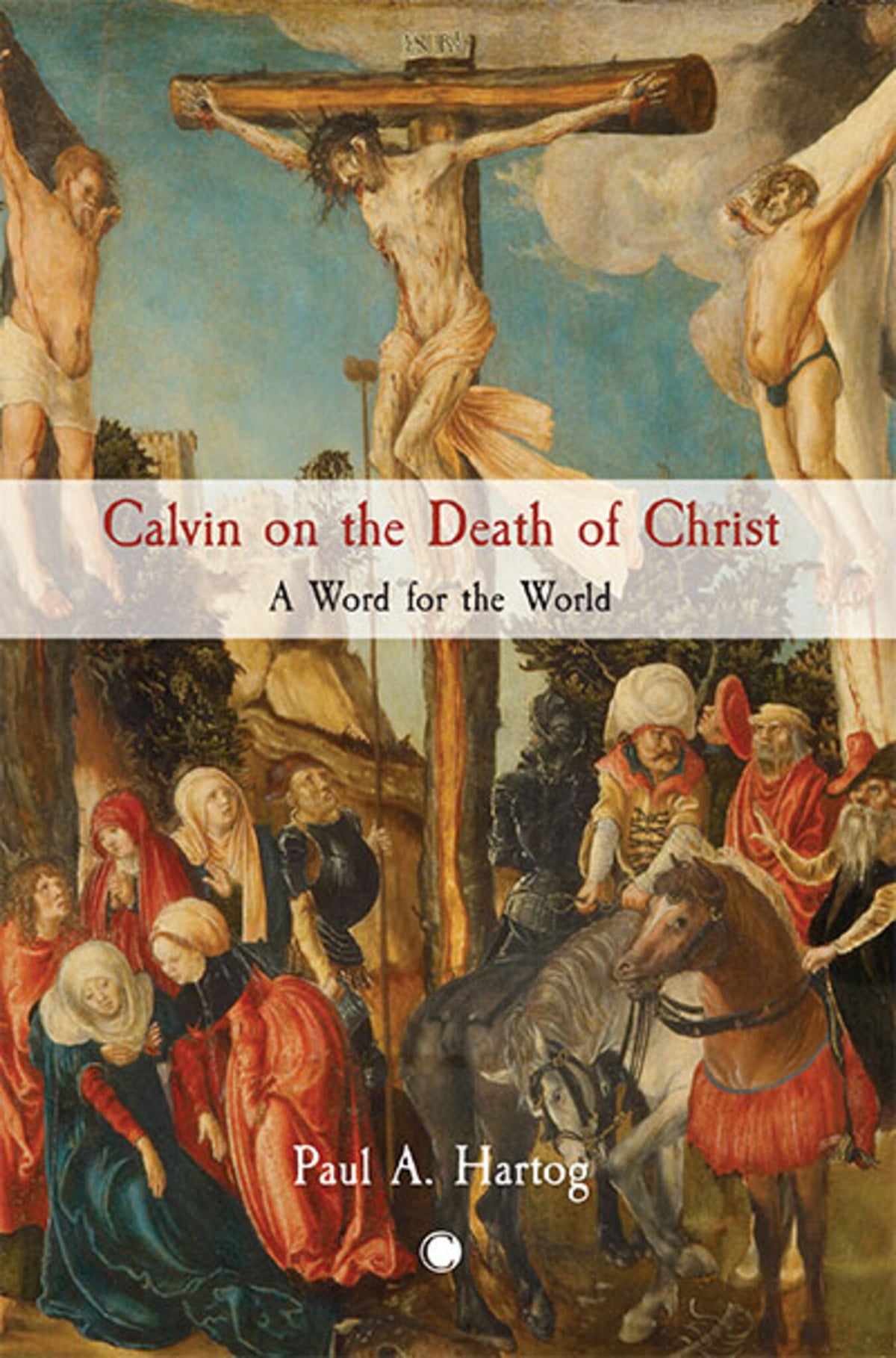
A re-evaluation of Calvin's writing on the atoning function of Christ's death, with radical implications for Reformed church doctrine today.
John Calvin's understanding of the extent of the atonement achieved in Christ's death is one of the most contested questions in historical theology. In common thought, Calvin's name is closely associated with the 'limited atonement' stance canonized within the 'TULIP' acronym, but Calvin's personal endorsement of a strictly particularist view, whereby Christ died for the elect alone, is debateable.
In Calvin on the Death of Christ, Paul Hartog re-examines Calvin's writing on the subject, traces the various resulting historical trajectories, and engages with the full spectrum of more recent scholarship. In so doing, he makes clear that, while Calvin undoubtedly believed in unconditional election, he also repeatedly spoke of Christ dying for 'all' or for 'the world'. These phrases must be held central if we are to discover Calvin's own view of the subject. Hartog's conclusions will surprise some, and may hold significant implications for the Calvinist tradition today. Throughout, however, they are cogently articulated and sensitively pitched.
John Calvin's understanding of the extent of the atonement achieved in Christ's death is one of the most contested questions in historical theology. In common thought, Calvin's name is closely associated with the 'limited atonement' stance canonized within the 'TULIP' acronym, but Calvin's personal endorsement of a strictly particularist view, whereby Christ died for the elect alone, is debateable.
In Calvin on the Death of Christ, Paul Hartog re-examines Calvin's writing on the subject, traces the various resulting historical trajectories, and engages with the full spectrum of more recent scholarship. In so doing, he makes clear that, while Calvin undoubtedly believed in unconditional election, he also repeatedly spoke of Christ dying for 'all' or for 'the world'. These phrases must be held central if we are to discover Calvin's own view of the subject. Hartog's conclusions will surprise some, and may hold significant implications for the Calvinist tradition today. Throughout, however, they are cogently articulated and sensitively pitched.

Price: $29.99
Pages: 216
Publisher: Boydell & Brewer Inc.
Imprint: James Clarke
Publication Date:
27 April 2023
Trim Size: 5.98 X 8.98 in
ISBN: 9780227178799
Format: Paperback
BISACs:
RELIGION / Christian Theology / Systematic, Christianity, RELIGION / Christian Theology / General, RELIGION / Biblical Studies / New Testament / General, RELIGION / Christian Living / Social Issues, RELIGION / Christian Church / History, RELIGION / Christian Theology / Eschatology, Theology

This is hands down the best work on the subject of Calvin's view on the extent of the atonement. Hartog's treatment is comprehensive, thorough, judicious, balanced, and irenic. Here is scholarship at its best. This study would seem to settle the issue in favour of the position that Calvin himself held the view that there is a universal provision in Christ's death and that Calvin never taught what we know today as strict 'limited atonement.' Highly recommended!'
— David Allen, Dean of the School of Preaching, Distinguished Professor of Preaching, Director of the Southwestern Center for Expository Preaching, and George W. Truett Chair of Ministry, Southwestern Baptist Theological Seminary
This book has all of the characteristics that make a historical theology study significant. It is balanced, precise, thorough, and readable. Hartog skilfully sorts through Calvin's works and the multitude of secondary sources and brings the study to an insightful conclusion. The twenty-five-page bibliography is itself worth the price of the book. I highly recommend it.'
— Larry Pettegrew, Research Professor of Theology, Shepherds Theological Seminary
In this densely argued and even more densely footnoted study, Paul Hartog has done what many might have thought impossible at this point: shed fresh light into the tangled thicket of the long debate on Calvin, 'Calvinism,' and limited atonement. Deftly weaving his way through the voluminous scholarship, Hartog persuasively argues that Calvin, respectful of the diverse biblical testimony on the issue, taught both a universal and a particular aspect to Christ's atoning work. In so doing, Hartog adds his voice to a growing chorus calling for Reformed teachers today to recognize the nuance and diversity of their tradition on this central mystery of the Christian faith.'
— W. Bradford Littlejohn, President, The Davenant Institute
— David Allen, Dean of the School of Preaching, Distinguished Professor of Preaching, Director of the Southwestern Center for Expository Preaching, and George W. Truett Chair of Ministry, Southwestern Baptist Theological Seminary
This book has all of the characteristics that make a historical theology study significant. It is balanced, precise, thorough, and readable. Hartog skilfully sorts through Calvin's works and the multitude of secondary sources and brings the study to an insightful conclusion. The twenty-five-page bibliography is itself worth the price of the book. I highly recommend it.'
— Larry Pettegrew, Research Professor of Theology, Shepherds Theological Seminary
In this densely argued and even more densely footnoted study, Paul Hartog has done what many might have thought impossible at this point: shed fresh light into the tangled thicket of the long debate on Calvin, 'Calvinism,' and limited atonement. Deftly weaving his way through the voluminous scholarship, Hartog persuasively argues that Calvin, respectful of the diverse biblical testimony on the issue, taught both a universal and a particular aspect to Christ's atoning work. In so doing, Hartog adds his voice to a growing chorus calling for Reformed teachers today to recognize the nuance and diversity of their tradition on this central mystery of the Christian faith.'
— W. Bradford Littlejohn, President, The Davenant Institute
Foreword by Professor Tony Lane
Acknowledgements
Introduction
1. Three General Approaches
2. Twelve Issues
3. Evidences for "Limited Atonement"
4. Calvin and Reformed Diversity
5. Epilogue
Bibliography
Name Index
Subject Index
Scripture Index
Acknowledgements
Introduction
1. Three General Approaches
2. Twelve Issues
3. Evidences for "Limited Atonement"
4. Calvin and Reformed Diversity
5. Epilogue
Bibliography
Name Index
Subject Index
Scripture Index